








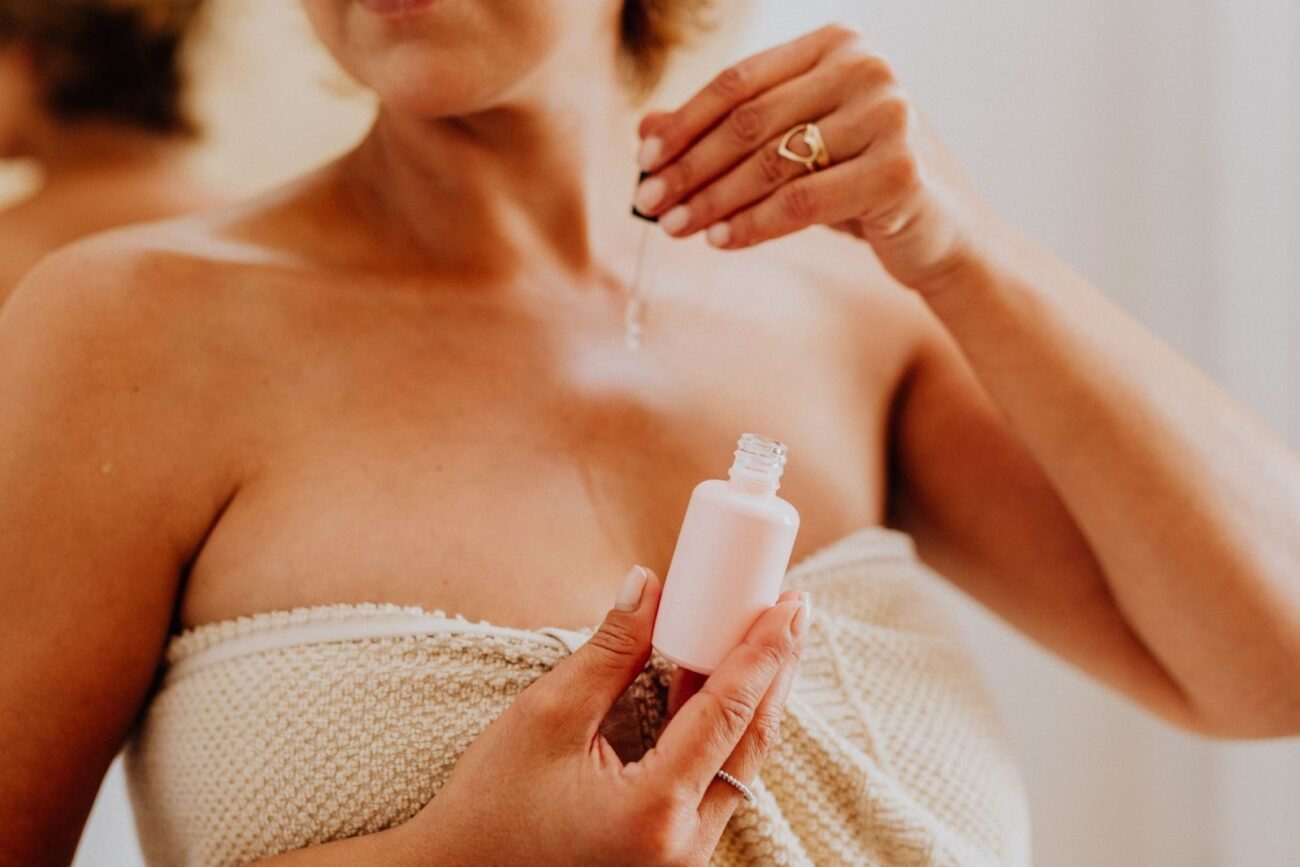
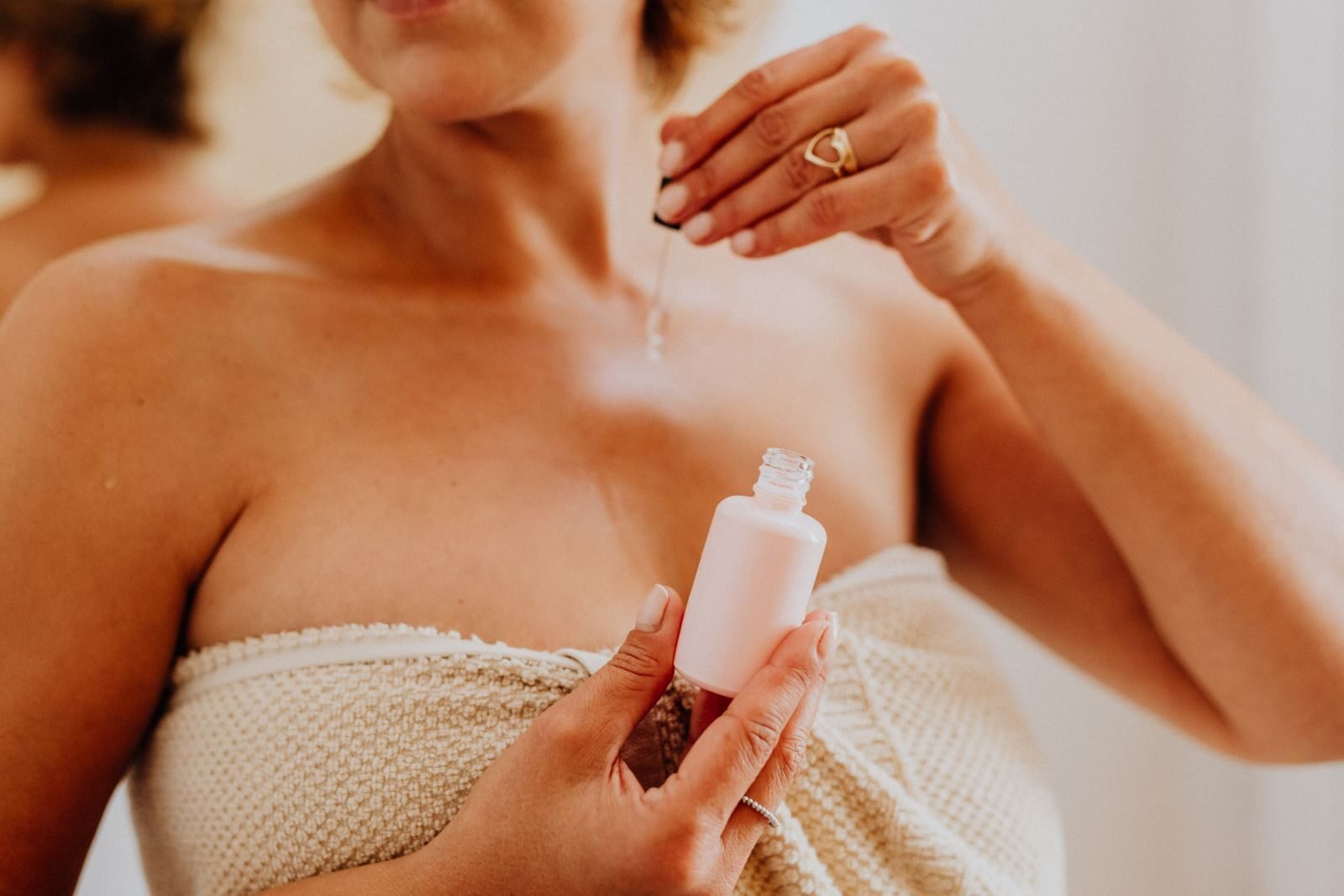
Does that serum ever reach a living skin cell, or does it just sit on top looking good?
Look this up and you get two answers that flat out contradict each other. Some sites say skin barely absorbs anything. Others say 60 to 70 percent gets in, like your skin is a sponge for whatever you put on it. Both are quoting studies that had nothing to do with skincare, chemical exposure through drinking water, drugs delivered through a patch, then applying that number to your face cream anyway.
I do not look at a bottle of plant based skincare and see a nice natural product. I see a molecule that started in a plant, got pulled out somehow, and ended up in a jar next to preservatives and whatever else the brand added. Every step of that is worth asking about, not just the plant name on the front. So the real answer to whether skin absorbs a plant extract is not one number. It comes down to the specific molecule.
I wrote about how concentration decides whether an extract does anything in do plant extracts in skincare really work. This is the next question. Getting the dose right only gets you through the first check. Whether that dose can even reach your skin is a separate question, and it comes down to what the molecule actually is.
The thing that decides it: size
The top layer of skin, the stratum corneum, is packed tight. What gets through it mostly comes down to size.
The rough cutoff used in penetration research is about 500 Daltons. Under that, a molecule has a real chance of getting through on its own. Over it, it mostly can’t. This is why hyaluronic acid, which can weigh over a million Daltons, does not soak into skin. It sits on top and holds water there. That is a real job, just not the deep hydration the ads talk about.
My biochemistry training is where this comes from. I spent a lot of time on how plant compounds are built, how big they are, what they’re made of. So when I see a plant extract on a label, I do not think of one ingredient. I think of a mix of different molecules, all different sizes, and most of them never get named separately.

What the data actually shows
Here is actual data…. A study tested this directly, using two plant pigments applied to skin, in lab tissue and on real people. They compared smaller pigments, around 450 to 580 Daltons, from elderberry, against bigger ones, over 900 Daltons, from red radish (Westfall et al., 2020).
The smaller elderberry ones got through more. Same plant family, different size, different result, in both the lab tissue and on live skin. When the chemistry predicts something and a real test backs it up that cleanly, I trust it.
What gets through, and what doesn’t
Once you know the size rule, sorting extracts gets easier, and here is how I do it.
Smaller phenolic compounds, some of what’s in green tea and a lot of botanical extracts, often sit close to or under that size line, and studies have measured some of them reaching skin.
Big polysaccharides, the sugar chains that make up most of what aloe vera actually is, sit way above that line. I covered aloe’s chemistry properly in aloe vera in skincare, what the plant biochemistry shows, and this is the same size problem. Those sugars are genuinely good at forming a film and holding moisture on top of skin. I just do not expect more from them than that, because their size rules it out from the start.
Proteins and big peptides, sold on firming or collagen claims, are usually too big to get through whole. What might get through is a small piece of the original molecule, and that is a different thing from the whole protein “absorbing,” even if the label does not say so.

That does not make the bigger ones useless. It just means I expect surface work from them, not anything deeper, whatever the bottle says.
Getting through is not the same as still working
Getting through skin is one check. Whether the molecule is still intact by the time it gets there is another, and this is where my other training comes in.
My ecotoxicology background trained me to ask what happens to something after it enters a system, not just what it does on paper. So the next question is what happened between the plant and the jar. How it was extracted, heat, solvent, pressure, changes what actually survives. My training in quality control adds the other half, whether the number on the label was actually measured for this product, or just repeated from somewhere else.
So a molecule small enough to get through skin is not automatically doing anything. It has to have survived extraction in one piece, and the amount claimed has to be real. Size gets it to the door. Extraction and honest measurement decide if there is still anything left worth letting in.
What to check before you buy
There is no one absorption number. It depends on the exact compound, and size is the biggest thing that decides whether it reaches living skin or just sits on top.
A big plant compound sitting on the surface is not a waste, holding moisture on skin is a real job worth paying for. What bothers me is a label implying deep, cellular action from a molecule that is never getting past the surface, or from a compound that never survived being made into a cream in the first place.
Check the size, check how it was made, check the dose. That tells you what a product can actually do, not what the jar wants you to think it is doing.
FAQs
Does skin actually absorb what you put on it?
Depends on the ingredient. Small molecules, under about 500 Daltons, can get through skin’s outer layer. Bigger ones, including most plant sugars and proteins, mostly stay on top. There is no single number that works for every ingredient.
Can plant extracts actually get into skin?
Some of their compounds can, some can’t, depending on size. A real test on plant pigments applied to skin found smaller ones got through more than bigger ones from the same plant, backing up that size is what decides it, not the plant name.
Why doesn’t hyaluronic acid get into skin?
Because it’s a big molecule, often over a million Daltons in most products, way past the roughly 500 Dalton cutoff for getting through skin on its own. It works by sitting on top and holding water there, which hydrates skin without needing to get inside it.
What is the 500 Dalton rule?
It’s a rough benchmark from penetration research saying molecules generally need to weigh under about 500 Daltons to get through skin on their own. It is a guide, not a hard law, but it explains why a lot of trendy skincare molecules work on the surface instead of deeper down.
Does how an extract is made affect whether it works?
Yes. Even a small enough molecule can fail to work if the extraction process damaged it before it reached the bottle. Heat, solvents, and pressure all treat plant compounds differently, so the same named ingredient can behave very differently depending on how it was pulled from the plant.