










This calculator was built by Serge (MSc) using government standards (AHAM, ASHRAE, EPA, ISO). My academic background covers Plant Biochemistry, Environmental Biology, Biogeochemistry, and Ecotoxicology. This is an estimation tool for educational purposes, not professional advice, medical diagnosis, or assessment.
Indoor Humidity & Mold Risk Calculator
Mould grows where moisture lingers. But how much moisture is too much? This calculator tells you whether your home’s humidity is in the safe zone or climbing toward levels where mould can take hold.
I studied indoor microbes and how they grow. What I learned is that humidity isn’t just a comfort issue. It’s a mould-growth trigger. Once you know your humidity level, you can see exactly where you stand.
This calculator gives you that picture. Not a diagnosis, not medical advice. Just the science of moisture and mould conditions.
Check Your Humidity Level
How This Works
Mould spores are everywhere. They’re in every home. The question isn’t whether they exist. The question is whether conditions are right for them to grow.
Mould thrives when three things happen together. It needs moisture. It needs a surface to grow on. And it needs time. Remove any one of those and mould stops.
This calculator focuses on the first part. Moisture. Specifically, relative humidity. The higher your humidity, the more water is in your air, and the more likely it will settle on cool surfaces like windows, walls, or inside cavities where you can’t see it.
Once moisture settles on a surface and stays there, mould can begin growing within 24 to 48 hours. That’s why humidity matters.
Understanding Your Result
The calculator gives you a category based on your humidity reading:
Below 30%. Very dry. Low mould risk, but can cause dry skin and respiratory irritation. Consider adding moisture if you’re feeling uncomfortable.
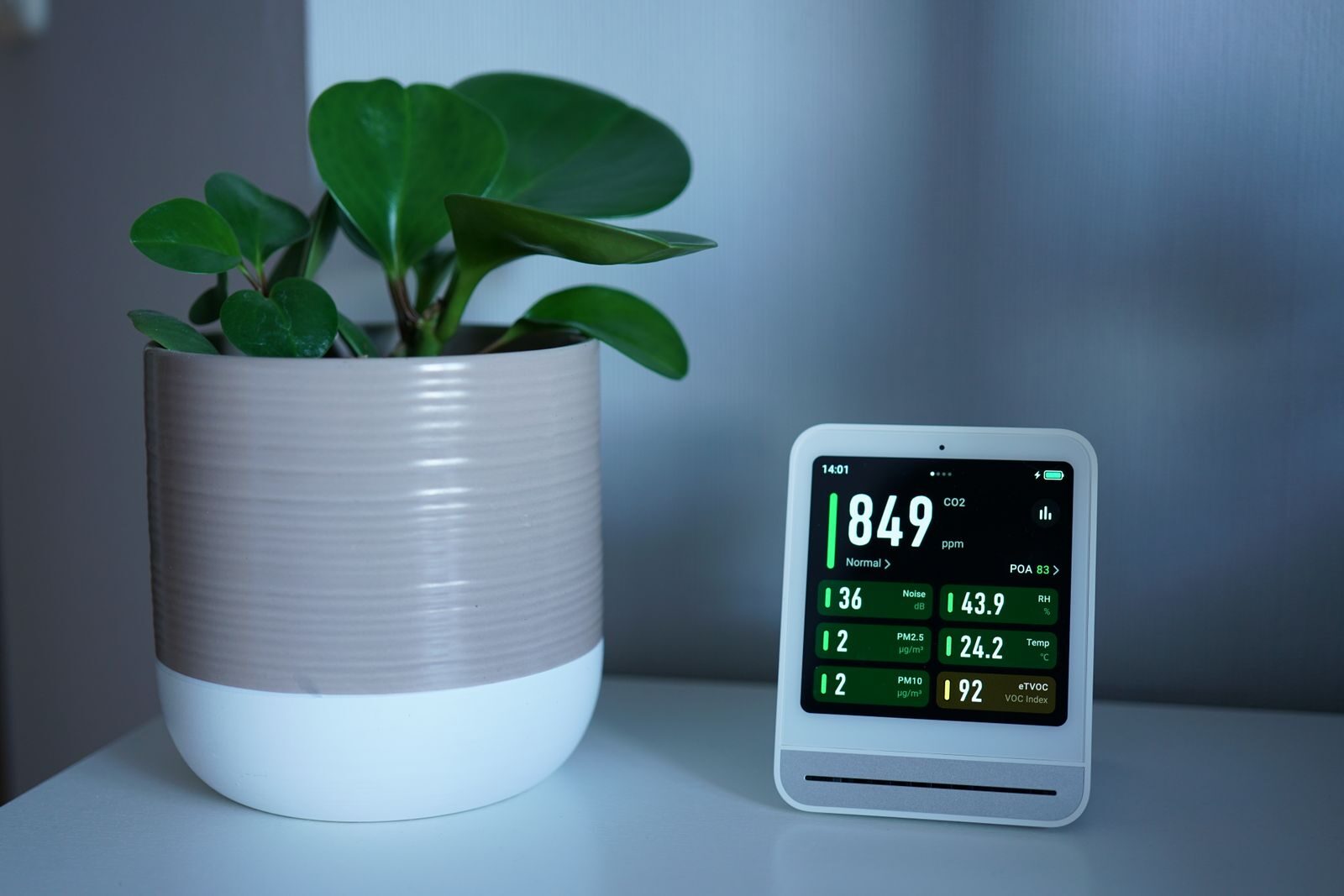
30% to 50%. Safe zone. This is where most healthy homes sit. Mould growth is unlikely. Condensation is rare. This is the target range.
50% to 60%. Caution zone. Mould risk is starting to climb. Condensation may appear on windows on cold mornings. Action is worth considering.
Above 60%. High risk zone. Mould can grow actively. Condensation appears regularly. You should act now to lower humidity.
Important Limitations
This is an estimation tool, not a mould assessment. A humidity reading alone does not diagnose mould or predict it with certainty.
This calculator measures relative humidity only. It does not measure temperature, air movement, or surface materials. Mould can grow even at lower humidity if conditions are right on one cold surface.
This is not a medical tool. If you have symptoms like respiratory issues, allergies, or other health concerns, see a doctor. Do not use this calculator as a substitute for professional medical advice or mould inspection.
Different mould types grow at different humidity levels. Some moulds grow below 50% humidity. Others need higher levels. This calculator uses general thresholds, not specific mould species.
This tool does not account for temperature. Cold surfaces can develop mould at lower humidity if moisture condenses on them. Insulation, ventilation, and home design all affect where moisture settles.
Location matters. Bathrooms, kitchens, and basements naturally have higher humidity than other rooms. A single whole-house reading may not reflect problem areas.
What this calculator does NOT do:
✗ Detect existing mould (you need a professional inspection)
✗ Diagnose health problems related to mould
✗ Account for mould in walls or hidden spaces
✗ Replace professional mould testing or environmental assessment
If you suspect mould in your home or have health concerns, contact a professional mould inspector or your doctor.
Scientific Basis
This calculator uses:
EPA Moisture Control Guidelines. The US Environmental Protection Agency recommends keeping indoor humidity between 30% and 50% to prevent mould and dust mite growth.
Read EPA moisture control guidance →
ASHRAE Standard 160. American Society of Heating, Refrigerating and Air-Conditioning Engineers provides criteria for moisture control in building design. It defines humidity ranges by climate zone.
Learn more about ASHRAE standards →
WHO Guidelines on Indoor Air Quality. The World Health Organization provides evidence on moisture and mould health risks.
Read WHO indoor air quality guidance →
Related Reading
These posts go deeper into mould, moisture, and indoor air quality:
How Long to Run a Bathroom Extractor Fan. Reducing moisture where it starts.
Do PIV Units Work for Condensation and Damp. Ventilation solutions for whole-house moisture.
Do Indoor Plants Really Clean the Air. Another part of the humidity and air quality picture.
Natural Ventilation Solutions. Improving air movement to control moisture.