









Search for a fix for condensation or damp and you’ll trip over PIV units within about thirty seconds, along with some very confident promises.
Cure your damp. Banish mould. Transform your home.
So let me give you the version without the sales pitch.
Do PIV units work?
Yes, but only in the right house, and only once you know what they do. That second half is where nearly everyone gets it wrong, so let me clear it up.
PIV stands for positive input ventilation.
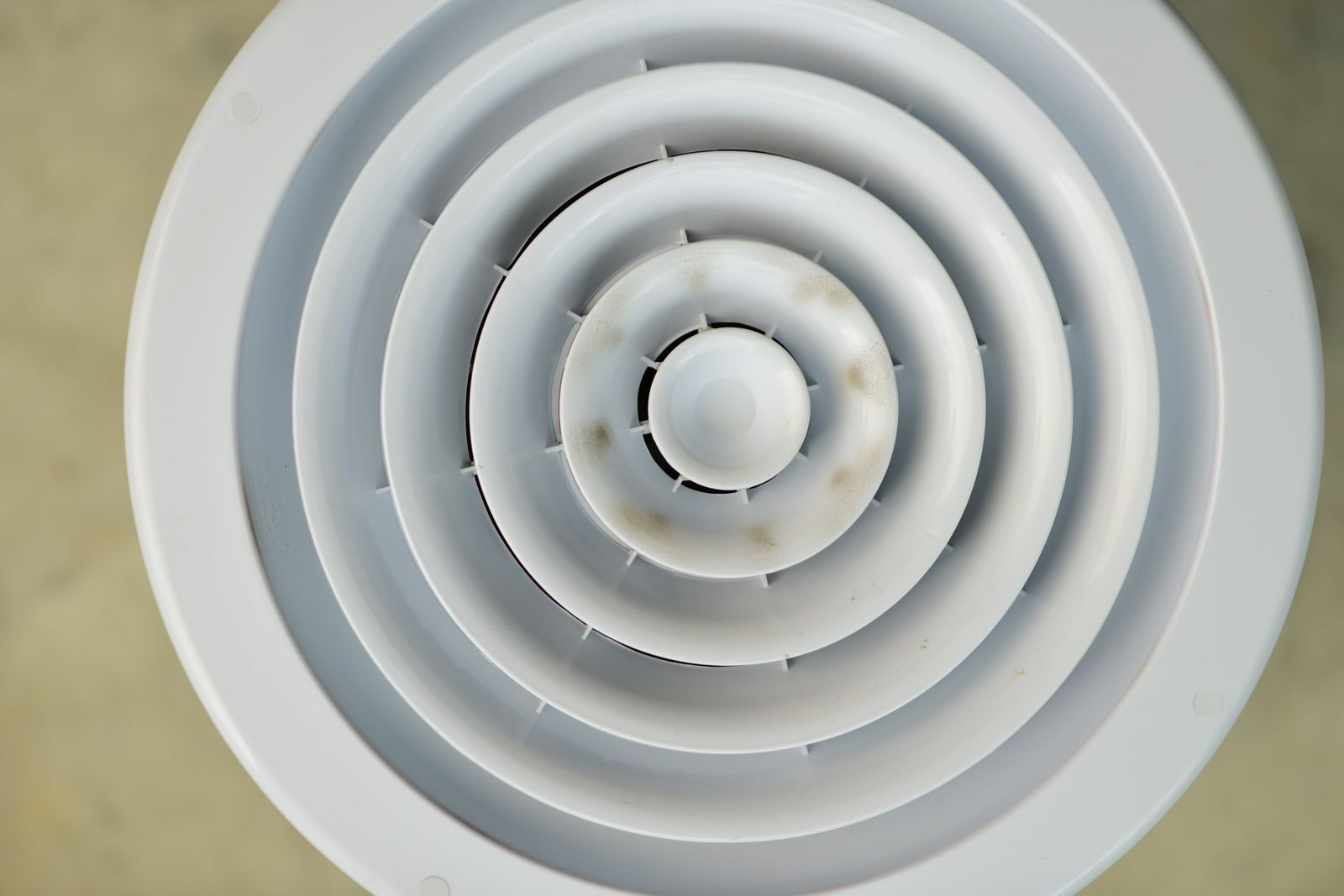
The unit usually sits in your loft, quietly drawing in outside air, filtering it, and pushing it gently into the house through a vent, normally on the landing. That steady trickle of fresh air raises the pressure inside your home just a little, and that slight pressure pushes the stale, damp air out through the small gaps every house has.
The first time I came across the idea, my instinct was that pushing air in to get damp out sounds backwards. But part of my training was a course on how gases and water vapour move through the air, between a surface and the air above it.
It was about the outdoors, not houses, but the science is the same one that decides whether a PIV unit does anything useful. Air moves from higher pressure to lower, and water vapour travels along with it, spreading out from where there’s more of it toward where there’s less.
So when a PIV unit lifts the pressure indoors even slightly above the pressure outside, the damp air has nowhere to go but out. It leaves through the gaps around doors, windows, and vents, and takes its moisture with it.
And that’s also why a PIV unit only works in a home that’s reasonably sealed. In a draughty house the pressure never builds, the air just leaves through the nearest gap, and the unit ends up ventilating your loft insulation instead of your bedroom.
Here’s the point I most want you to hold on to, because it’s the one the adverts skip past.
A PIV unit does not remove moisture. It dilutes it and moves it out. That’s a completely different job from a bathroom extractor fan, which grabs wet air at the source and throws it straight outside. PIV works across the whole house by mixing the damp air with drier air until the overall moisture level drops.
Even the trade sources are clear on this once you read past the headline: as one independent building-industry reference puts it, the system supplies fresh air, creates positive pressure, and drives moist air out through the building fabric.
Once that clicks, everything else about PIV, what it’s good at and where it lets people down, makes sense.
Do PIV units work for condensation and damp?
For the most common kind of damp, yes, they can help, and here’s the bit that surprises people. A lot of household damp isn’t a leak at all. It’s you. Cooking, showering, drying laundry on the radiator, even just breathing overnight, all of it puts moisture into the air. That warm, wet air drifts to your cold windows and walls and turns to water. Do it day after day in a house that can’t clear the moisture, and mould settles in.
I also studied indoor microbes and how we’re exposed to them, and that’s what shapes how I read the mould claim. Mould is not demanding. It doesn’t need a flood, just a surface that stays damp long enough and a bit of time. So anything that keeps the whole-house humidity down, and stops moisture settling on cold surfaces, quietly removes the conditions mould needs to get going. A PIV unit does that by constantly swapping damp indoor air for drier outside air. Lower the humidity everywhere, and condensation gets far fewer chances to form in the first place.
But, and this is the real catch, that only holds when two things are true. First, the outside air has to be drier than your indoor air, which in a heated UK home over the colder months it usually is. Second, and this is the big one, your damp has to be condensation in the first place. UK government guidance on damp and mould separates condensation damp, which comes from indoor moisture settling on cold surfaces, from penetrating and rising damp, which come from leaks and the ground.
If your damp is a leaking pipe, a broken gutter, or moisture rising up from the ground, a PIV unit won’t help, because no amount of air swapping dries out a source that keeps topping itself up. This is the line the adverts skip: PIV treats condensation, not plumbing faults or structural damp.
And one more limit worth being upfront about. PIV lowers the moisture across your whole house, but it won’t do much for one very wet room, the classic being a bathroom with no fan and the door kept firmly shut. That room still needs its own extractor pulling the moisture out at the source. PIV and a good bathroom fan aren’t rivals, they solve different parts of the problem.
Will a PIV unit make your house cold?
This is the worry I hear most, and it’s a fair one. The plain answer is: a bit, sometimes, and it comes down to your loft.
Think about where the air comes from. A standard PIV unit pushes in whatever air is sitting in your loft. In summer that loft air is warm, sometimes very warm. In winter, if your loft is cold and poorly insulated, the unit is feeding that cooler air into your home, and yes, you might notice a slight chill on the landing. It’s not freezing air, but it’s real, and I’d rather you heard it from me than felt it in January and wondered if you’d wasted your money.
Manufacturers have a fix: heated PIV units, with a small built-in heater that warms the incoming air. That does solve the chill. It also quietly undoes one of the main selling points, the low running cost, because now you’re paying to heat outside air on its way in. So here’s my take. If your loft is reasonably insulated, a standard unit is usually fine and the cooling effect is small.
If your loft runs cold, you’re choosing between a slight chill and a bigger energy bill. Neither is a disaster, but you want to make that choice on purpose, before you buy, not discover it afterwards.
What do PIV units cost?
Two costs to keep separate here, because people muddle them and then get a shock: what you pay to buy it, and what you pay to run it.
On buying, PIV sits in the middle. It’s dearer than a simple extractor fan but cheaper than a full heat-recovery system, and because it needs a trained installer rather than a DIY afternoon, the fitting adds to the cost too. Not pocket money, but not frightening either.
On running, the fan itself uses very little power. A basic PIV unit runs on a low-energy motor and costs only a few pence a day, which is a big part of the appeal. The exception, and you can probably guess by now, is the heated model. The heater is the part that costs, so if you go heated to deal with a cold loft, expect the running cost to climb well past that few-pence-a-day figure. When someone quotes you a running cost, the first question to ask is: heated, or not? That one word changes the answer.
Set all that against what damp costs when you let it run, redecorating, treating walls, replacing ruined belongings, and a PIV unit starts to look cheap, as long as, and I can’t stress this enough, you’ve correctly worked out that condensation is your problem. Buying one to fix damp that’s really a leaking gutter is just an expensive way to leave the gutter unfixed.
Is a PIV unit right for your house?
Here’s how I’d sum it up. A PIV unit is a good fit if your damp is condensation, your home is reasonably airtight so the pressure can actually build, you’ve got a suitable loft for it, and your wet rooms sit off a central hallway where the fresh air can reach them.
It’s a poor fit, or not enough on its own, if your damp comes from a leak or from the ground, if you live in a flat or bungalow with no usable loft (though wall-mounted versions exist for exactly this), or if your real problem is one unventilated wet room that just needs its own extractor fan.
So when someone asks me “do PIV units work,” I don’t give them a clean yes or no, because the true answer won’t fit in one word. The way it works is real, and it helps with condensation damp in the right home. But it’s not a cure-all, and it won’t fix every kind of damp. Match it to the right problem in the right house and it does exactly what it promises.
Aim it at the wrong problem and you’ll feel let down, through no fault of the unit. The trick is knowing which situation you’re in before you spend a penny.
Summary
A PIV unit, or positive input ventilation, sits in your loft and gently pushes filtered outside air into your home, raising the pressure slightly so damp air is pushed out through the gaps.
The key thing to understand is that it dilutes and displaces moisture rather than removing it at source. That makes it a real help for condensation damp, because it keeps whole-house humidity down and stops moisture settling on cold surfaces where mould grows.
It won’t fix damp from leaks or rising ground moisture, and it won’t replace a bathroom extractor fan for a single very wet room. The main trade-off is temperature: a standard unit can feel slightly cool in winter if your loft is cold, and a heated unit fixes that but costs more to run. Matched to condensation damp in a suitable house, a PIV unit works. Matched to the wrong problem, it doesn’t.
PIV Units: Your Questions, Answered
Do PIV units work for condensation?
Yes, for condensation damp they can work well. By constantly replacing humid indoor air with drier outside air, a PIV unit lowers the overall humidity so moisture is less likely to settle on cold windows and walls. It works best when the outside air is drier than your indoor air, which in a heated home over winter it usually is.
Will a PIV unit stop mould?
It can, if the mould is being fed by condensation. Mould needs surfaces that stay damp, so lowering the humidity across the house removes the conditions it needs. It won’t stop mould that’s caused by a leak or rising damp, because that moisture keeps being replaced at the source.
Do PIV units make your house cold?
Sometimes, slightly. A standard unit pushes in loft air, which can be cool in winter if your loft is poorly insulated. The effect is usually small rather than a cold draught. Heated models warm the incoming air, but they cost more to run.
Do PIV units use much electricity?
A basic unit runs on a low-energy fan and costs only a few pence a day. A heated unit is the exception, since the built-in heater pushes running costs up noticeably. If low running cost is your priority, the standard unit is the cheap one.
Do PIV units work in a flat or bungalow?
A standard PIV unit needs a suitable loft, so it isn’t ideal for many flats or some bungalows. Wall-mounted versions exist for homes without loft space, so it’s worth checking which type suits your property before buying.
Is a PIV unit better than a dehumidifier?
They work in different ways. A dehumidifier pulls moisture out of the air in one room and collects it as water. A PIV unit doesn’t collect anything; it lowers humidity across the whole house by swapping damp air for drier outside air. For whole-home condensation, PIV can be a tidier long-term fix because it treats every room at once. For one problem room, a dehumidifier may be simpler and cheaper to start with. Which suits you comes down to whether you’re dealing with one room or the whole house.