




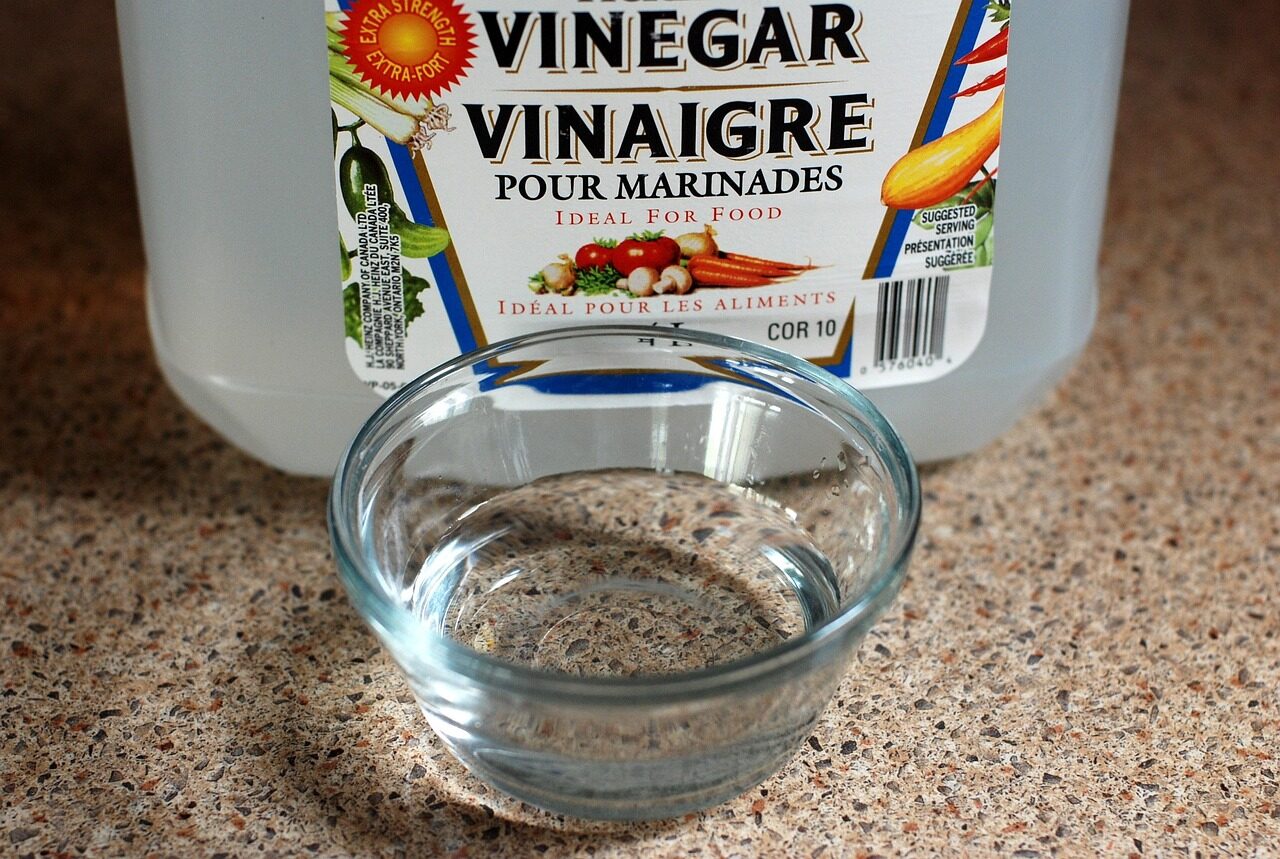
Vinegar has a reputation as a natural disinfectant.
A spray bottle of diluted white vinegar is meant to wipe out germs on your counters, your chopping board, your bathroom, all without a single manufactured chemical.
It is one of the most repeated claims in natural cleaning, and it is one I get asked about a lot.
So does vinegar disinfect?
The short answer is that it kills some things, struggles with others, and does not meet the standard that the word disinfectant is supposed to carry. I want to walk you through what the evidence shows, because the gap between “has some antimicrobial action” and “is a disinfectant” is exactly where people get misled.
Let me tell you how I come at this.
Part of my postgraduate training was a course in the quality control of chemical and environmental measurements, which sounds dry until you realise what it teaches you to do. It teaches you to stop reading the front of the bottle and start asking what was measured, under what conditions, and against what standard.
Once that becomes a habit, you cannot switch it off. So when someone hands me a claim like “vinegar disinfects,” I do not ask whether it sounds plausible. I ask who tested it, at what concentration, for how long, and against which organisms.
Vinegar is a lovely example of how differently a claim reads once you ask those questions. I use white vinegar in my own home and I rate it, but I treat it as what it is, a weak acid that is good at certain jobs, not a germ-killing cure-all.
What vinegar is and how it kills microbes
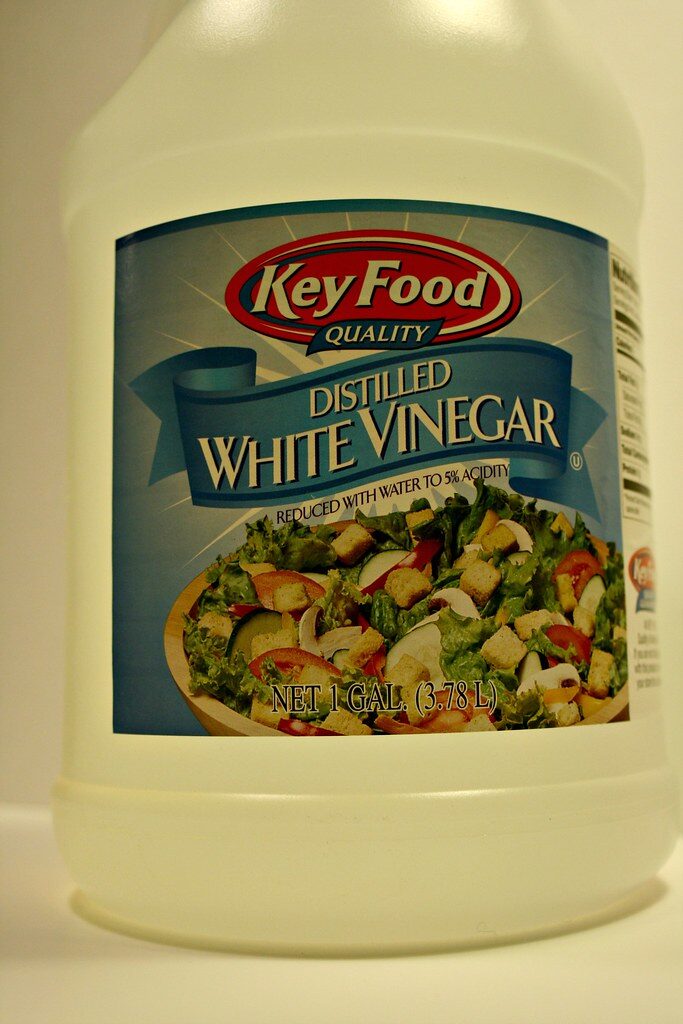
White vinegar is a dilute solution of acetic acid in water, usually around five percent. Acetic acid is a weak organic acid, and its antimicrobial action comes from that acidity. When acetic acid contacts a bacterial cell, it can cross the cell membrane and drop the internal pH of the cell. Most bacteria need their inside kept within a narrow pH range to function. Push it too acidic and their proteins and internal chemistry stop working, and the cell is damaged or killed.
That mechanism is real, and it is why vinegar has been used to preserve food and clean surfaces for thousands of years. The word I keep coming back to, though, is weak.
Acetic acid is a mild acid, and the version in your kitchen is mostly water. So the killing power depends heavily on two things: how concentrated the acid is, and how long it stays in contact with the microbe. This is where my other bit of training does the heavy lifting.
I studied ecotoxicology and risk assessment, and the first principle you learn there is that the dose makes the poison. Nothing is simply toxic or safe, effective or useless. It depends on the concentration and the length of exposure. I read every antimicrobial claim through that lens, and vinegar is a textbook case: the same liquid can kill or do almost nothing depending entirely on strength and contact time.
So does vinegar disinfect, or just clean?
This is where the word disinfect needs pinning down, because it is not a loose term, and my measurement training will not let me treat it as one.
A disinfectant, in the regulated sense, is a product that has been tested and shown to destroy or inactivate a defined set of bacteria, fungi, and viruses on surfaces to a specific standard.
In the United States these products are treated as registered antimicrobial pesticides, and the guidance from the Environmental Protection Agency is clear that a product cannot make a disinfection claim unless it has been reviewed against efficacy data and approved. That testing uses real soil loads, defined contact times, and target organisms. That is the standard sitting behind the word, and it is a high bar on purpose.
Vinegar has never been through that process. It carries no disinfectant registration, because no one has taken acetic acid through the standardised efficacy testing that the claim requires. I want to be careful here, because this is the point people misread. It does not mean vinegar does nothing. It means the evidence for reliable surface disinfection at kitchen concentrations has not been established to the standard the word implies. Those are two very different statements, and the whole confusion around vinegar lives in the gap between them.
There is a useful distinction underneath all this, and it is one I lean on constantly. Cleaning means reducing dirt and lowering the number of microbes on a surface, partly by physically wiping them away. Disinfecting means a guaranteed reduction of specific germs to a tested level. Vinegar can do the first. It does not reliably do the second.
What vinegar does kill, and what it misses
Now to the evidence itself, because this is the part I find genuinely interesting. There is a peer-reviewed study in the journal mBio that I come back to whenever this topic comes up, where researchers found that a six percent acetic acid solution killed the bacterium that causes tuberculosis after thirty minutes of exposure, and that more resistant related species needed a ten percent solution to be knocked down.
When I first read it, my reaction was not “see, vinegar works.” It was the opposite. Here is acetic acid killing one of the tougher, waxy-coated bacteria out there, and look at what it took to do it. Higher strength than anything in your cupboard, and half an hour of unbroken contact. That study is often quoted as proof vinegar disinfects. Read through a dose-response lens, it is almost proof of the opposite for everyday use.
Because look at what those numbers mean for your kitchen. Six to ten percent is stronger than standard white vinegar. Thirty minutes is a very long contact time. That is nothing like spraying a counter and wiping it after a few seconds. The concentration was higher and the exposure was far longer than any normal wipe-down delivers, and both of those are the exact variables my training tells me to watch.
And vinegar has clear blind spots I would not want you to miss. Its action against viruses is generally poor, and non-enveloped viruses such as norovirus, the classic cause of winter stomach bugs, are among the hardest to kill and are not reliably touched by vinegar at household strength. Some hardy bacteria found in damp spots, like the ones that colonise drains and sink edges, tolerate acid well. So the honest summary I give people is this: vinegar handles some bacteria if you give it real strength and real time, and misses several of the germs you most want gone.
The food-safety question, plainly
A lot of people reach for vinegar hoping to make raw-meat surfaces or salad leaves safe, and this is the one place I get firm, because getting it wrong carries a real cost. Rinsing produce with diluted vinegar can lower surface bacteria to some degree, and there is research showing acetic acid reduces microbial counts on vegetables. That is a reduction, not a guarantee, and the difference is not academic when it comes to what could make someone ill.
For anything involving raw chicken, raw meat, or a household bug like norovirus, please do not rely on vinegar to make a surface safe. It has not been shown to reach the level of kill those situations demand, and treating it as if it has is exactly where people get caught out.
For those jobs, a product tested and registered for the purpose, used as directed, is the right tool. Vinegar is not, and I would rather tell you that plainly than let a nice-sounding claim put someone at risk.
Where vinegar genuinely earns its place
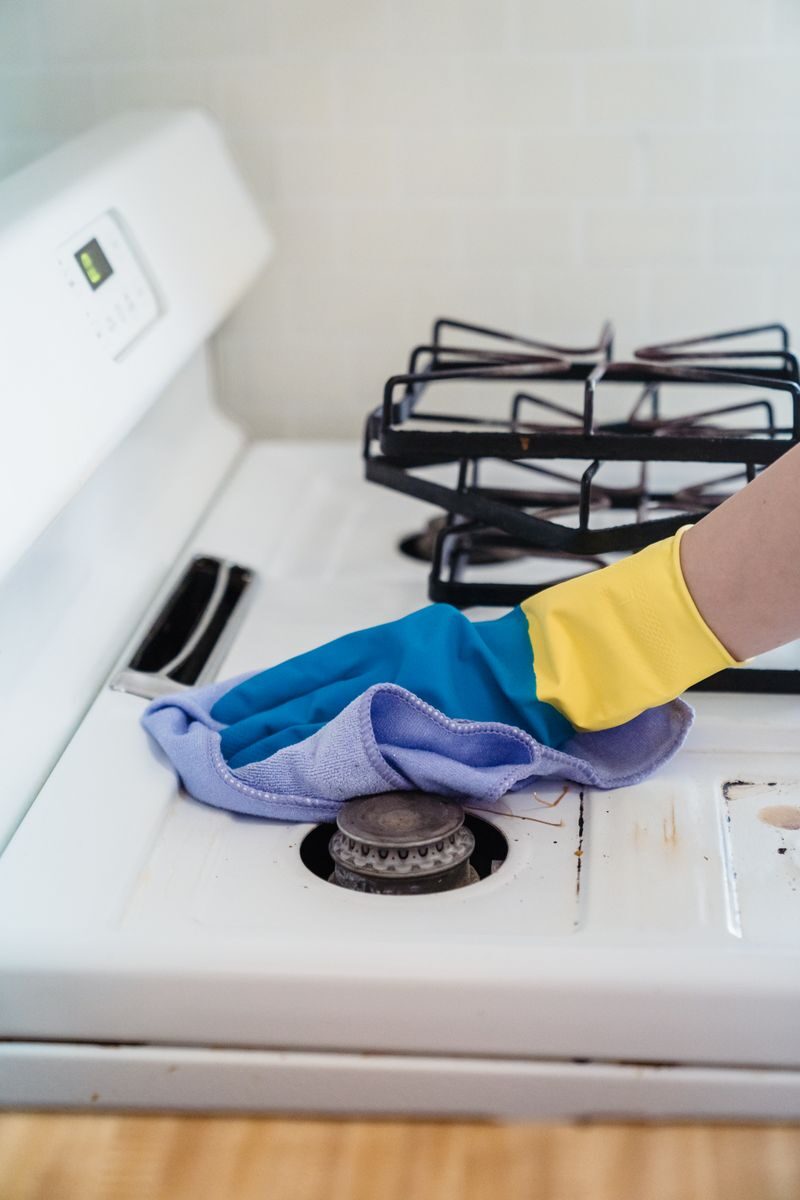
None of this makes vinegar useless, and I do not want you to come away thinking that. It makes it a cleaner rather than a disinfectant, and a good one for the right jobs. Its acidity dissolves alkaline mineral deposits, which is why it is excellent on limescale, hard-water marks, kettles, showerheads, and glass. For general surface cleaning, where the goal is a lower microbial load and a surface free of grime rather than a guaranteed germ kill, wiping with vinegar does a reasonable job, especially paired with the physical action of the cloth.
If you want to lean on its antimicrobial side, everything I have read points the same way: use it at full strength, not heavily diluted, and let it sit. Spraying undiluted white vinegar onto a surface and leaving it for several minutes before wiping gives the acid the concentration and the contact time it needs to do something. That is a world away from a quick misting and an immediate wipe, which is mostly just moving things around. That single change, strength plus time, is the practical takeaway from the whole dose-response picture.
That is the theme with vinegar. It is cheap, useful, and worth keeping under the sink. Just ask it to do the job it can do, which is cleaning and descaling, and reach for a tested disinfectant when the situation genuinely calls for one.
Summary
Vinegar is a dilute weak acid, and its antimicrobial action comes from acetic acid lowering the internal pH of microbial cells. That action is real but mild, and it depends heavily on concentration and contact time.
Vinegar is not a registered disinfectant and has not been through the standardised efficacy testing that the term requires. In laboratory conditions acetic acid can kill a range of bacteria, but usually at concentrations higher than kitchen vinegar and over contact times far longer than a normal wipe. It performs poorly against many viruses, including norovirus, and should not be relied on to make raw-meat surfaces safe.
Where it shines is as a cleaner and descaler, cutting limescale and lowering general grime and microbial load. Used at full strength with time to sit, it has some antimicrobial effect. For genuine disinfection, a tested and registered product is the honest choice.
Common questions
Does vinegar disinfect surfaces?
Not to the standard the word disinfect implies. Vinegar has genuine but mild antimicrobial action from acetic acid, and it is not a registered disinfectant tested to a defined efficacy standard. It works as a cleaner that lowers grime and some microbes, but it does not guarantee the germ reduction a tested disinfectant does.
What bacteria does vinegar kill?
In laboratory conditions acetic acid shows activity against a range of common bacteria, and stronger solutions given long contact times can even kill the tough bacterium behind tuberculosis. At kitchen strength and short wipe times the effect is much weaker, and several hardy bacteria found in damp areas tolerate acid well.
How long does vinegar need to sit to kill bacteria?
Longer than most people leave it. The evidence for meaningful kill involves contact times of many minutes, not the few seconds of a spray and wipe. If you want any antimicrobial effect, use vinegar at full strength and let it sit for several minutes before wiping.
Does vinegar kill viruses like norovirus or flu?
Poorly. Vinegar is generally weak against viruses, and non-enveloped viruses such as norovirus are among the hardest to kill and are not reliably affected by vinegar at household strength. For viral illnesses in the home, a product tested against those viruses is the reliable choice.
Can I use vinegar to disinfect raw meat or chopping boards?
No, not to make them safe. Vinegar can lower surface bacteria somewhat but has not been shown to reach the level of kill that raw meat contamination demands. For chopping boards after raw meat, use hot soapy water and a product registered as a disinfectant, used as directed.
Is white vinegar or apple cider vinegar better for killing bacteria?
The active ingredient is acetic acid in both, so what counts is the concentration, not the type. Standard white vinegar and apple cider vinegar are both around five percent, so neither has a real edge. So-called cleaning vinegar at six percent is a little stronger, but still not a registered disinfectant.