







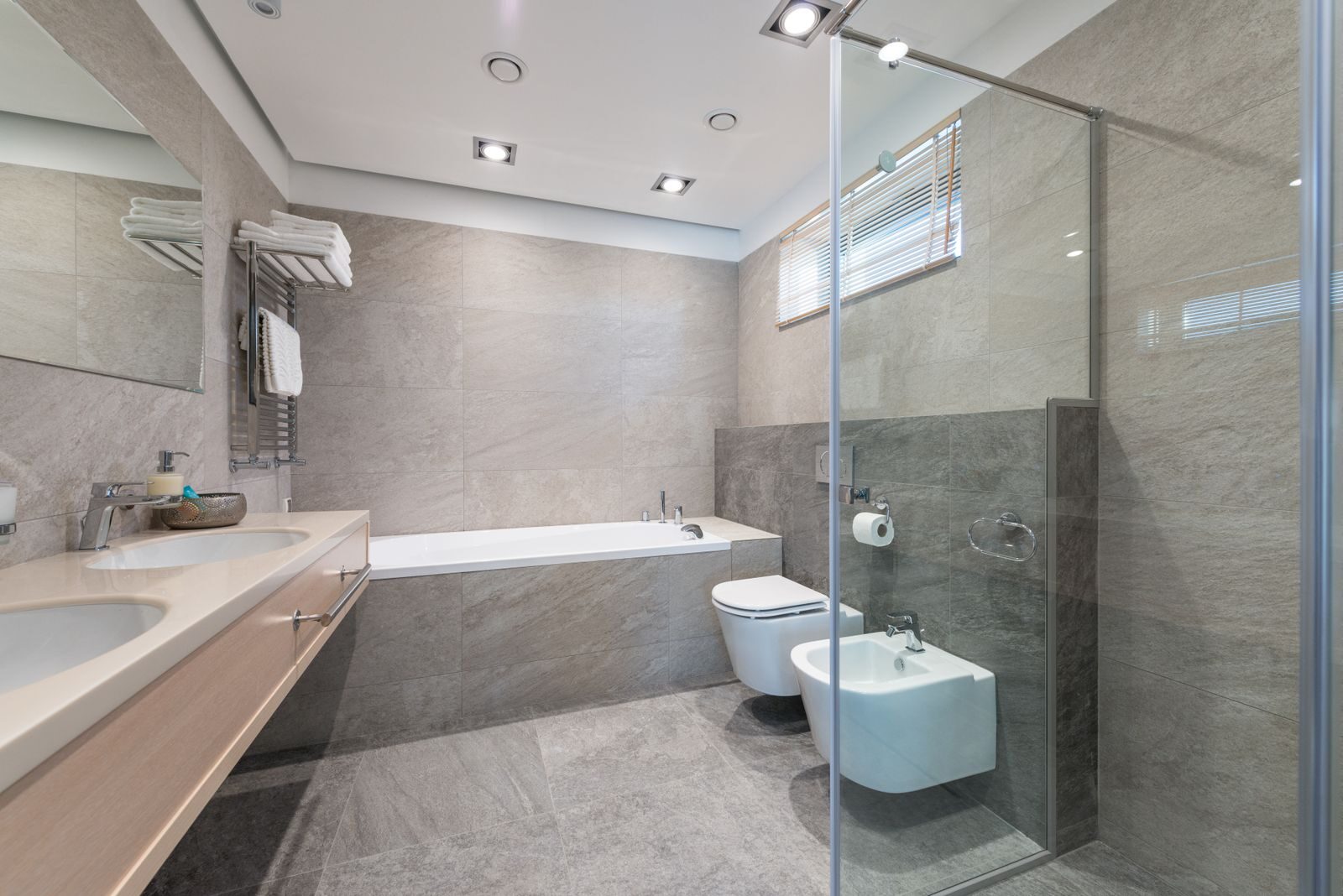
Why does the mould keep coming back in your bathroom, even though you run the fan every time?
Well, it’s probably not that you forgot the fan. It’s when you switch it off.
Most people flick it off the second they step out of the shower. That’s the mistake, and it’s an easy one to make. So let me tell you what’s going on in there, and then the “how long” answers itself.
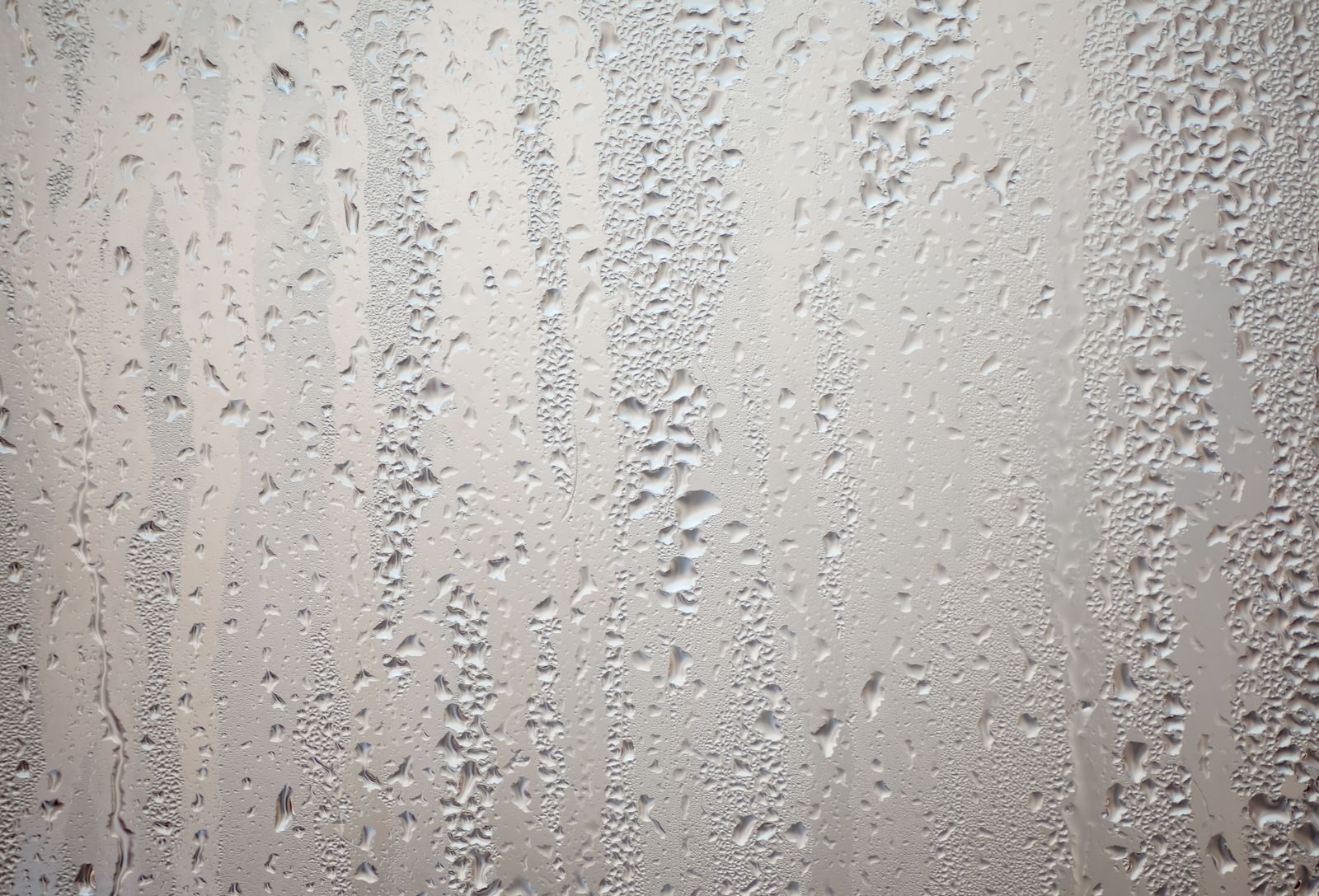
The steam doesn’t vanish when you turn the water off. It looks like it does, the mirror clears, the room feels normal again, but a lot of that damp is still hanging in the air. You can’t see it, and that’s the catch.
A big part of my training went into indoor microbes and what helps them grow inside a home, and the one lesson that stuck with me is this: mould needs less than people think. It doesn’t need a leak or standing water. It needs a surface that stays damp, and a bit of time.
Give it a wall or a tiled corner that never quite dries between showers, and that’s all it needs to start. So the moisture you can’t see, the bit that drifts onto your walls and soaks in after the mirror’s cleared, is exactly what feeds it week after week.
That reframed the whole question for me. It’s not “how do I clear the steam,” because the steam clears on its own. It’s “how do I stop a surface staying damp long enough for something to grow on it.”
That’s what the fan is really for, and it’s why the timing is the part that counts.
So how long do you really run it?
For a normal bathroom and a normal shower, leave it going a good fifteen to twenty minutes after you finish. That’s my baseline, and for a decent fan in an average room it clears most of the damp.
But don’t treat that as a hard rule. If you take long hot showers, if the room’s on the big side, or if the fan’s weak or the ducting’s long and full of bends, give it longer. Some building-science folks push this much further. According to the US Department of Energy’s Building America Solution Center, it’s worth leaving the fan running for a full hour after a shower for effective humidity control, set on a timer switch so it turns itself off.
Now, an hour sounds like a lot, and for plenty of UK bathrooms I think it is more than you need. But I like why they land on it, and it fits what I learned about moisture and mould. They’re not timing the steam, they’re timing how long a surface stays wet. An hour is them building in a big safety margin so the room is properly dry, not just clear-looking, before the fan stops. So I’d read that hour not as an order, but as a ceiling. If your bathroom really struggles to dry out, that’s the direction to move, and now you know the reasoning rather than just the number.
Here’s how I’d want you to think about it.
You’re not running the fan for a set number of minutes because the number is somehow correct. You’re running it until the room’s dry enough that mould can’t get a foothold. Small room, strong fan, you’re there fast. Big room, tired fan, it takes a while. The timer’s just standing in for the thing you really care about, which is a dry surface.
One more thing, because most guides skip it.
When the fan blows air out, air has to come in from somewhere to replace it, and that’s usually from outside. Most days that helps, because the outside air is drier than your steamy bathroom. But on a warm, muggy day, when it’s already damp out there, the fan does a bit less for the rest of the house, though it still clears the steam right where it’s made. I’m not saying don’t use it. I’m just saying it’s moving air, not doing anything clever, and that’s why the same fan feels better on a crisp day than a sticky one.
Turn it on during the shower, not just after
This is the one habit that helps most people, and hardly anyone does it. Don’t wait until you step out to switch the fan on. By then the damp’s already reached your cold surfaces and started settling.
Switch it on as you get in, so it’s pulling the moisture out while it’s still being made. It’s far easier to catch the damp while it’s up in the air than to dry a wall once the water’s sitting on it. And this ties back to that same point about surfaces: every minute a wall sits wet is a minute working against you, so the sooner you start, the less time anything has to take hold.
Start it early and the run-on afterwards has hardly anything left to do. Same fan, same minutes, better result, just from when you flicked it on.
What the UK rules say, and what they don’t
If you’ve wondered whether there’s an official number, there is, but it’s answering a different question than the one you’re asking. The UK Building Regulations set how much air a bathroom fan has to shift, not how long you personally run it. For a bathroom with a bath or shower, the rules set a minimum of 15 litres a second, which works out at 54 cubic metres an hour, for an intermittent fan. Most standard fans clear that comfortably, moving quite a bit more air than the minimum.
What I find interesting about that rule is what it quietly admits. It sets a rate, how fast the fan moves air, and stays almost silent on duration for most rooms. To me that lines up with the moisture side of things: a fan’s job is to shift damp air out faster than you’re making it, and once you’re doing that, the exact minute count depends on your room, not on a rule. The regulation is setting a floor for the equipment, not writing you a schedule.
There is a timing rule buried in there, but it’s narrow, and people quote it wrong all the time. For a room with no window you can open, the rules say the fan has to keep running at least fifteen minutes after you leave. That’s a minimum for windowless rooms, and it makes sense, those are the rooms that can’t fall back on an open window to finish the drying off.
It’s not the law for every bathroom. I’d rather tell you that plainly than have you thinking “fifteen minutes, that’s the rule,” because for most rooms it isn’t. If you’ve got a window you can open, you’ve got more room to play with, though everything about the damp still holds.
Timer or humidistat: which one’s for you?
Most fans clear moisture better when they’re not tied to the light switch, because a light-switch fan cuts out the second you turn the light off, usually way before the room’s dry. So you’ve got two better options.
A timer, or over-run timer, keeps the fan going for a set few minutes after the light goes off. Simple, predictable, and that’s why I like it. You know exactly how long it runs and you set it to suit your room. Most adjust from a couple of minutes up to about thirty, so you can dial in your fifteen to twenty and take it from there.
A humidistat senses the damp in the room and runs the fan until it drops, then stops on its own. On paper it’s the closest thing to what you want, because it’s reacting to real moisture instead of a clock, and that appeals to me, it’s measuring the thing that actually feeds mould rather than guessing at it. It’s great for a busy family bathroom or an en-suite you’d otherwise forget about.
The catch is, it can be over-sensitive. It’ll sometimes kick in on a damp day or run longer than you expected, so it wants setting up with a bit of thought.
If your bathroom gets hammered, a combined timer-and-humidistat fan gives you both, the sensor to react and the timer as a backstop. For a simpler setup, a good timer fan running during and after the shower does you fine.
Do bathroom extractor fans use much electricity?
This is the worry that makes people switch the fan off too early, so let me put it to bed. They barely sip electricity, using only a small fraction of what an old-style light bulb draws. Even a low-power trickle fan left running all the time costs you only a pound or two a year.
Now weigh that against what leftover damp brings: condensation, peeling paint, and mould that’s grim and pricey to shift. Running the fan an extra ten or fifteen minutes is one of the cheapest things you’ll do in the house all week. And leaving it on overnight after a really steamy session is perfectly safe, even if it’s usually more than you need.
So, how long should you run it?
Flick it on as you get in the shower. Leave it going fifteen to twenty minutes after you’re done in a normal room. If the mirror or walls are still wet after that, the room’s telling you it needs longer, so stretch the run-on out or head toward the half-hour mark, and have a think about whether the fan’s big enough for the space.
The number on the timer was never the point. A dry surface is. The timer’s just how you get there without having to think about it every day.
Summary
Your bathroom fan pulls the warm, damp air from your shower outside before it can settle on cool surfaces as condensation. The steam clears fast, but the moisture you can’t see hangs around in air that looks dry, and that’s what feeds mould if you switch off too soon.
Mould doesn’t need a puddle, only a surface that stays damp, so the timing is really about not letting a wall stay wet. Run the fan during the shower and for fifteen to twenty minutes after in a normal bathroom, longer if the room’s big, the fan’s weak, or the damp keeps coming back.
UK rules set how much air the fan must shift, 15 litres a second for a bath or shower room, but leave the minutes up to you except in windowless rooms. A timer gives you predictability, a humidistat reacts to the damp itself, and both cost next to nothing to run. The real target isn’t a number on a clock. It’s a dry surface.
Your Bathroom Fan Questions, Answered
How long do I run a bathroom extractor fan after a shower?
A good fifteen to twenty minutes after you finish, for a normal bathroom. Give it longer if the room’s big, the shower was long and hot, or you can still see condensation. And if you switch it on during the shower rather than after, the run-on needs less time.
How long should a bathroom extractor fan run for if I keep getting condensation?
Longer than the usual fifteen to twenty. Condensation that keeps coming back means the room isn’t drying out before the fan stops, so stretch the run-on toward thirty minutes or more, and check the fan’s strong enough for the room size and the length of the ducting.
Is it safe to leave a bathroom fan on overnight?
Yes, it’s safe, and it costs almost nothing. For most bathrooms it’s more than you need, but after a really steamy session, or in a room that’s prone to damp, running it longer or overnight now and then is a sensible call.
Do bathroom extractor fans use much electricity?
No. They draw very little power, far less than an old-style light bulb. Even a low-power trickle fan left on all the time costs a pound or two a year, which is nothing against the cost of damp and mould.
Should the fan run during the shower or only after?
Both, and starting it during the shower makes the bigger difference. Running it while you shower catches the moisture as it’s made, before it settles. The run-on afterwards clears what’s left. Wait until after you’re done and you’ve let the damp land first.
Is fifteen minutes a legal requirement in the UK?
Not as a blanket rule. The Building Regulations set how much air the fan has to shift, 15 litres a second for a bathroom. The fifteen-minute run-on is only required for rooms with no window you can open. For every other bathroom, it’s guidance, not law.