




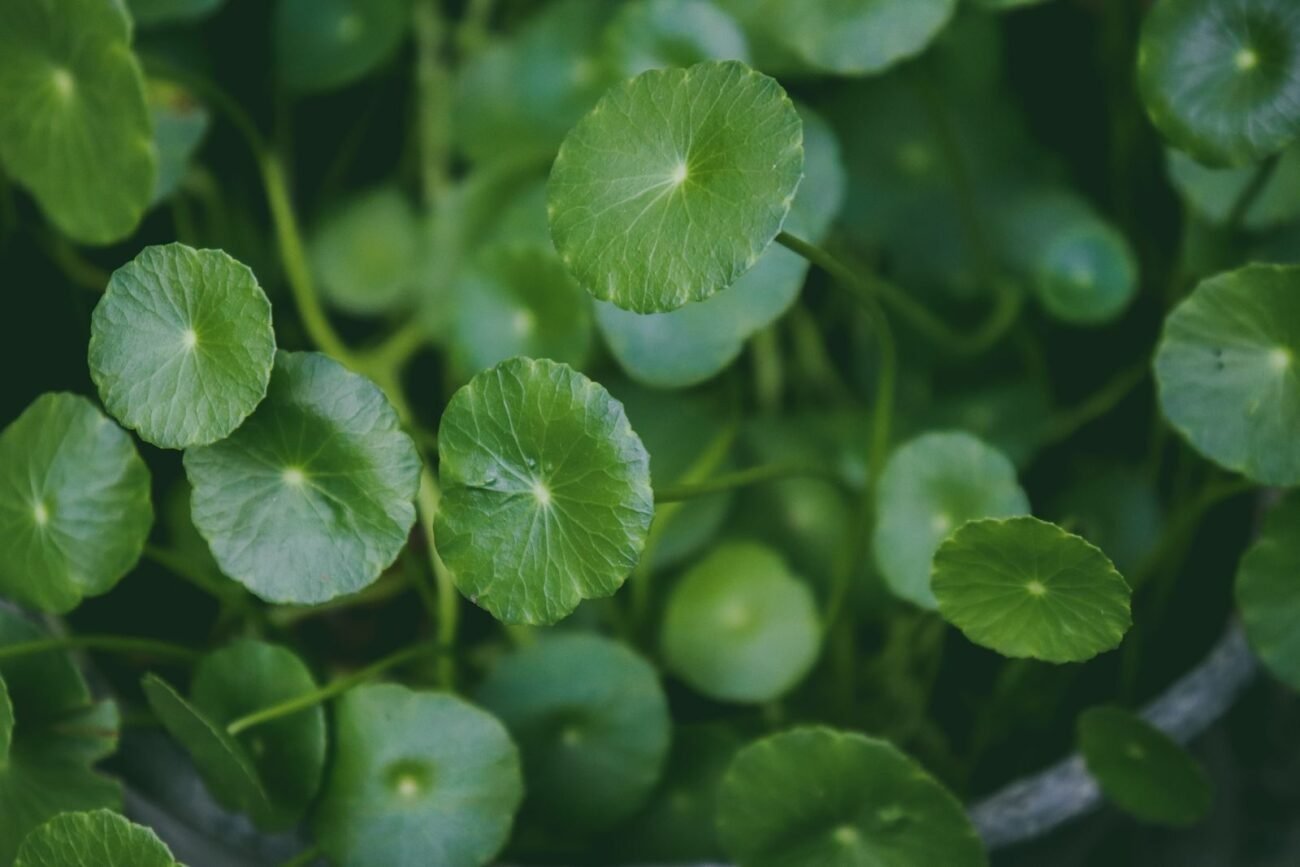
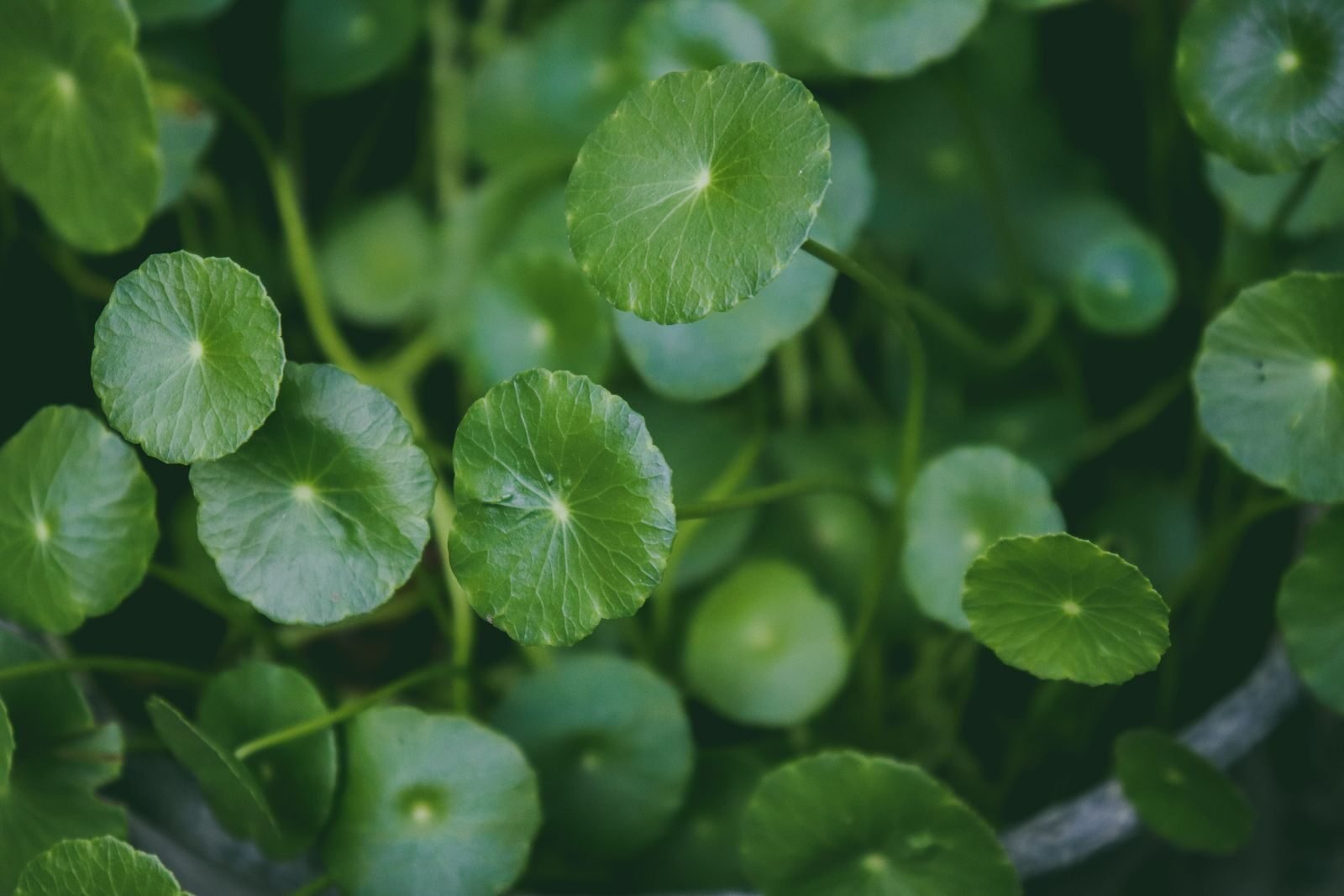
I knew this plant before it had a marketing name.
As an undergraduate studying botany, I saw Centella asiatica growing wild all the time, low to the ground, spreading over disturbed soil, even right up against building foundations. It’s the kind of plant you’d walk straight past.
So watching it become “Cica,” the star of an entire skincare category, is a strange thing to see happen. I know it as a tough little groundcover with a genuinely interesting chemical makeup. Most people know it as a green jar on a shelf.
I want to walk you through what’s actually in that jar, because the chemistry is real and specific, and it’s a lot more precise than “soothing” and “hydrating” makes it sound.
The compounds, and why I already know this chemistry
Centella’s real actives are four related compounds: asiaticoside, madecassoside, asiatic acid, and madecassic acid. All four are triterpenoids.
I already went through this exact class of compound when I covered silver birch extract, since betulin and betulinic acid are triterpenoids too. Different plant, same family, same basic shape, a tight, ring-based carbon structure plants build for defense and structure.
Spotting the same compound class turn up in a totally different plant is one of the things that actually makes studying plant chemistry worth it. It’s not four random ingredient names on a label. It’s one family showing up twice.
But Centella’s triterpenoids come in two forms, and the split between them matters more than most articles let on.
Glycoside or aglycone: the difference that actually decides what happens
Asiaticoside and madecassoside are glycosides, the triterpenoid with a sugar chain stuck onto it. Asiatic acid and madecassic acid are the aglycones, basically the same structure with that sugar chain taken off.
A study tested all four compounds side by side on real human skin cells, same cells, same conditions (Wu & Bian et al., 2012). The two glycosides pushed up collagen production and switched on TGF-β/Smad signaling, the pathway that tells skin cells to build more collagen. The two aglycones did neither. Same basic structure, one version worked, the other didn’t. Madecassoside beat asiaticoside in the same test too.
That’s the kind of detail almost nothing online tells you, because most content just lists all four names together like they do the same thing. They don’t. That sugar chain isn’t decoration, it’s part of what lets the cell recognize the molecule in the first place.
The concentration question, again
The same lesson from aloe vera applies here. Centella extract can sit anywhere on an ingredient list, and where it sits tells you more than the front of the bottle does.
The actual triterpenoid content in raw Centella extract moves around a lot too, published figures put asiaticoside at roughly 0.5 to 3.7 percent and madecassoside at 0.29 to 6.09 percent of the extract itself, before that extract even gets diluted into a finished product. So “Centella extract” on a label isn’t one fixed dose. It’s a starting material with its own wide range, then cut down further depending on where it lands on the ingredient list.
What the “exosome” claims are actually about
Some Centella products have started advertising exosomes, framed as tiny messengers that carry repair signals straight to your cells. I want to treat this fairly rather than wave it away, because there’s real research behind the idea.
Extracellular vesicles, the actual term for what’s being sold as exosomes, are a genuine, active area of plant research right now. There is a registered clinical trial studying a Centella extracellular vesicle formulation over 28 days, using a purified, specific version of the ingredient. That’s real, current science.
What it isn’t, is a settled fact about what’s in a general Centella serum on a shelf. One early trial using a purified, isolated formulation is a very different thing from a marketing word on a mainstream product. That gap, between real research happening and proven to work in the bottle you’re holding, is exactly the thing worth noticing before you pay extra for the word exosome on a label.
Is Centella better than retinol
This comparison comes up constantly in search, and it doesn’t really hold up once you look at how each one works.
Retinol binds to specific receptors inside skin cells that control gene activity tied to cell turnover and collagen production, a well established, strong pathway with decades of clinical evidence behind it. Centella’s glycosides work through a completely different route, the TGF-β/Smad pathway I just went through, mostly documented for wound healing and collagen support rather than cell turnover.
They’re not doing the same job. Asking which is better is a bit like asking which tool is better out of two tools built for different tasks. Some people use Centella alongside retinol on purpose, since Centella’s calming effect can help with the irritation retinol sometimes causes. That’s a real, sensible pairing, not one replacing the other.
What to look for next time
Centella asiatica has real, specific chemistry behind it, more precise than “soothing and hydrating” makes it sound. The glycosides, asiaticoside and madecassoside, are doing the collagen work. The aglycones are chemically close but don’t appear to do the same job in skin cells.
Check where Centella sits on the ingredient list, same rule that applies to every plant extract. Stay curious but not gullible about exosome claims, the research is real, the leap to your specific jar usually isn’t proven yet. And skip the “better than retinol” question entirely, they’re not solving the same problem.
FAQs
What does Centella asiatica actually do for skin?
Its two active glycosides, asiaticoside and madecassoside, have been shown to boost collagen production in skin cells by switching on a specific cell signaling pathway. This supports wound healing, skin barrier repair, and calming irritation. Its other two compounds, the aglycones, don’t appear to do the same in the same tests.
Is Centella asiatica the same as Cica?
Yes. Cica is marketing shorthand for Centella asiatica, also called gotu kola, tiger grass, or Indian pennywort. All the same plant, all the same set of active compounds.
What is the difference between asiaticoside and asiatic acid?
Asiaticoside is a glycoside, the compound with a sugar chain attached. Asiatic acid is the aglycone, the same core structure without the sugar chain. In direct testing on skin cells, the glycoside form drove collagen production and the aglycone did not.
Is Centella asiatica better than retinol?
Not really a fair question, since they work through completely different routes. Retinol affects genes tied to cell turnover, with strong clinical backing. Centella’s active compounds support collagen and calm inflammation through a separate pathway. Plenty of people use both together rather than picking one.
Do Centella asiatica products really contain exosomes?
Extracellular vesicles from Centella are a real, active area of research, with at least one registered clinical trial underway. But that research uses purified, specific formulations, which is different from a general claim on a mainstream product. The word on the label doesn’t tell you the concentration or form you’re actually getting.