










The word natural on a skincare product means nothing legally. Nothing at all.
There is no regulatory definition of natural in cosmetics in most countries. No minimum percentage of plant derived ingredients required. No restriction on what else can be in the formula alongside that rosehip extract on the front of the bottle.
I want to show you how to read a skincare ingredient list the way a plant biochemist would. Because once you know what to look for the gap between the marketing and the formula becomes very clear very quickly.
What Greenwashing in Skincare Looks Like
Greenwashing in natural skincare takes several forms and some are more obvious than others.
The most obvious is putting a plant name on the front of the packaging when that ingredient appears at the very bottom of the ingredient list. Ingredient lists are written in descending order of concentration. An ingredient at position 15 out of 16 is present at less than one percent of the formula. Often significantly less. The plant extract is there for the label not for your skin.
A less obvious form is using natural sounding names for synthetic ingredients. Sodium lauryl sulfate derived from coconut oil is still sodium lauryl sulfate. The coconut origin does not change the chemistry of the compound you are applying to your skin. Some brands use this framing extensively.
Then there is the natural fragrance claim. Fragrance listed as natural on a label can still mean dozens of undisclosed volatile compounds derived from plant sources. Natural fragrance is not the same as no fragrance or low fragrance. For people with sensitive skin the natural origin of a fragrance compound does not reduce its irritation potential.
How Ingredient Lists Are Structured
Understanding the structure of an ingredient list is the foundation of reading it properly.
Ingredients are listed in descending order of concentration down to one percent. Below one percent ingredients can be listed in any order. That means everything from position where the one percent threshold sits downward could be present at any concentration from just under one percent to a fraction of a fraction of a percent.
Water is almost always first. It makes up the largest proportion of most skincare formulations. Emollients and emulsifiers typically follow. Active ingredients that appear after the halfway point of a long list are very likely present at or below one percent.
Here is something that changed how I read formulas. When you understand the concentration thresholds at which specific plant compounds actually produce effects in skin tissue the ingredient list tells a completely different story. Vitamin C as ascorbic acid needs to be present at around ten to twenty percent to produce documented brightening effects. Finding it near the bottom of an ingredient list tells you immediately that the concentration is not meaningful for that purpose regardless of how prominently it is featured on the packaging.
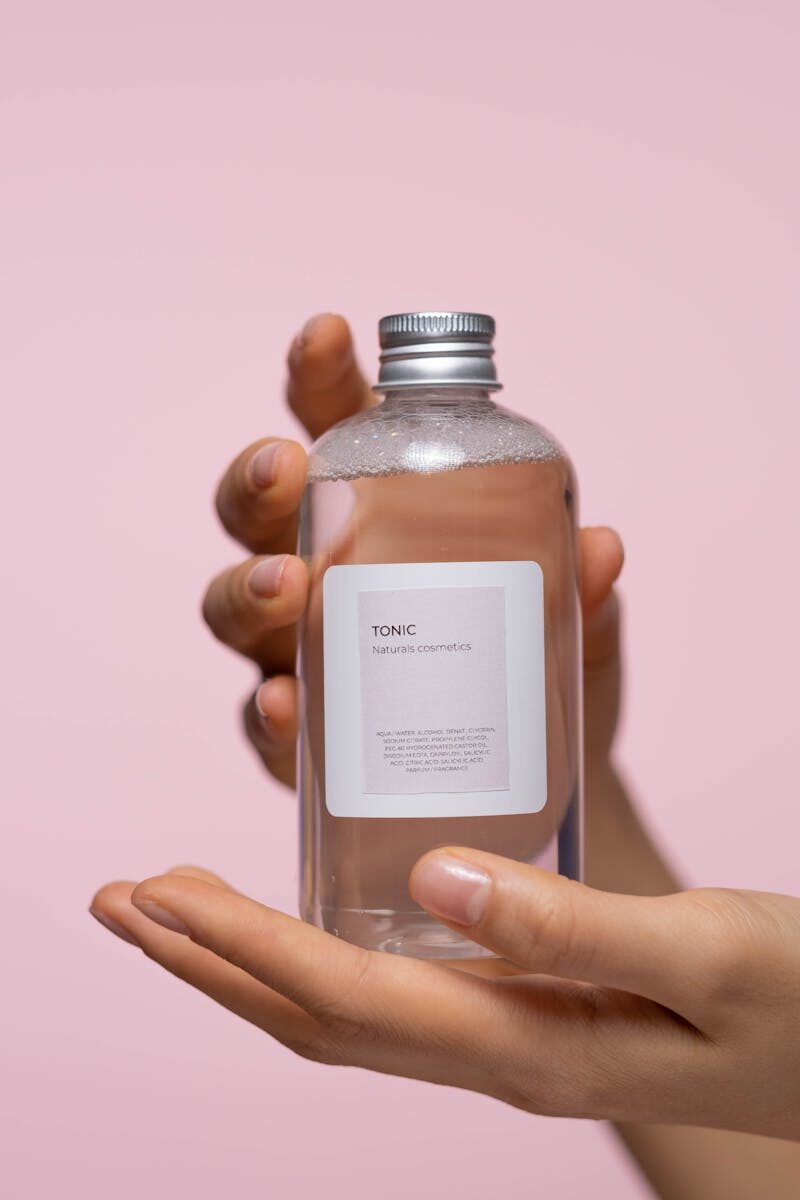
Ingredient lists are written in descending order of concentration. Everything below the midpoint of a long list is likely present at one percent or less.
What Natural Means Chemically
This is where I want to give you a more precise picture than you usually get in content about natural skincare.
A compound being derived from a plant source does not automatically make it safer, more effective, or more compatible with skin than a synthetic equivalent. The chemistry of the compound is what determines its behaviour in a formula and on your skin. Origin is not the same as chemistry.
Essential oil components like limonene and linalool are terpenes. They are produced by plants as secondary metabolites with specific ecological functions. Understanding how a plant produces these compounds and what roles they play in plant biology gives you a very different perspective on their behaviour in a skincare formula. Limonene and linalool are naturally derived and both are listed as potential allergens in EU cosmetic regulations. Natural origin does not equal safe for all skin types.
Some natural compounds are highly effective in skincare at appropriate concentrations. Retinol derived from animal sources and bakuchiol derived from Psoralea corylifolia seeds both interact with retinoid receptors in skin. The plant derived option is not automatically superior. The evidence for each needs to be evaluated on its own terms.
The Concentration Problem
This is the most underappreciated issue in natural skincare and the one I find myself coming back to repeatedly when I evaluate products.
Most plant actives have documented effects only at specific concentration ranges. Below those ranges the compound is present but not doing what the marketing implies it does.
A rosehip plant concentrates specific fatty acids in its seeds at levels that make extraction meaningful. Those fatty acids have real documented roles in skin barrier function. But a skincare formula listing rosehip oil at position 14 of 16 is not delivering those fatty acids to your skin at any concentration that matters. The chemistry that makes rosehip oil interesting is real. The concentration in that formula is not.
Niacinamide at two to five percent has evidence for improving skin barrier function and reducing pigmentation. At 0.1 percent it is doing very little. Hyaluronic acid at high molecular weight sits on the skin surface and provides temporary hydration. At low concentrations in a formula with many other ingredients it is a token inclusion.
When a product markets itself heavily around a specific plant extract and that extract appears at position 12 of 14 in the ingredient list the concentration is almost certainly insufficient for the documented effects associated with that compound. That is greenwashing through inclusion rather than through outright false claims.
What to Look For When Reading a Natural Skincare Label
Here is a practical framework you can use on any natural skincare product right now.
Find water. It is almost always first and represents the largest volume of the formula. Note where the active ingredients you care about appear relative to water and relative to each other.
Find the preservatives. Every water containing formula needs a preservative system to prevent microbial growth. In natural skincare look for phenoxyethanol, sodium benzoate, potassium sorbate, or ethylhexylglycerin. If you cannot find a preservative system in a water based formula that is a red flag for product stability regardless of how natural the formula claims to be.
Check where the hero ingredients land. If the plant extract featured on the front of the packaging appears in the bottom third of a long ingredient list it is present at a low concentration. That does not automatically mean the product is bad but it does mean the active is not the primary thing you are paying for.
Look at the fragrance listing. Fragrance or parfum in an ingredient list can represent dozens of undisclosed compounds. Natural fragrance is slightly more transparent but still does not tell you which specific compounds are present or at what concentrations.
Are Natural Skincare Products Better
This is the question I get asked most often in this area and the answer is genuinely more complicated than either side of the natural versus synthetic debate admits.
Some natural skincare products contain well formulated combinations of plant actives at meaningful concentrations with good evidence behind them. These products can work well.
Many natural skincare products are primarily water, emollient, and fragrance with token plant extracts included for marketing purposes. These products are not harmful but they are not delivering the plant chemistry benefits their marketing implies.
The natural label tells you almost nothing about efficacy. The ingredient list tells you a great deal. That is the shift I want you to make.
What This Means for You
You do not need a biochemistry degree to make better decisions about natural skincare. You just need to know three things.
Ingredient lists go from highest to lowest concentration. Anything in the bottom third of a long list is present at a very low level. The plant extract on the front of the bottle may not be doing what you think it is doing.
Natural does not mean safe, effective, or meaningful. It means the ingredient has a plant or natural origin. The chemistry and concentration determine everything else.
Fragrance is the ingredient most worth paying attention to if you have sensitive skin regardless of whether it is described as natural or synthetic.
Next time you pick up a natural skincare product turn it over. Find the hero ingredient on the front label. Then find it in the ingredient list. Where it sits tells you more about the product than everything on the front of the packaging combined.
Summary
Natural on a skincare label has no legal definition in most countries and tells you nothing about ingredient quality or concentration. Ingredient lists are written in descending order of concentration with everything below the midpoint of a long list likely present at one percent or less. Plant actives have documented effects only at specific concentration ranges.
Finding a hero ingredient near the bottom of an ingredient list means it is present at a concentration unlikely to produce the effects the marketing claims. Fragrance whether natural or synthetic represents undisclosed compounds that can be sensitising for some skin types. Reading the ingredient list rather than the front of the packaging is the most reliable way to evaluate a natural skincare product.
FAQs
What does natural mean on skincare products?
In most countries natural has no legal definition in cosmetics. Any brand can use the word without meeting any minimum standard for ingredient origin or percentage. It is a marketing term not a regulated claim.
Are natural skincare ingredients better for your skin?
Not automatically. The chemistry and concentration of an ingredient determine its effect on skin. Some natural compounds are highly effective at appropriate concentrations. Some are potentially irritating. Origin alone does not determine safety or efficacy.
How do you read a skincare ingredient list?
Ingredients are listed in descending order of concentration. Water is almost always first. Everything below the midpoint of a long list is likely present at one percent or less. Check where your key active ingredients appear relative to the full list length.
What is greenwashing in skincare?
Greenwashing in skincare includes featuring a plant ingredient prominently in marketing while including it at a meaningless concentration in the formula, using natural sounding names for synthetic ingredients, and making vague claims like clean or green that have no regulatory definition or standard.
How can you tell if a natural skincare product is effective?
Look at where the active ingredients appear in the ingredient list. Check whether the concentration implied by their position is sufficient for the documented effects associated with those compounds. Research the evidence for specific actives at relevant concentrations rather than relying on marketing claims.
Is clean beauty the same as natural skincare?
No. Clean beauty is another unregulated marketing term with no standard definition. Different brands and retailers define it differently. It often implies the absence of certain synthetic ingredients but there is no agreed list of what clean excludes.
What skincare ingredients should you avoid?
Rather than avoiding categories of ingredients look at concentration, your skin type, and the evidence for specific compounds. Fragrance both natural and synthetic is worth minimising for sensitive skin. Beyond that blanket avoid lists are rarely supported by the evidence and often reflect marketing rather than science.
Why do some natural skincare ingredients work for some people but not others?
Skin response to any ingredient varies based on individual skin barrier function, microbiome composition, existing sensitivities, and genetic differences in how compounds are metabolised at the skin surface. A plant active that produces a clear effect in one person may produce no visible response in another at the same concentration. This is not unique to natural ingredients. It applies to all skincare actives.
Are natural skincare ingredients safer to combine than synthetic ones?
Not automatically. The safety of combining ingredients depends on their chemistry not their origin. Some natural compounds interact in ways that increase irritation potential. Some synthetic compounds are designed specifically to be stable and non-reactive in combination. Origin does not determine compatibility. Formulation chemistry does.
What is a natural skincare product with zero chemicals?
There is no such thing as a product with zero chemicals. Everything including water is a chemical. Natural skincare products contain plant derived chemicals. The question worth asking is not whether a product contains chemicals but whether the specific compounds present are appropriate for your skin type and present at meaningful concentrations.