





Can an invisible gas damage the plants on your windowsill?
Ozone has a sharp, clean smell that most people link with thunderstorms or an office photocopier. We mostly hear about it as something to worry about for our lungs.
I have a different starting point. I spent part of my research exposing silver birch trees to ozone in an open-air field experiment, so I think about this gas from the plant’s side first.
Plants take in ozone through the same tiny pores they use to breathe. So the question of whether it can harm a houseplant has a real biological answer, and I want to walk you through it, including the parts nobody has measured yet.
How ozone gets into a leaf
A leaf is covered in microscopic openings called stomata. They open to let carbon dioxide in for photosynthesis, and water vapour escapes through them as the plant does so.
Ozone does not need to be invited. When the stomata are open, ozone drifts in with the air.
My course on the cell biology of air pollution damage in plants covered what happens next. Inside the leaf, ozone reacts with the moist cell surfaces and produces reactive oxygen compounds. These are the same kind of unstable molecules behind oxidative stress in our own bodies.
The plant has defences against them, and it can cope with a small dose. A larger or repeated dose overwhelms those defences, and cells begin to die. Photosynthesis slows, and the leaf ages early.
Two points follow from this. The damage depends on the dose over time, not on a single reading. And a plant with its stomata wide open, well watered and in good light, takes in more ozone than a plant under drought stress that has closed them.
What ozone damage looks like
On broadleaf plants, ozone injury usually shows on the upper surface of mature leaves. You see tiny flecks or stipples, often dark brown, bronze, or pale yellow, sitting between the veins.
With more exposure, the leaf may yellow and drop earlier than it should. Young leaves are often spared, because mature leaves have been exposed longer.
The trouble is that these symptoms look like other problems. Spider mites cause stippling too, and so do some nutrient shortages and sun scorch.
I check a few things before blaming a gas. Mites usually leave fine webbing and show damage on the underside of the leaf. A nutrient problem tends to follow a pattern across the whole plant. Ozone injury is typically on the upper side of older leaves, in a fairly even pattern.
If a garden plant is struggling and you are not sure why, why are my native plants dying goes through the more common causes first.
Where ozone comes from in a home
Most ozone starts outdoors. It forms when sunlight acts on pollution from traffic and industry, and it is usually highest on hot, sunny afternoons.
Indoor levels are typically lower than outdoor levels, because ozone reacts quickly with surfaces and with chemicals in indoor air. That is good news for houseplants, but it also means ozone does not simply disappear. It turns into other compounds, which I cover in cleaning products and indoor air VOCs and in are soy candles toxic.
The bigger indoor source is a device that makes ozone on purpose or as a side effect. Ozone generators do this, and so do some ionisers sold as air purifiers. I go through that in negative ion air purifiers, salt lamps and ozone.
If you keep plants close to a device like that, the plants are in the exposure path along with you. The gases involved are explained in what are VOCs in your home.
What I can and cannot say about houseplants
Most of the evidence on ozone and plants comes from outdoor crops and trees. Documented injury includes crops such as beans, soybean and potato.
Very few studies have tested the usual houseplants at the low levels found indoors. So I cannot give you a number that is safe for a pothos or a peace lily, and I would be suspicious of anyone who does.
What I can say is that harm needs enough ozone for long enough, and in a normal home with no ozone-producing device, that is unlikely.
The same plants are often sold as air cleaners, which is a separate claim. I looked at the evidence in do indoor plants clean the air.
What my silver birch research showed
In my research I measured how silver birch trees responded to raised ozone in an open-air field site. Treated plots ran at about 33 parts per billion against about 24 in ambient air, roughly 1.4 times the normal level.
The result surprised some people. In the first growing season, ozone alone had very little effect on stem height, leaf count or leaf area.
One of the two genotypes did show a late season reduction in stem diameter under ozone. The other did not. The same trees, grown side by side, reacted differently.
The combined treatment, warming plus ozone, reduced that effect. A likely reason is that warming changes how plants manage their stomata and their protective compounds, though I would not claim my experiment proved the mechanism.
I also could not rule out that the effects build up over several seasons, as other studies have reported.
I do not want to stretch a field experiment on birch trees to a plant on your shelf. What I take from it is the general lesson. Ozone is a dose problem, and two plants of the same species can respond differently.
What I would do at home
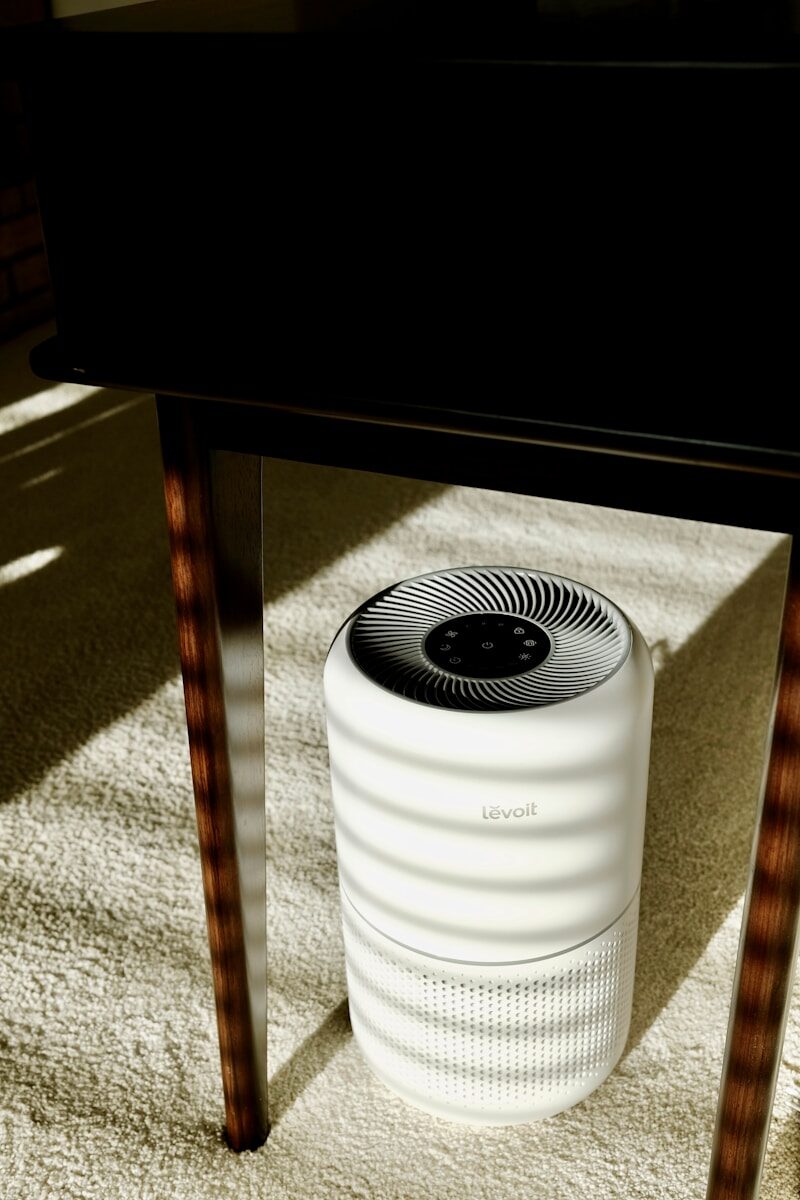
I would not keep an ozone generator or an ioniser near plants, or near people. If I wanted cleaner air, I would pick a sealed mechanical HEPA filter, and do air purifiers work explains how to choose.
On days when outdoor ozone is high, I would open windows early in the morning or in the evening, not in the hot afternoon. At night ozone levels are usually lower, which suits the habit described in cooling your home at night without AC.
To see how fast a room swaps its air with the outside, try my Home Ventilation ACH Calculator. To judge your exposure to indoor chemicals more broadly, use my VOC Exposure Risk Estimator.
If a leaf shows stippling, I would check for mites and watering first. That is far more common than ozone.
Summary
Ozone enters leaves through open stomata and causes oxidative stress. The injury shows as small flecks between the veins on the upper side of older leaves, and it looks a lot like mite damage or nutrient problems.
Indoor ozone is usually lower than outdoor ozone. The main risk is a device that produces it, such as an ozone generator or ioniser. Few studies have tested typical houseplants at indoor levels, so no one can state a safe number.
In my silver birch research, raised ozone had little effect in the first season, but the two genotypes responded differently. That points to dose and plant variety as the key factors.
FAQs
Does ozone damage houseplants?
It can, if the dose is high enough for long enough. Ozone enters through the leaf pores and causes oxidative stress. In a normal home without an ozone-producing device, indoor levels are low, so harm is unlikely.
What does ozone damage look like on leaves?
Tiny dark, bronze or pale flecks between the veins on the upper surface of older leaves, sometimes with yellowing and early leaf drop. Spider mites and nutrient problems can look similar, so check for those first.
Do air purifiers harm plants?
A sealed HEPA filter does not make ozone. Ozone generators and some ionisers do, so avoid those near plants and people.
When is ozone highest outdoors?
Usually on hot, sunny afternoons, when sunlight drives the reactions that form it. Opening windows in the early morning or evening on those days helps.