




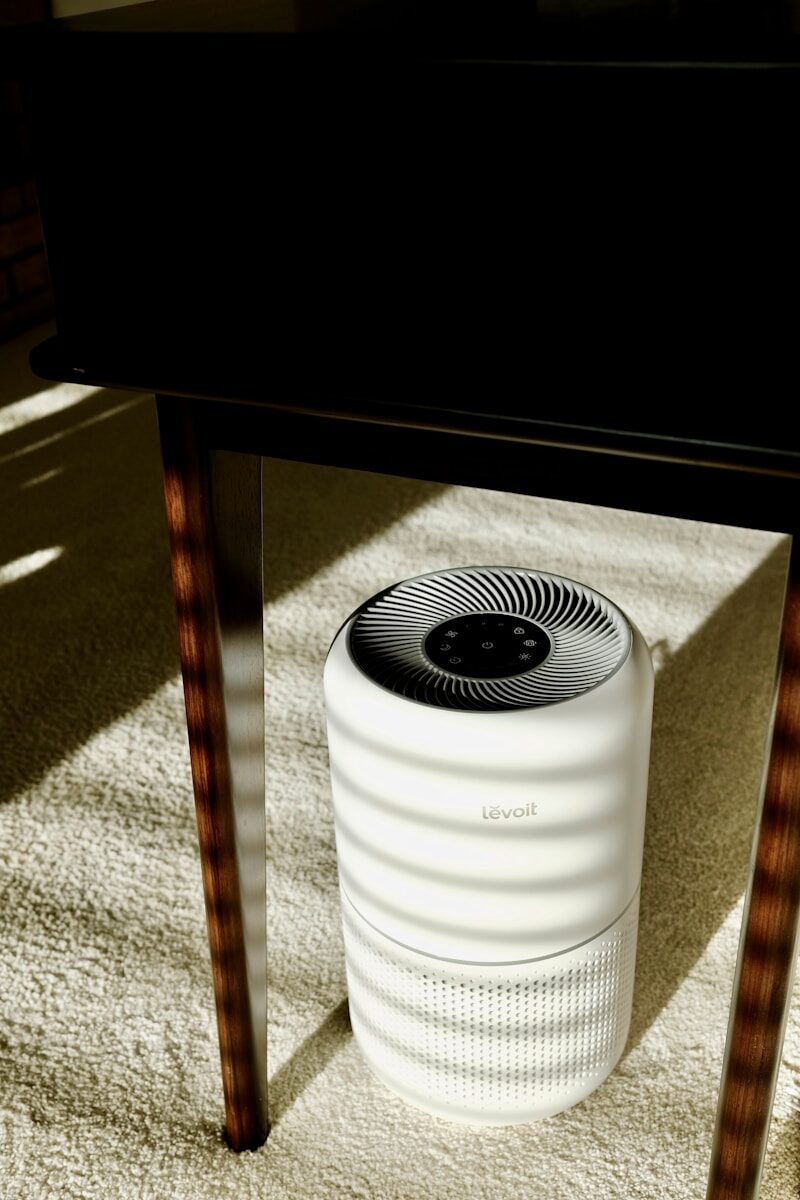




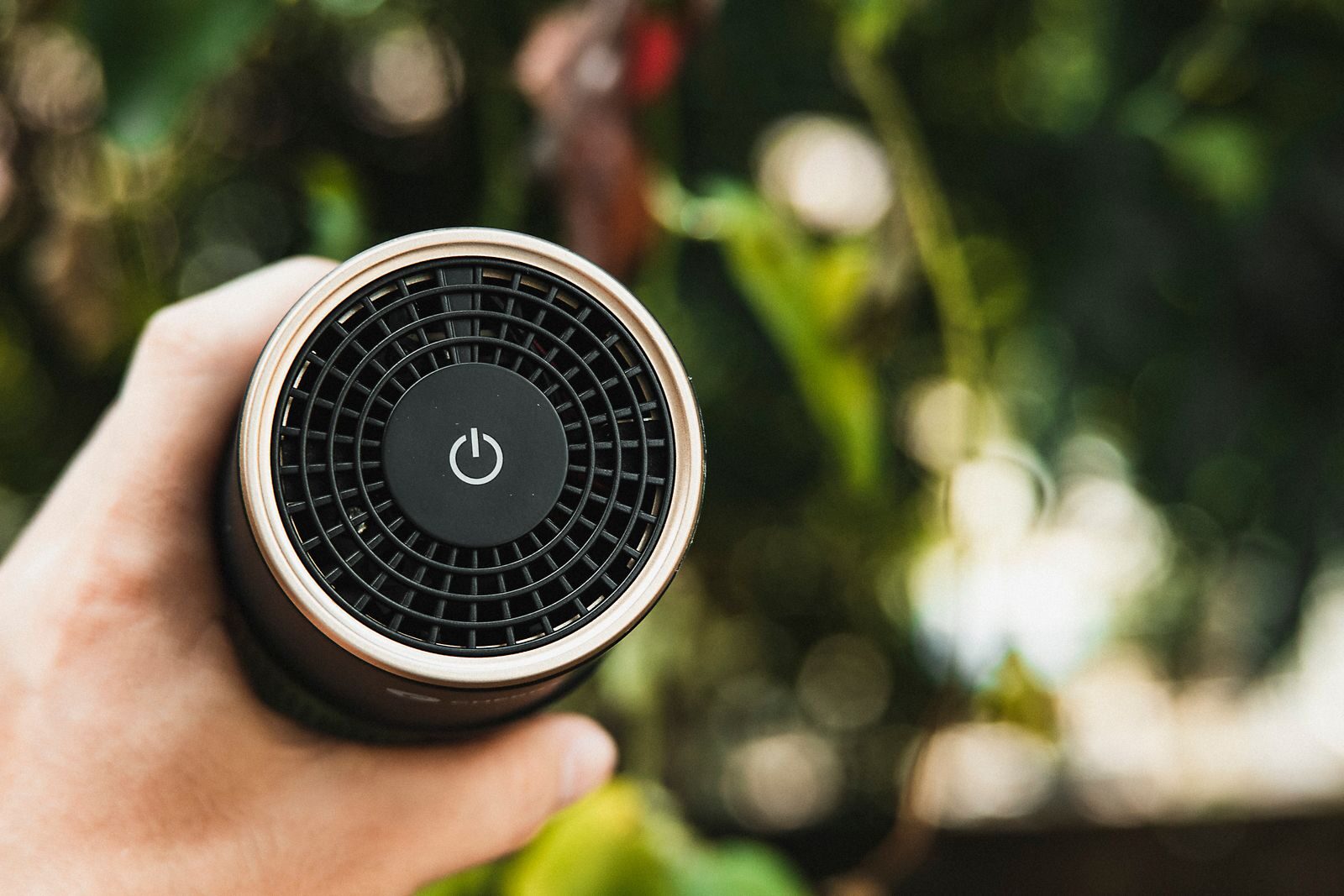
You’ve probably stood in front of a shelf full of home air gadgets and seen the words “negative ions” printed on two very different products. One is a sleek electronic purifier. The other is a glowing chunk of pink salt. Both promise the same thing, cleaner air through the power of ions.
Here’s the thing nobody selling either one wants to slow down and explain: they don’t work the same way at all, and only one of them comes with a real safety question attached.
Let’s take them one at a time.
What is an ion, anyway?
Before any of this makes sense, you need one small piece of chemistry, and it’s simpler than it sounds. An ion is just an atom or molecule that’s picked up or lost an electron, which gives it a tiny electrical charge.
Nature makes these all the time, near waterfalls, after a storm, out at sea. An electronic ioniser does the same thing on purpose, using electricity to strip electrons off air molecules.
So what’s happening inside an electronic ioniser?
Picture the dust floating in a sunbeam. An ioniser gives those particles, and the smoke, pollen, and everything else drifting around your room, a small electrical charge. Charged particles are clingy, so they start sticking to your walls, floors, and furniture instead of floating around.
That’s the whole trick. Nothing gets filtered out or destroyed, it just gets relocated onto your surfaces, which is exactly why people who use these devices often notice more dust building up nearby than they used to.
Here’s the part worth slowing down for. Making that electrical charge takes energy, and that same energy can split oxygen molecules apart in a way that creates ozone. The EPA is blunt about this: ozone comes out of ion generators and similar devices, and how much varies a lot from one unit to the next.
I dug into a California Air Resources Board review of the research on this, and the range they found was wild, tested devices ranged from 0.056 all the way up to 30.5 milligrams of ozone per hour. That’s not a small spread. That’s the difference between a device barely producing anything and one producing five hundred times more.
There are two different safety standards these devices get tested against, and this is where it gets interesting for someone like me. UL 867 allows up to 50 parts per billion of ozone. A newer, stricter standard called UL 2998 caps it at just 5 parts per billion, ten times lower.
Two products can both slap “ozone safe” on the box and mean completely different things. I spent time studying how measurement and quality control work, and this is exactly the kind of gap that training trains you to hunt for. A label claim is only as good as the standard behind it, and “ozone safe” without naming which standard is basically meaningless. If you want a real check, look for UL 2998 on the box, not the phrase itself.
And ozone doesn’t just sit there quietly once it’s in your room. It reacts with whatever else is floating around. That same CARB review points to a study where researchers ran an ion generator with a plug-in air freshener in the room, and formaldehyde levels went up by roughly 9 to 14 percent. So the ozone isn’t just a lung irritant on its own, it’s quietly creating new pollutants out of things already in your air.
This is the fact that stuck with me most. My own thesis work involved measuring ozone directly, out in the field, at real low concentrations most people never think about. I also studied ecotoxicology, which is basically the science of how chemicals harm living things, and dose is the whole story there. Ozone damages tissue the same way whether it’s a leaf or a human airway, through oxidative stress.
So when I see that 500-fold range in how much ozone different ionisers produce, I don’t think “ionisers are dangerous” or “ionisers are fine.” I think dose. One specific plug-in unit sitting on your nightstand could be producing next to nothing, or it could be one of the worst offenders in that whole range, and the only way to know is to check what standard it passed.
Okay, but does it clean the air?
A little, and only in one narrow way. Since these devices work by making particles stick to surfaces instead of floating in the air you breathe, they can lower what’s airborne at any given moment. What they can’t do is touch smells, gases, or VOCs, since nothing is being filtered or broken down.
And when researchers tested them side by side, ionisers came out worse than a true HEPA filter or an electrostatic precipitator at removing dust, smoke, pollen, and fungal spores.
What about salt lamps, then? Same deal?
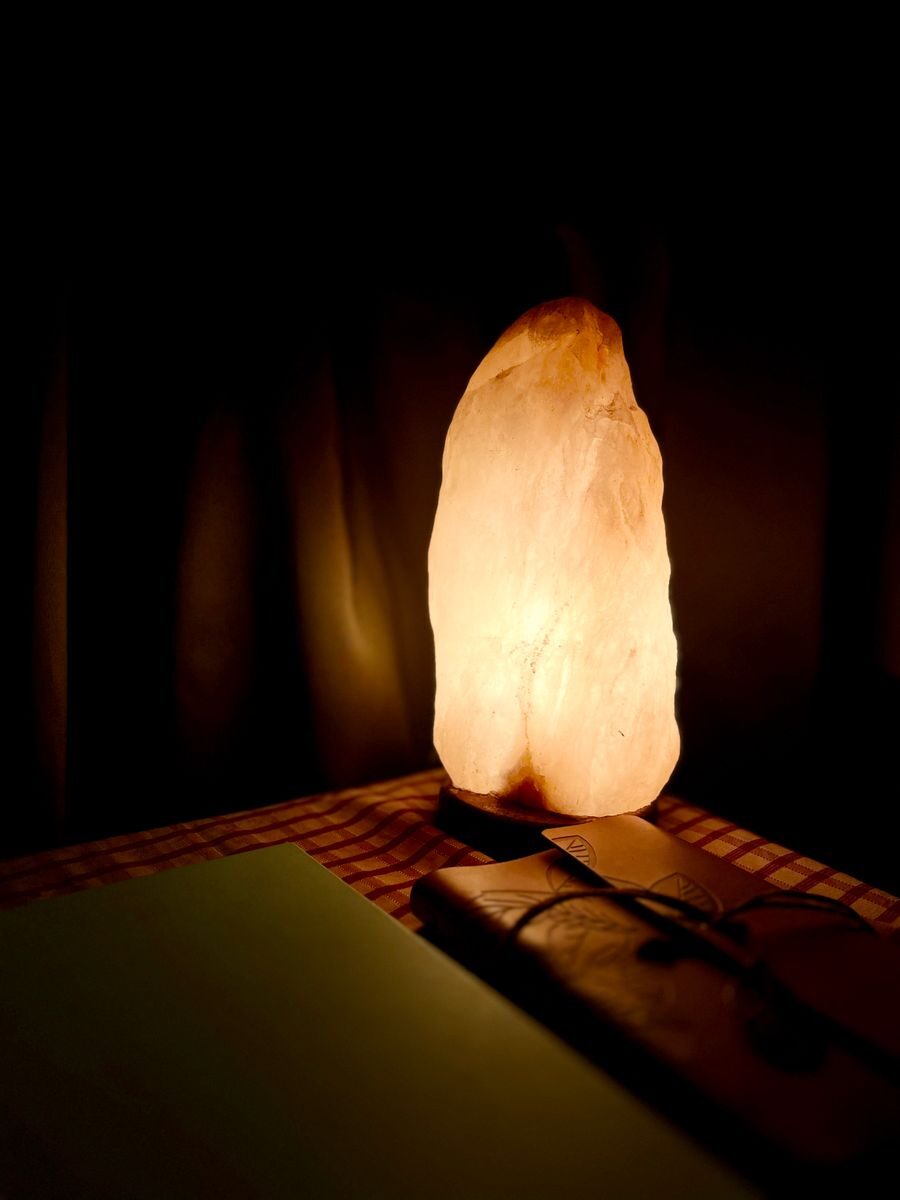
No, and this is where I think most articles get lazy. A salt lamp has no electricity doing anything clever, no ionisation happening, nothing generating a charge. The story behind a salt lamp is completely different: salt naturally pulls moisture out of the air, and the warmth from the bulb is supposed to evaporate that moisture back off, theoretically leaving behind whatever dust hitched a ride in with it.
That idea isn’t crazy in principle. The problem is that nobody has ever measured it doing much. Independent testing, including from the Negative Ion Information Center, checked the ion output from a real commercial salt lamp and found it was barely above the background level you’d get standing in any ordinary room, nowhere close to what’s used in the studies that first linked negative ions to any health benefit. No peer-reviewed study has ever confirmed a salt lamp meaningfully cleans your air.
Here’s the one thing worth remembering from all this: a salt lamp isn’t a safety risk, because there’s no real ionisation happening to make ozone from in the first place. Its problem isn’t danger, it’s that the marketed benefit just doesn’t show up when anyone measures it.
So where does that leave you?
If you’re weighing an electronic ioniser, it does something real, both the particle-settling and the ozone are measurable facts, not marketing. The question is whether that trade-off is worth it to you. My own take: I’d skip anything sold as an ioniser, ionic purifier, or electrostatic precipitator, and reach for a sealed mechanical HEPA filter instead, for the same reason I’d avoid anything that intentionally puts ozone into a room I’m breathing in.
A salt lamp is a different conversation entirely. Keep one if you like the warm glow on your nightstand, there’s nothing wrong with that. Just don’t keep it thinking it’s doing anything measurable to your air, because as far as anyone’s been able to test, it isn’t.
Summary
Salt lamps and electronic negative ion purifiers get sold with nearly identical language, but they work through completely different mechanisms. Electronic ionisers charge airborne particles so they settle onto surfaces, and that same process can generate ozone as a byproduct, a lung irritant that can also react with other things in your air to form pollutants like formaldehyde.
Emission rates vary hugely between devices, which is why two different safety standards exist, UL 867 and the stricter UL 2998. Salt lamps generate essentially no ionisation at all, so they carry no ozone risk, but they also don’t do anything measurable to clean your air. A sealed mechanical HEPA filter beats either ionising technology for real results.
Questions worth asking
Do negative ion air purifiers produce ozone?
Yes, generally. The amount varies a lot by device. Two safety standards exist, UL 867 (50 parts per billion limit) and the stricter UL 2998 (5 parts per billion), so it’s worth checking which one a product passed.
Do salt lamps purify the air?
Not in any way anyone’s been able to measure. Salt lamps produce a negligible amount of ions compared to the devices used in real health studies, and no peer-reviewed research backs up the air-purifying claim.
Are negative ion air purifiers safe?
It’s a real trade-off. They do pull some particles out of the air, but the ionisation process can produce ozone, and how much varies enormously from one device to another, which is exactly why checking the certification counts for more than trusting the label.
Is it safe to be in a room with an ioniser running?
It depends heavily on that specific device, since ozone output can differ by hundreds of times between models. Looking for UL 2998 certification specifically, rather than trusting a vague “ozone safe” claim, is the more reliable way to judge it before running one in a room you spend a lot of time in.