


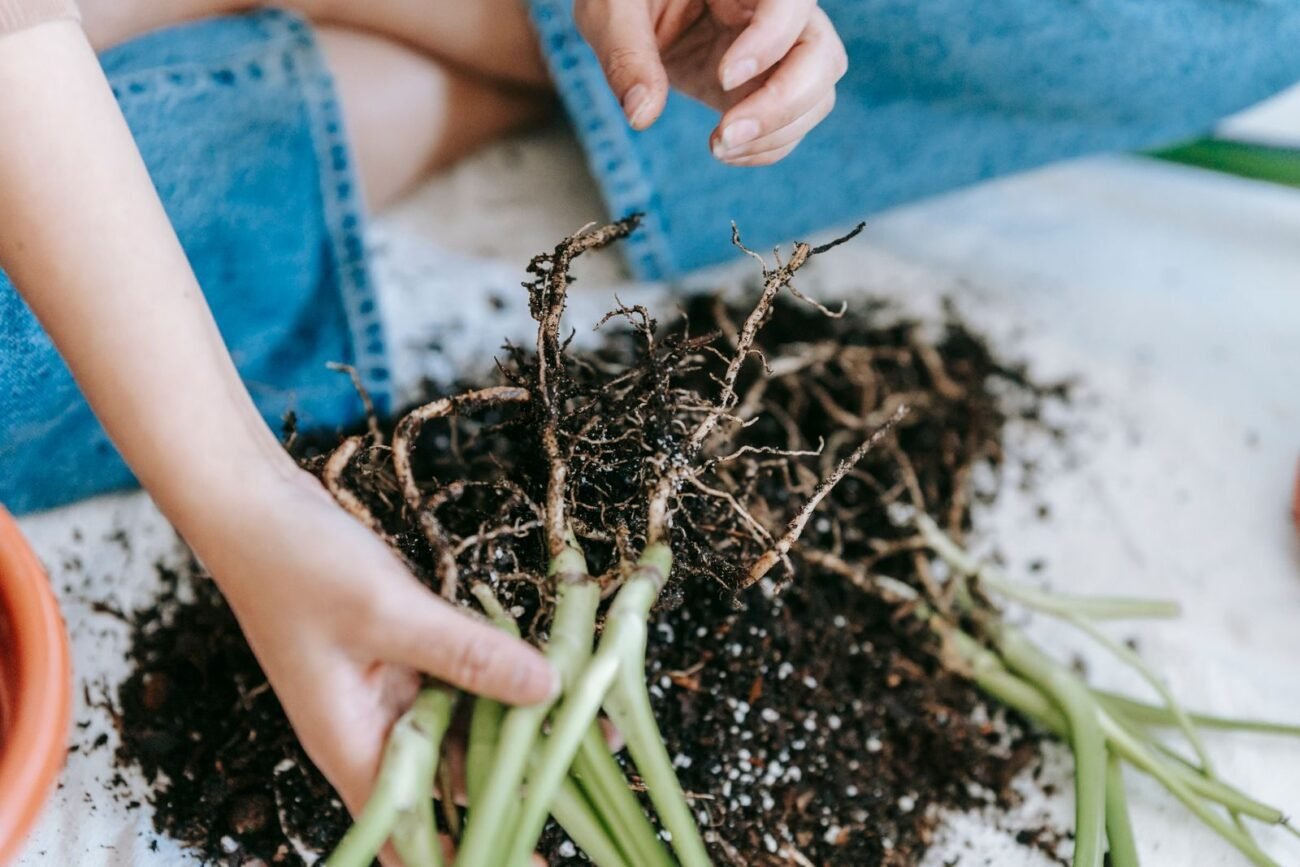
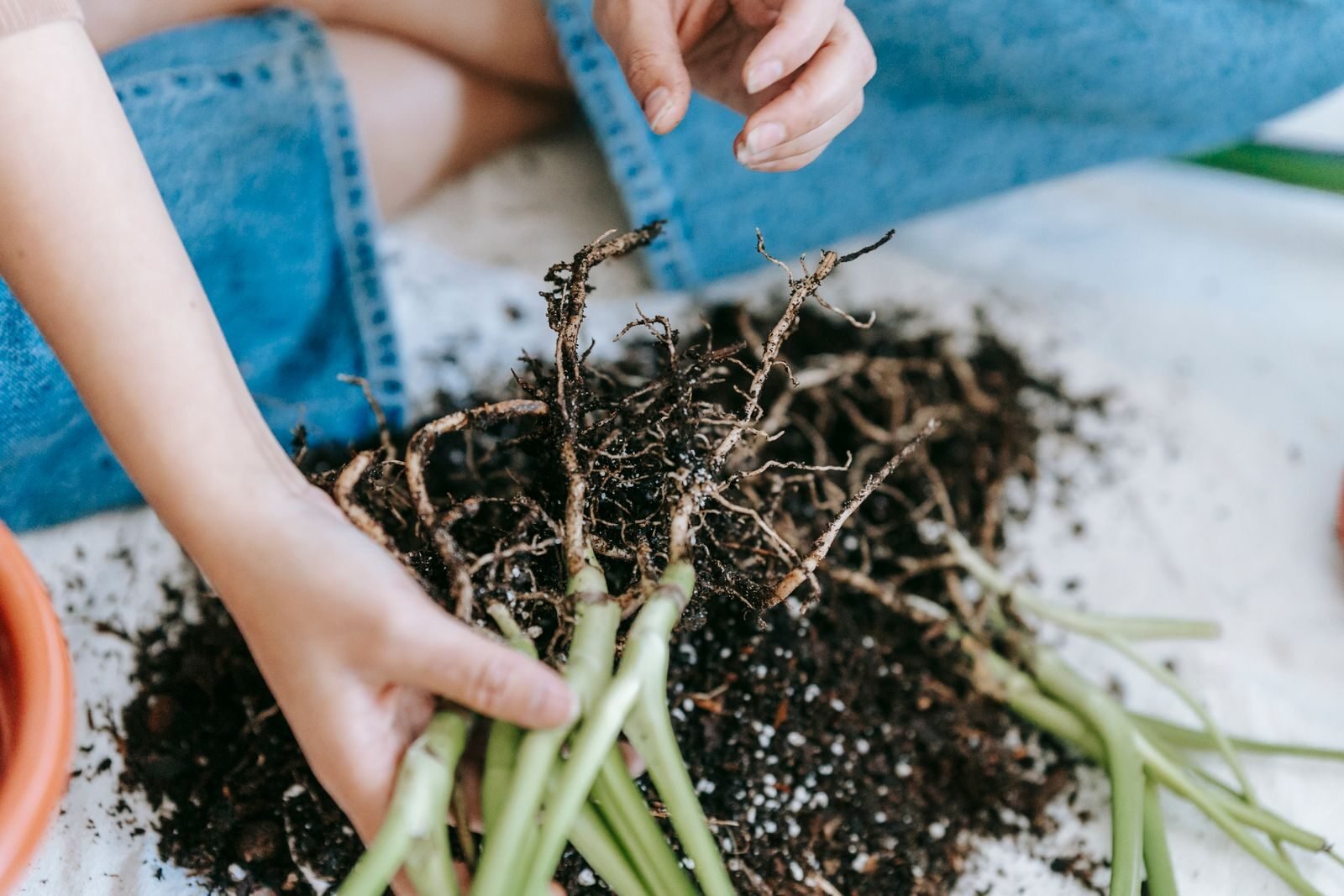
You pick up a bag of mycorrhizal inoculant, it promises bigger roots and healthier plants, and you drop it in the trolley. But here is a question the label almost never answers:
Is it even the type your plants can use?
Because there is not one kind of mycorrhizal fungus. There are two main ones, and most plants partner with only one of them. Buy the wrong type and you have bought a product your plant cannot form a partnership with, no matter how alive and healthy the fungi in the bag are. So before you spend anything, let me show you the split, and how to tell which side your plants sit on.
I studied these fungal partnerships as a plant biologist, so what I want to give you is not a marketing summary. It is the structural difference that decides everything, explained plainly, so you can look at a product and your plant and know whether they match.
The two types, and the one difference that defines them
The whole split comes down to one thing: where the fungus goes in relation to the root cell.
Endomycorrhizae go inside. The fungal threads push into the root cells themselves and form tiny branched structures there, where the trading of nutrients for sugars happens. The most common kind by far is called arbuscular mycorrhizae, named after those little branched structures, the arbuscules (Oklahoma State University Extension).
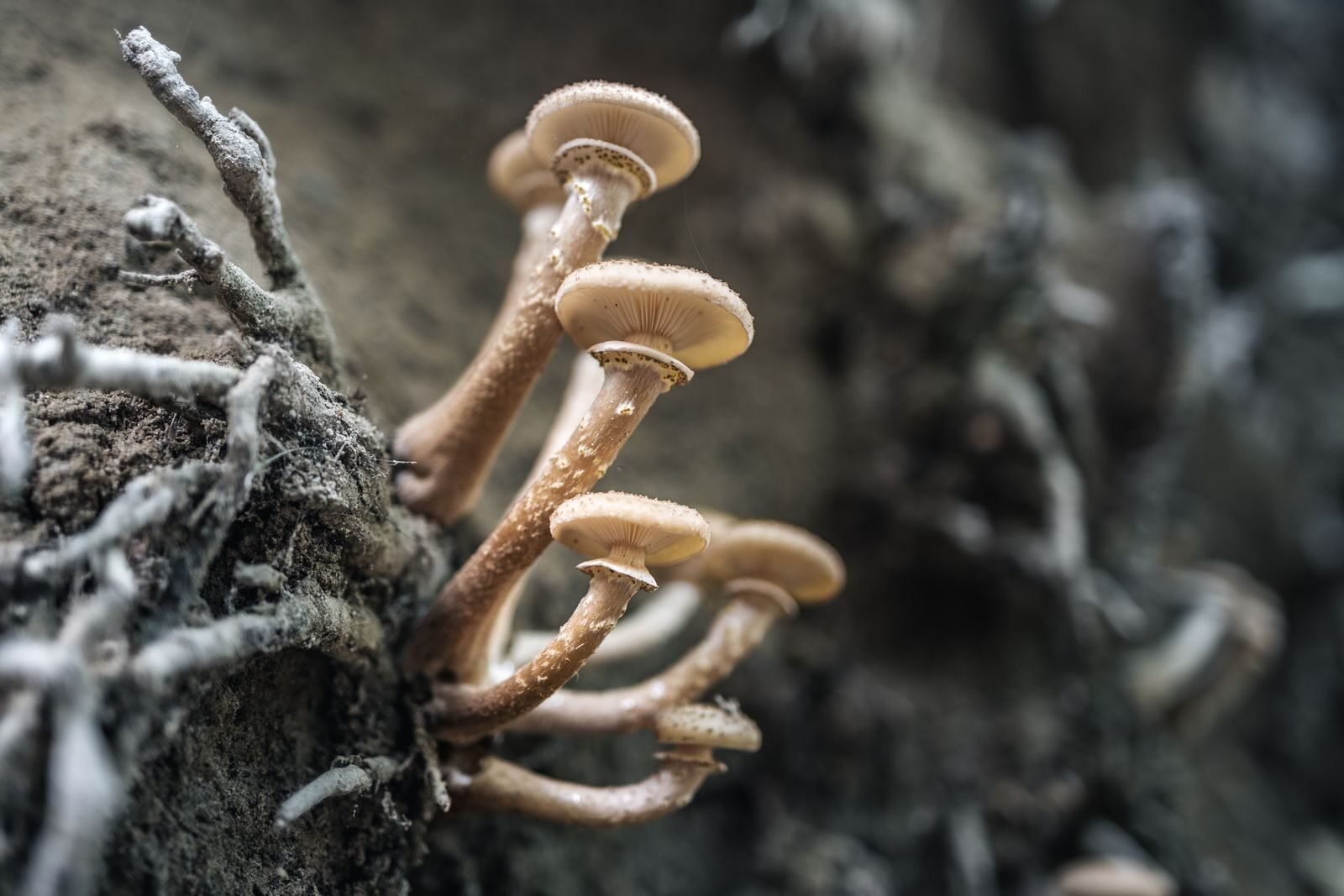
Ectomycorrhizae stay outside. Instead of entering the cells, the fungus wraps around the root tip in a sheath and threads between the cells without piercing them. It is a close partnership, but the fungus never goes inside the cell the way the arbuscular type does.
That is the entire structural story. Inside the cell, or around it. Endo, or ecto. Every practical decision below follows from which one your plant forms.
Which type do your plants use?
Here is the part that decides your purchase, and the good news is it sorts cleanly along the kind of plant you are growing.
Most garden plants use the arbuscular (endo) type. Vegetables, most flowers, grasses, herbs, and the majority of crops form arbuscular associations. In fact around 72 percent of all vascular plant species partner with arbuscular fungi (North American Mycological Association). If you are growing tomatoes, peppers, beans, most ornamentals, or a lawn, you are in arbuscular territory.
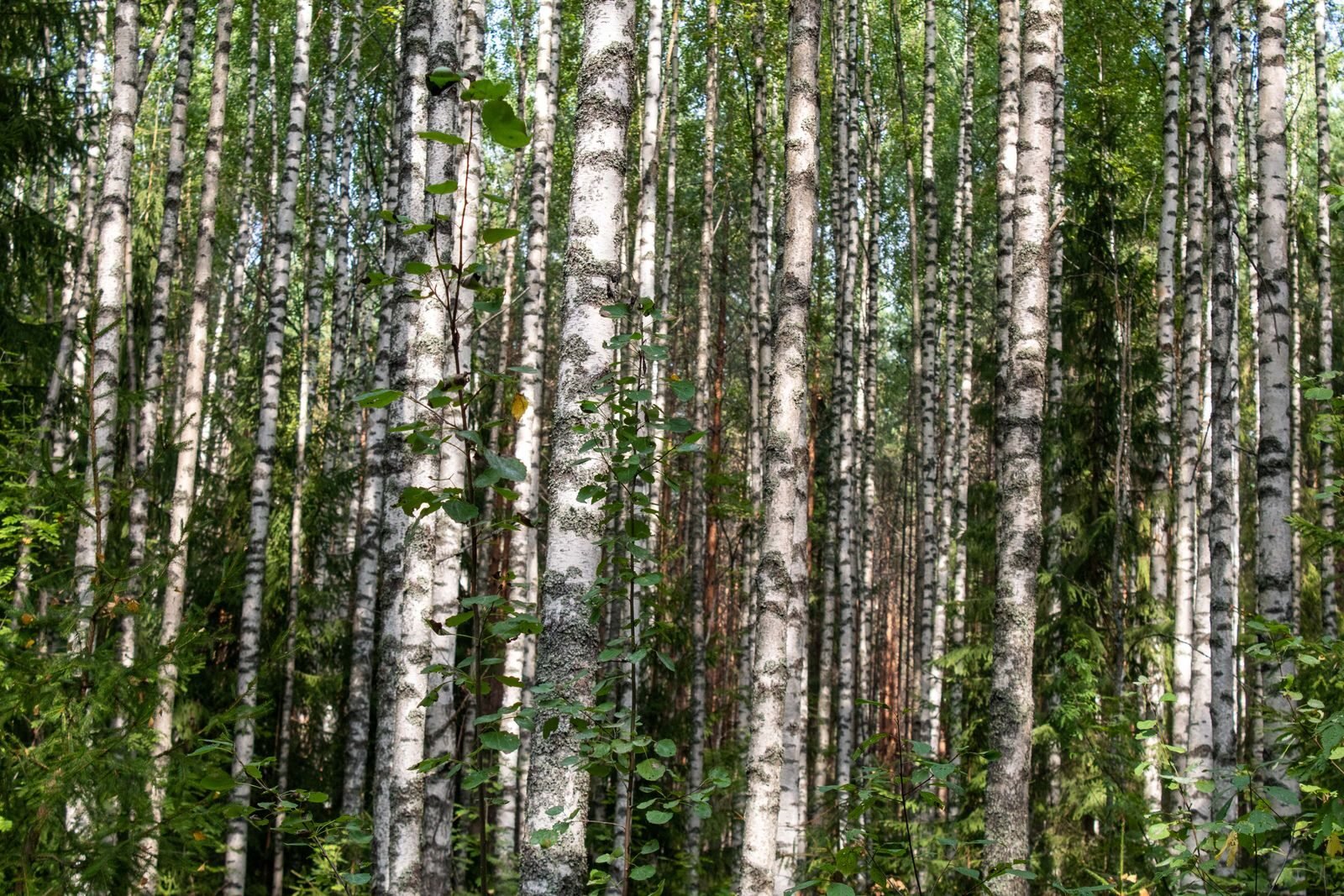
Most trees use the ecto type. Oaks, pines, beeches, birches, and many other woody trees form ectomycorrhizal partnerships instead. This is a much smaller share of plant species, but it includes a lot of the forest trees you would recognise.
This is where my own field research sits, on the ecto side. The silver birch I worked with in open-air experiments is an ectomycorrhizal tree. When I measured soil carbon dioxide coming off the ground under those birches, part of what my chamber picked up was the respiration of exactly this kind of fungal partnership working below the surface. So when I say the fungus is down there trading with the roots, I am describing a system I measured the output of directly, not something I read in a catalogue.
So the rough rule is simple. Growing soft, green, leafy, or flowering plants and most crops, you want arbuscular. Growing trees, you are likely looking at ecto. Get that right and you have solved most of the buying problem before you even read the rest of the label.
So which mycorrhizae is best?
This is the question people type into search, and I want to reframe it, because it has no answer as asked.
There is no best type. There is only the type that matches your plant. Arbuscular is not better than ecto, and ecto is not better than arbuscular. They are adaptations to different plants. Asking which is best is like asking whether a house key or a car key is better, the answer is whichever one fits the lock in front of you.
What the “best” question usually means, underneath, is “which should I buy.” And the honest version of that is: buy the type your plant actually forms, or do not buy at all. A product loaded with the finest ectomycorrhizal fungi is worthless around your tomatoes. A premium arbuscular blend does nothing for your oak.
Why the wrong type is money in the bin
It is worth being blunt about what happens when the type is wrong, because the marketing never spells it out.
A mycorrhizal partnership only forms when a compatible fungus meets a compatible root. If the fungus in the bag is the ecto type and your plant only forms arbuscular partnerships, nothing happens. The fungi cannot colonise a root they are not adapted to. You have watered live fungi into your soil that your plant will simply ignore.
This is one reason so many gardeners report that inoculants “did nothing.” Sometimes the product was dead on the shelf. But sometimes it was alive and simply wrong, the wrong type for the plant it was sprinkled on. Both feel identical from where you stand: no result.
Whether a matched product is even worth buying in the first place is a separate question, and I worked through that evidence in do mycorrhizal inoculant products actually work. This post is only about making sure that if you do buy, you buy something your plant can use.
The plants that use neither
There is a third group worth a quick flag, because it catches people out. Some plants form no mycorrhizal partnership at all. The cabbage family, including broccoli, kale, and cauliflower, and plants like spinach and beetroot, do not form these associations.
For them, any inoculant of any type is wasted. I covered that list and the reasons in the pillar above, so I will not repeat it here, just know the group exists before you treat every plant as a candidate.
How to read the label before you buy
Armed with the split, a product label gets easy to judge.
Look for the type first, not the claims. A good arbuscular product will say arbuscular, or endo, or list species names like Glomus or Rhizophagus. An ectomycorrhizal product will say ecto, or list species tied to trees. If the label will not tell you which type it contains, that alone is a reason to be wary.
Match it to your plant, not to the promise on the front. The big print about growth and yield is the same on every bag. The type is the part that decides whether any of that can happen in your soil.
And if a product claims to cover everything, treat that with care. Some blends do include both types to cover mixed plantings, which is fair enough, but a blend is only useful if it contains the specific type your plant needs. Broad coverage is not the same as the right match.
FAQ
What are the two main types of mycorrhizae?
Endomycorrhizae, whose fungi enter the root cells, and ectomycorrhizae, whose fungi wrap around the outside of the roots without entering the cells. The most common endo type is arbuscular mycorrhizae, which is what most garden plants form.
Which type of mycorrhizae do most plants use?
Most garden plants, including vegetables, most flowers, grasses, and crops, use the arbuscular (endo) type, which covers around 72 percent of vascular plant species. Most trees, such as oaks, pines, and birches, use the ecto type instead.
Which mycorrhizae is best?
Neither. There is no best type, only the type that matches your plant. Arbuscular suits most garden plants, ecto suits most trees. A product is only useful if it contains the type your specific plant can form a partnership with.
Can I use one mycorrhizal product for all my plants?
Only if it contains the right type for each plant. An arbuscular product does nothing for trees that need the ecto type, and vice versa. Some blends include both to cover mixed plantings, but check the label lists the type your plants actually use.
How do I know if a product is arbuscular or ecto?
Read the type on the label. Arbuscular products say arbuscular or endo, or list genera like Glomus or Rhizophagus. Ecto products say ectomycorrhizal or list tree-associated species. If the label does not state the type, that is a reason to be cautious.
BEFORE YOU BUY ANY MYCORRHIZAL PRODUCT
Here is the one check that saves you the most money.
Ask what you are growing before you look at any bag. Soft, leafy, flowering plants and most crops form the arbuscular (endo) type, so that is the product to look for. Trees form the ecto type. The cabbage family and beet family form neither, so skip the product entirely for those. Match the type to the plant first, and only then judge the rest of the label.
If most of what you grow is vegetables and flowers, and your soil is already healthy, the better move is often to feed the arbuscular fungi you already have rather than buy more. Building living soil through organic matter and less disturbance does more for these partnerships than any bag, which is the same conclusion I keep coming back to, and the reason I built the Fix Your Garden Soil guide around soil condition rather than products.