




Why does the same bottle of hydrogen peroxide disinfect properly one time and do almost nothing the next?
The answer is the whole reason this post exists, and it comes down to how you use it, not what you buy. That brown bottle sits in a lot of bathroom cabinets, and it has quietly become a favourite in natural cleaning circles. Unlike some of the ingredients I look at, this one has a stronger claim than its reputation suggests, not a weaker one.
So the question is worth asking plainly: does hydrogen peroxide work for cleaning and disinfecting your home? Yes, with conditions, and the conditions are the whole story.
I want to walk you through what it kills, why the number on the bottle matters more than anything else, and how to use it so it does something rather than nothing.
Let me be clear about one thing up front.
This post is about cleaning surfaces in your home. I am not covering putting hydrogen peroxide in your ears, on wounds, on your teeth, or anywhere on or in your body. Those are medical questions, they are not what I do here, and they are not what this post is for.
A word on how I read this.
Part of my postgraduate training was a course in the quality control of chemical and environmental measurements. It left me with one reflex I cannot shake. When I pick up a bottle, I do not look at the marketing on the front. I look at the concentration, and I ask what that number buys me.
With hydrogen peroxide, that habit is not just useful. It is the key to using it well.
What hydrogen peroxide is and how it kills microbes
Hydrogen peroxide is a simple molecule, water with an extra oxygen atom attached. That extra oxygen is what makes it reactive, and what makes it useful.
Left alone, it slowly breaks down into two harmless things: water and oxygen. That is a useful property for a cleaning product, because it does not leave a lasting chemical residue behind the way some disinfectants do.
The killing power comes from that same reactivity.
When hydrogen peroxide contacts a microbe, it produces highly reactive fragments called hydroxyl free radicals. According to the Centers for Disease Control and Prevention, these radicals attack the membrane fats, the DNA, and other essential parts of the cell. In effect it oxidises the microbe apart.
Bacteria do have a defence. An enzyme called catalase normally mops up small amounts of peroxide, which is why you see froth when it hits an open cut. But at the concentrations used for disinfection, that defence is overwhelmed.
This is a very different mechanism from an acid like vinegar. It is a big part of why peroxide reaches germs vinegar cannot.
Does hydrogen peroxide disinfect, or just clean?
Here is where hydrogen peroxide separates itself from most natural cleaning ingredients.
Public-health guidance is clear that ordinary three percent hydrogen peroxide, the strength in the brown bottle, is a stable and effective disinfectant on hard surfaces. That is a real difference, and it is one vinegar cannot claim.
It is documented to work against a wide range of bacteria, yeasts, fungi, and viruses, and even bacterial spores if you give it enough strength and time. Vinegar does not reach that far. Hydrogen peroxide does, as long as you use it at the right strength and leave it on long enough.
Those two conditions, strength and time, are the part that matters most, so let me be clear about them.
How well peroxide works is not fixed. It depends on two things: how concentrated it is, and how long it stays on the surface. These are the two variables I was trained to watch above all others, both in my measurement work and in ecotoxicology and risk assessment, where the first rule is that the dose decides the effect.
The same guidance shows this with the common cold virus. Three percent peroxide killed it in about six to eight minutes. Drop the strength to well under one percent, and it takes nearly an hour to do the same job.
Same chemical, very different result, decided entirely by strength and how long you leave it.
This is the most important thing to take from the post. If you spray peroxide on and wipe it off after two seconds, you have wasted it. The surface needs to stay wet with it for several minutes for the chemistry to work.
Concentration: why the number on the bottle decides everything
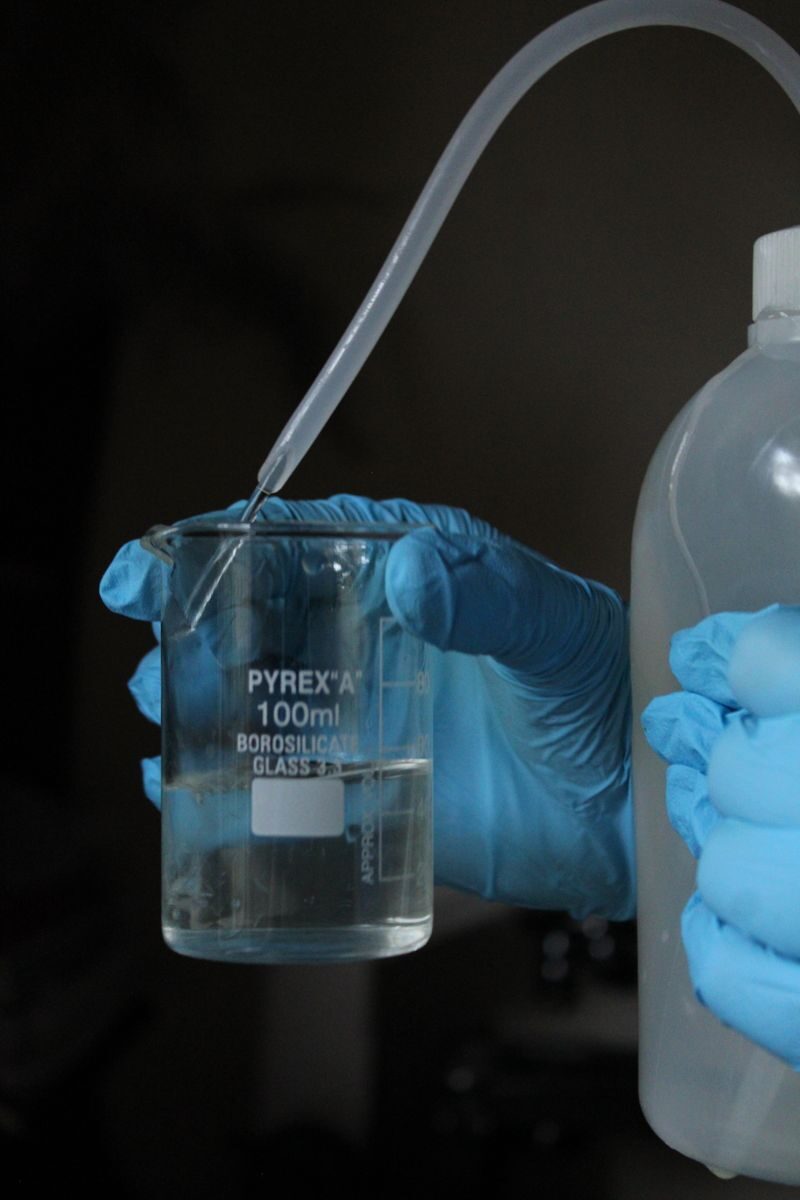
This is where reading the number on the bottle really counts. Hydrogen peroxide is sold at very different strengths, and that number tells you more than the label on the front.
The standard household bottle is three percent. That is the strength the disinfection evidence refers to, and the one you want for cleaning.
You will also see stronger or so-called food-grade peroxide at much higher concentrations. That is a different and more hazardous material, not a better cleaner for your kitchen.
There is a regulatory point worth knowing too, and it ties to how I read any product claim. A product can only be sold as a disinfectant, with specific germ-killing claims, once it has been tested and registered as an antimicrobial product.
The Environmental Protection Agency treats these products as registered antimicrobial pesticides that must meet set efficacy standards before those claims can appear on a label.
Plain three percent peroxide from the pharmacy shelf is usually sold as a general antiseptic, not as a registered surface disinfectant, even though the chemistry can do the job. So the lesson is simple.
Buy plain three percent, use it properly, and judge it by concentration and contact time, not by the wording on the front.
What hydrogen peroxide is good for around the home
Given all that, here is where I actually reach for it.
It is useful on bathroom surfaces, since it handles the kinds of bacteria and fungi that gather there, provided you let it sit. It works on cutting boards and countertops as part of a routine, again with dwell time, not a quick wipe.
It has documented activity on fabrics and has been used to spot-treat them, which makes it handy on some stains. And because it breaks down to water and oxygen, it does not leave the sort of residue that makes you want to rinse a food surface twice.
The way to use it follows directly from the chemistry.
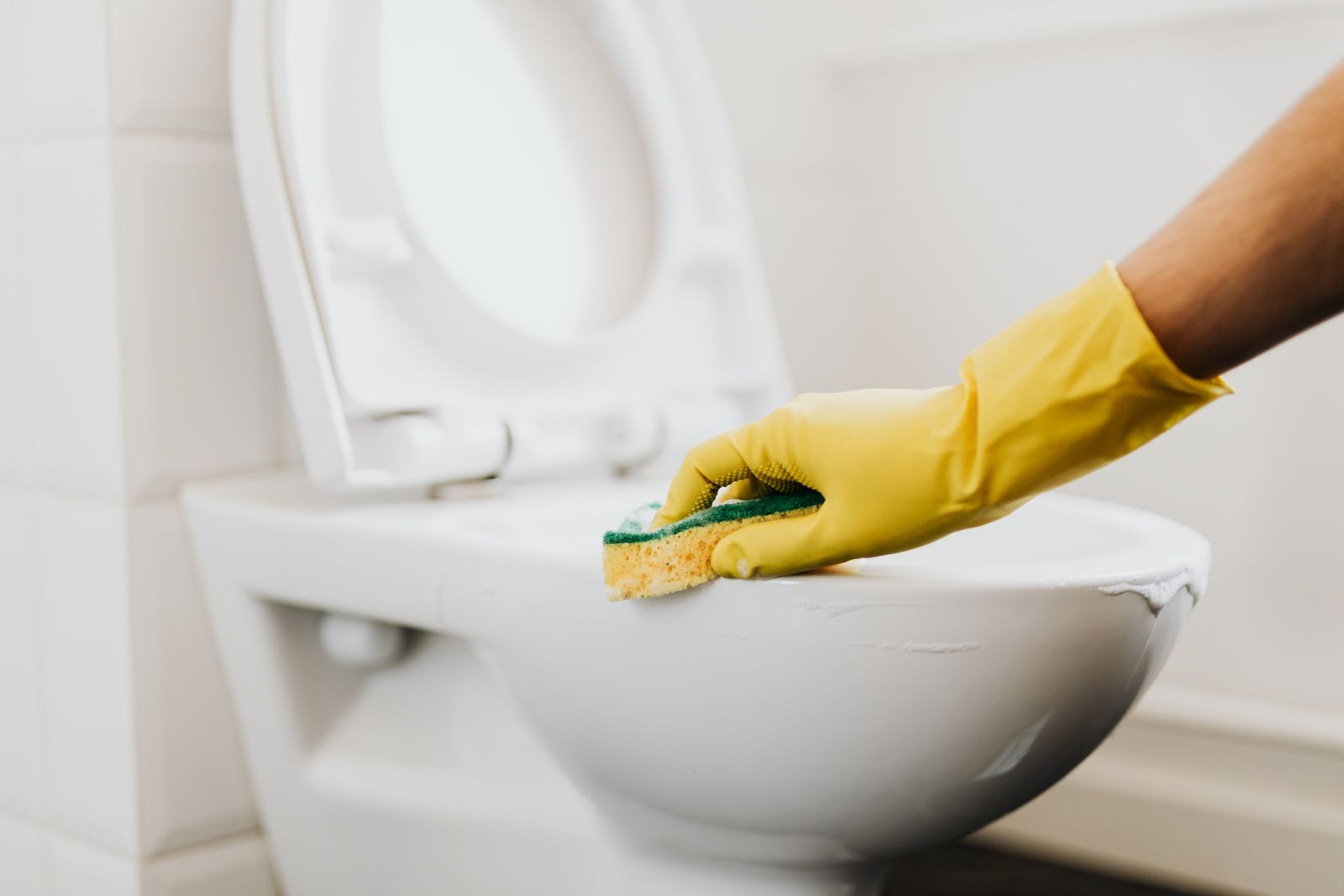
Apply the three percent peroxide to a pre-cleaned surface, because heavy dirt and grease use up the peroxide before it can reach microbes. Let it stay wet for several minutes. Then wipe.
If you want to keep a spray bottle of it, and this is the part people get wrong, keep it in an opaque or dark bottle, never a clear one left out on the side.
Why light matters: the one storage mistake to avoid
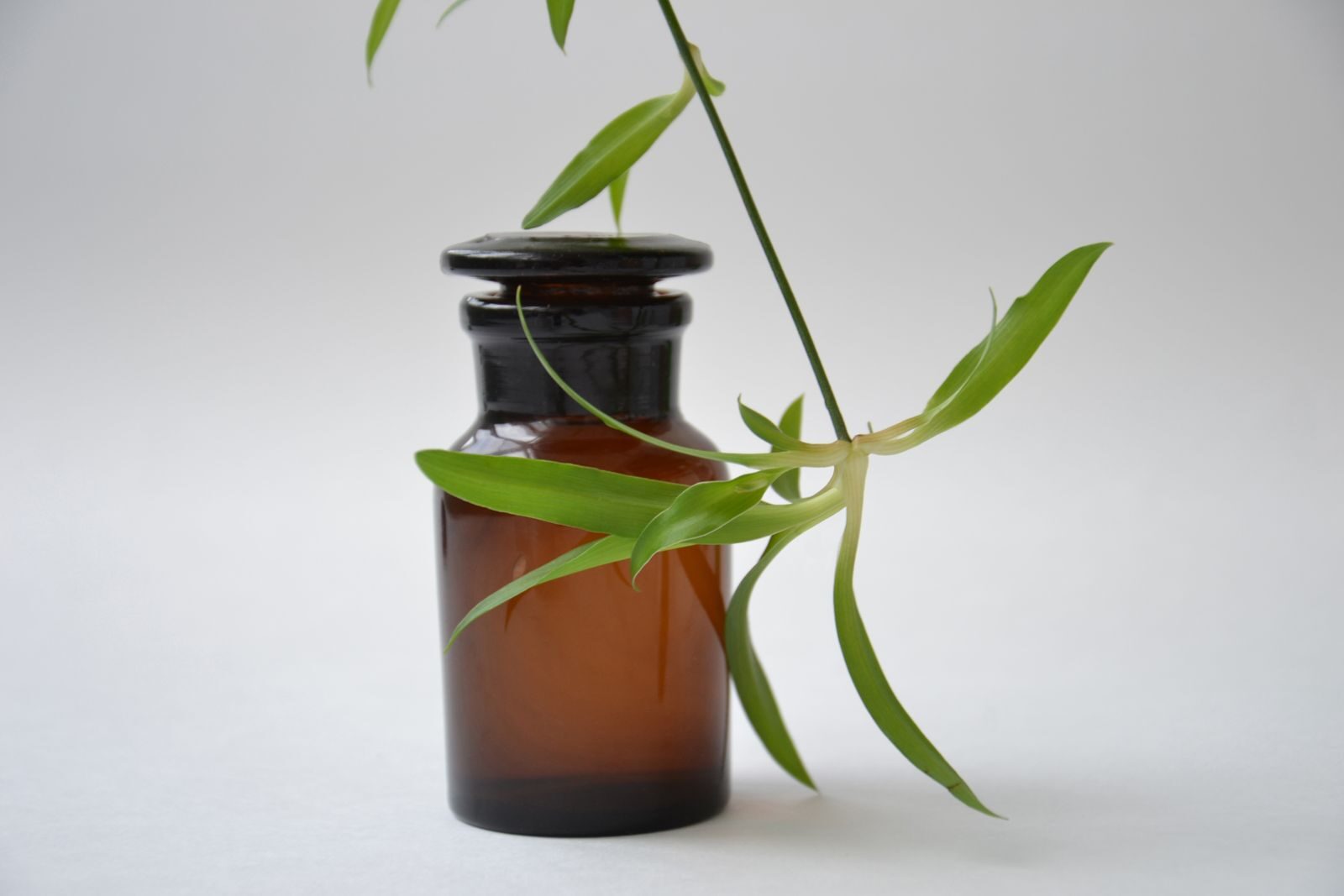
There is a reason hydrogen peroxide comes in a brown bottle, and it is not decoration.
The same reactivity that makes it a good disinfectant also makes it break down, and light speeds that breakdown up. Kept in a dark container, peroxide is stable and loses only a tiny fraction of its strength over a year.
Pour it into a clear spray bottle and leave it on a sunny windowsill, and it breaks down far faster, turning into little more than water while you assume it is still working.
This is the concentration point again, and it is a practical one. A solution that is weaker than the label says is the common trap. You think you are disinfecting, but you are wiping with something close to water.
Keep it dark, keep it capped, and do not move it into clear plastic for the long term. That one habit is the difference between peroxide that works and peroxide that only looks like it does.
Summary
Hydrogen peroxide is water with an extra oxygen atom, and it kills microbes by producing reactive hydroxyl radicals that oxidise their membranes, DNA, and cell contents. Unlike vinegar, ordinary three percent hydrogen peroxide is recognised as a stable and effective disinfectant on hard surfaces.
Its effectiveness is decided by concentration and contact time. Three percent is the right household strength, and the surface needs to stay wet for several minutes rather than being wiped straight off.
It works well on pre-cleaned bathroom surfaces, countertops, cutting boards, and some fabrics, and it leaves no lasting residue because it breaks down to water and oxygen.
The main mistake to avoid is light. Peroxide degrades in clear containers exposed to light, so keep it in its dark bottle. Buy plain three percent, use it on already-clean surfaces with real dwell time, and it earns its place as one of the few natural-leaning ingredients that genuinely disinfects.
Common questions
Does hydrogen peroxide work for cleaning and disinfecting?
Yes. Ordinary three percent hydrogen peroxide is recognised as a stable, effective disinfectant on hard surfaces, active against a wide range of bacteria, fungi, and viruses. The catch is that it only works if the surface stays wet with it for several minutes, not if you spray and wipe immediately.
What concentration of hydrogen peroxide should I use for cleaning?
The standard three percent solution sold in the brown bottle is the right strength for household cleaning. Higher-strength or so-called food-grade peroxide is a more hazardous material and is not a better everyday cleaner. For general surfaces, plain three percent is what you want.
How long does hydrogen peroxide need to sit to disinfect?
Several minutes, not seconds. The evidence shows effectiveness depends on contact time as well as concentration, and lower strengths need much longer. Apply it to a pre-cleaned surface, let it stay visibly wet for a few minutes, then wipe.
Does hydrogen peroxide need to be diluted for cleaning?
No, three percent is already dilute and is the strength most of the disinfection evidence refers to. You do not need to dilute it further for surface cleaning. Diluting it down would only lengthen the contact time needed to be effective.
Why does hydrogen peroxide come in a dark bottle?
Because light breaks it down. Hydrogen peroxide is stable in a dark container, losing only a small fraction of its strength over a year, but it degrades much faster in clear containers exposed to light. Keep it in its original dark bottle so it stays at the strength on the label.
Is hydrogen peroxide better than vinegar for disinfecting?
For genuine disinfection, yes. Three percent hydrogen peroxide is recognised as an effective surface disinfectant, while vinegar is not, because peroxide oxidises microbes through a mechanism acids cannot match. Both still depend on concentration and contact time, so either way, letting it sit is what makes the difference.

Serge, I really respect your expertise and clear explanation of household “green cleaners”. I don’t have much time to search all of your articles. Do you have any information about what you use to clean your own home (different areas) as well as concentration and contact time? I would really appreciate being steered in the right direction. I currently use white vinegar plus a little liquid dish soap for a lot of hard surface cleaning, or 3% hydrogen peroxide (dark bottle) with a little liquid dish soap for stuff like cutting boards and disinfecting counters and bathroom surfaces. I generally use a baking soda solution bath for fruit and veggies wash, then finish with a good splash of white vinegar and rub agitate well before rinsing. I don’t get sick, but I want good quality cleaning and disinfecting so I won’t get sick, you know what I mean? Thank you for reading this! I hope you will respond when you get the time!
Thank you so much for your kind words!
I understand exactly what you’re looking for a practical reference showing what to use for different areas of the home, the right dilutions, which surfaces to avoid, and the basic safety precautions, without having to search through all of my articles.
I’ve put that information together in my Natural Cleaning Recipes & Dilutions guide. It covers six everyday cleaning jobs, with the recipes, amounts, surface precautions, and a quick dilution table you can keep handy while cleaning.
One important distinction is that cleaning and disinfecting are not the same thing, so I also explain where these simple cleaners are appropriate and when a properly tested and labelled disinfectant is the better choice.
You can find the guide here: Natural Cleaning Recipes & Dilutions
I hope it saves you some time and makes your cleaning routine much simpler!