






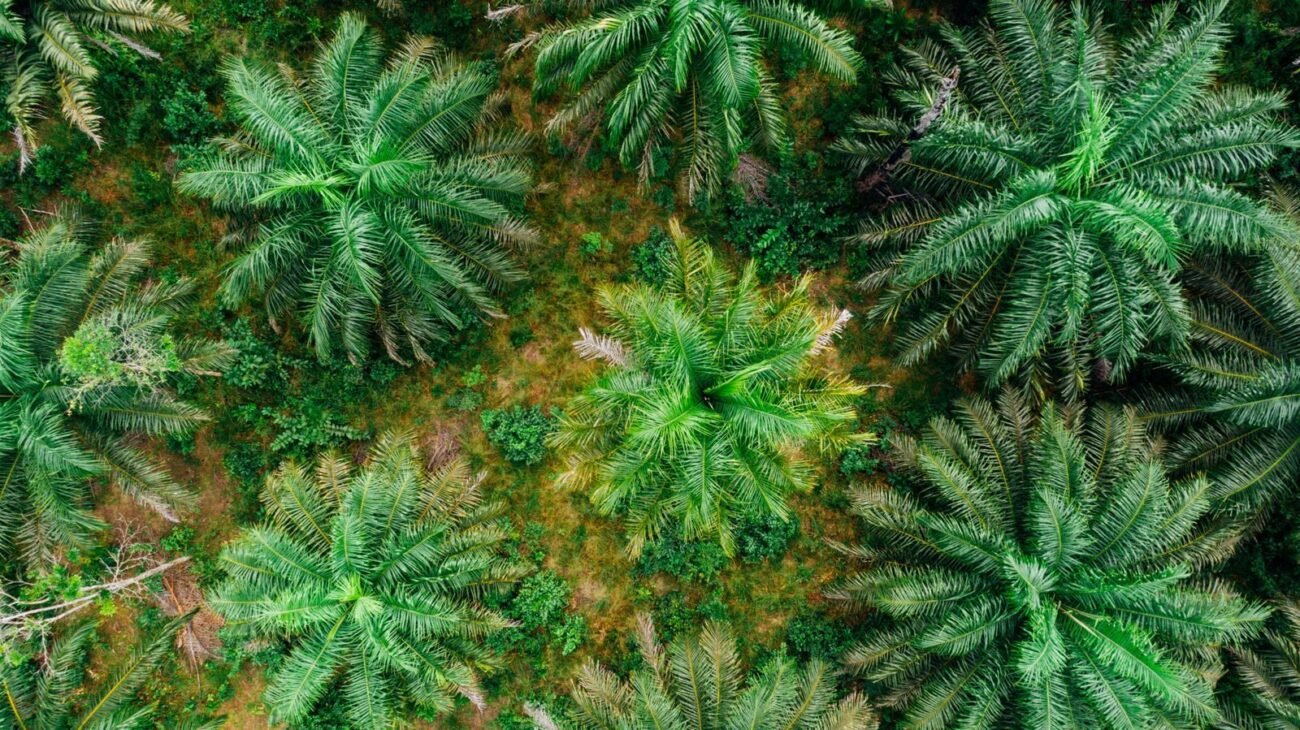
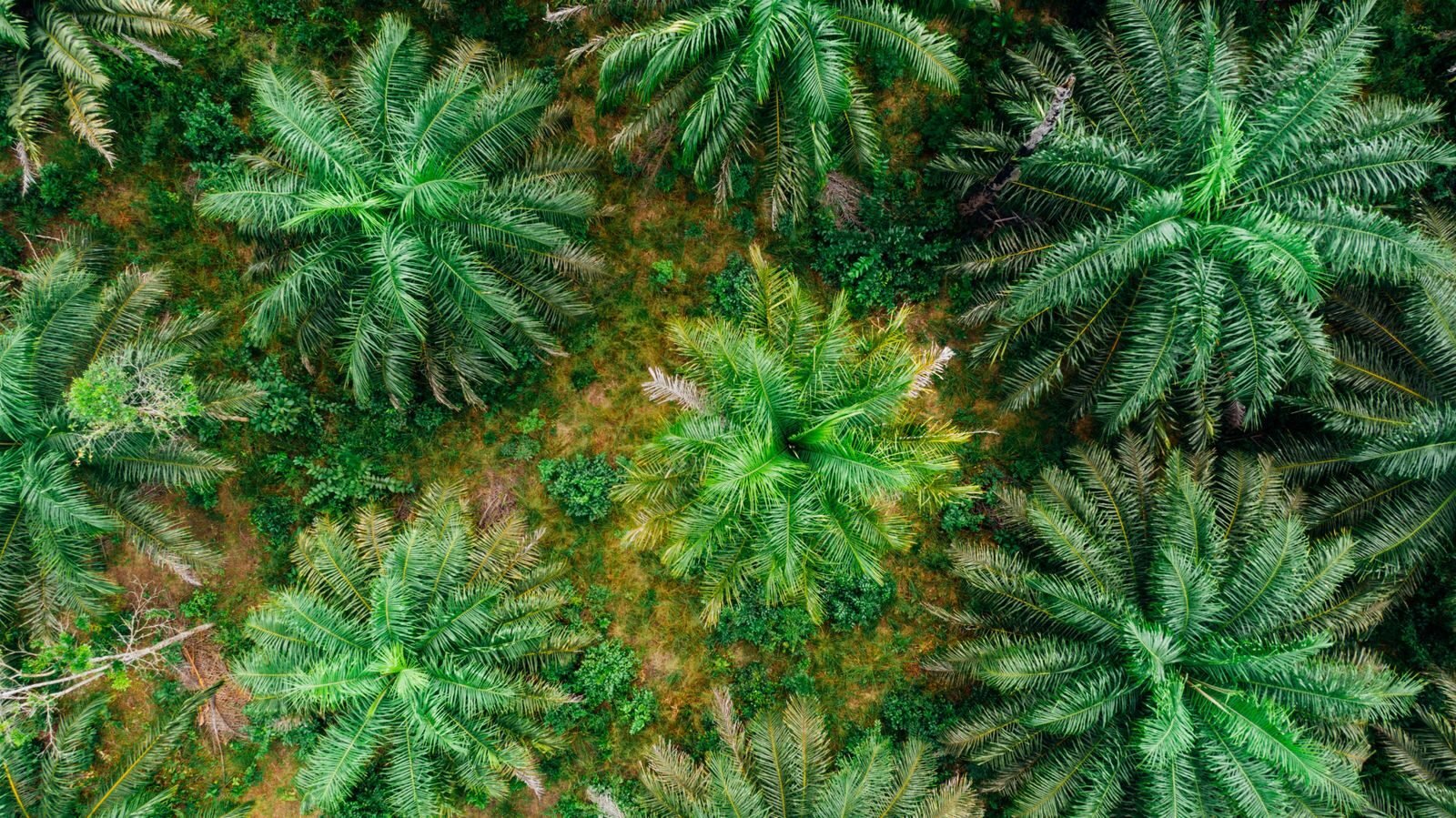
You reach for the cleaner that says “plant-based” because it sounds like the kinder choice.
Plants, not petrochemicals.
But here is a question almost no label answers: which plant?
Because a large share of the time, the plant is oil palm, and palm oil carries an environmental cost that the friendly green wording never mentions.
I want to walk you through this plainly, because it sits right in my area. I am a plant biologist, so a bottle saying “plant-based” does not make me feel warm and safe. It makes me want to know the species, where it grew, and what growing it did to the land.
I am the sort of person who reads an ingredients list and starts naming plant families in my head, which is not the party trick you might hope for, but it turns out to be quite useful here. With palm oil, that habit opens up one of the biggest environmental stories in the whole cleaning aisle.
The plant behind “plant-based”
Let me start with the plant itself, because that is where I always begin.
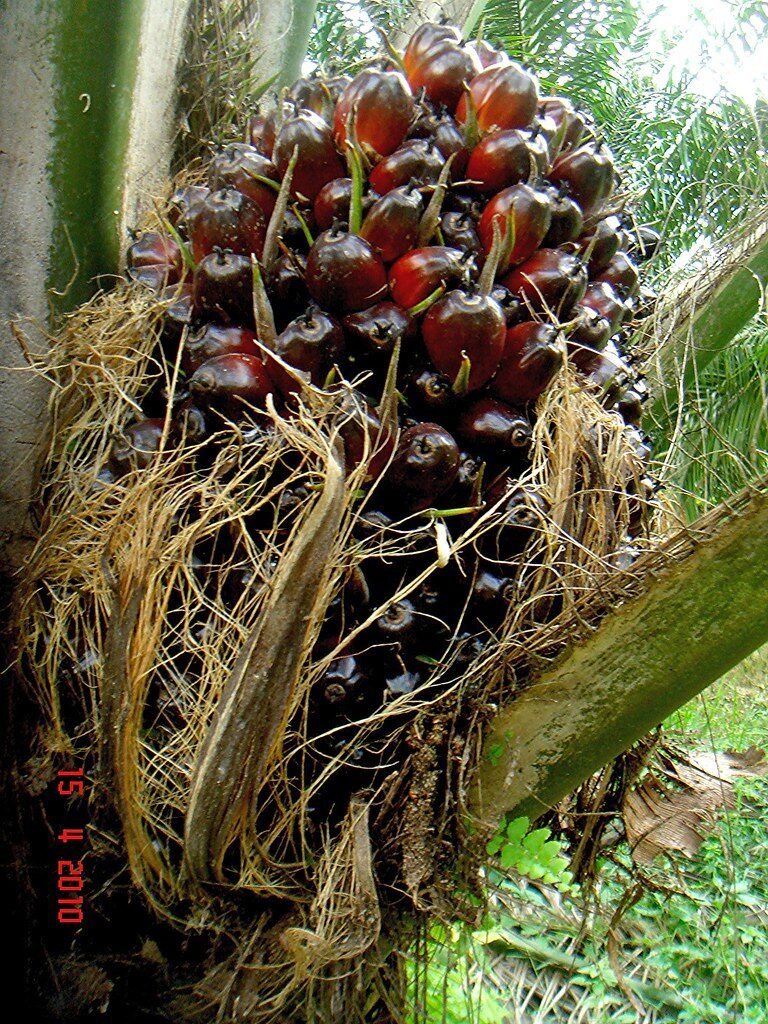
Most of the palm oil in the world comes from a single species called Elaeis guineensis, the African oil palm. It belongs to Arecaceae, the palm family, the same broad group as coconut and date palms. I do not know this plant only from a textbook. I have stood right next to these fruit bunches, the heavy, tightly packed clusters of dark red fruit you can see below, so this is a plant I have known up close, not just read about.
There is a second, less common species, Elaeis oleifera from the Americas, but the African one does nearly all the work, because it produces far more oil. So when a label says “plant-based,” and the surfactant came from palm, this tall tropical palm is very often the plant in question.
Knowing the species is not showing off. It is the thing that lets you ask the useful question, which is not “is this natural” but “what does growing this particular plant, at this scale, do to the world.” And for Elaeis guineensis, the answer is a serious one.
Why so many plant-based cleaners use palm
Here is the link most people never make, and it is the heart of this.
The cleaning power in most liquid cleaners comes from surfactants, the molecules that lift grease and dirt. Many of these are made from plant oils, and by far the cheapest and most common oil for the job is palm oil, along with palm kernel oil from the seed.
Palm turns up in something like half of all supermarket products, and it feeds a large slice of the world’s surfactant supply. So a cleaner that says “plant-based” has a strong chance of being, underneath, palm-based.
That would not trouble me if palm were grown gently. The problem is the scale. To meet global demand, enormous areas of tropical rainforest in Southeast Asia have been cleared to plant oil palm, taking habitat from wildlife like orangutans and releasing stored carbon as the forest goes. So the cheerful “plant” on the front of the bottle can carry a heavy load the wording never hints at.
How I spot hidden palm on a label
This is the part I most wanted to give you, because it is a skill, and once you have it you cannot unsee it.
Palm almost never appears on an ingredients list as “palm oil.” It hides behind the names of the processed surfactants and fatty pieces made from it, and there are said to be over two hundred such names. You do not need all two hundred. As a plant biologist reading a label, I look for a few tell-tale clues:
The word “palm” or “palmitate.” Anything ending in palmitate, or containing palm or palmate, usually traces back to palm. Sodium palm kernelate is about as blunt as it gets.
The Latin name itself. If you see Elaeis guineensis on a list, that is the oil palm, named in plain botanical Latin that most shoppers walk straight past.
The lauryl and laureth family. Sodium lauryl sulfate and sodium laureth sulfate are commonly made from palm or palm kernel oil, though they can also come from coconut, which is why sourcing openness from the brand counts.
The “coco” and “glucoside” names. Ingredients like sodium coco sulfate or the gentle coco glucoside are marketed as coconut, but the same chemistry is often run on palm kernel oil, because the two oils are chemically similar. Coconut on the story, palm in the tank, is a thing that happens.
None of these names is a guarantee on its own, and that is the honest trouble. The label was never built to let you trace the plant. If you want a structured way to weigh how trustworthy a green claim is, I made a greenwashing score tool that walks through the questions I would ask.
The twist: palm-free is not simply the answer
Now I have to be fair, and my training stops me handing you the easy answer you might expect.
The obvious response is “just avoid palm.” But the evidence does not back a simple boycott, and I would be misleading you if I pretended it did. Oil palm has one powerful advantage that comes straight from its biology: it produces far more oil per area of land than any other oil crop.
According to the conservation body the IUCN, oil palm gives much more oil per hectare than soy, rapeseed, or sunflower. So if the world dropped palm and moved to another plant oil, it could need far more land to make the same amount, and clearing that extra land could harm more wildlife in total, not less.
So the position is uncomfortable and layered. Palm oil does real harm the way it is often grown, yet replacing it with hungrier crops can do harm too. This is not the tidy story either side likes to tell, and it is the sort of trade-off I would rather set in front of you than smooth over.
What “sustainable” palm oil does and does not fix
If palm-free is not a clean answer, the next hope is “sustainable” palm oil, usually shown by a certification called the RSPO. Does it work? Partly, and the evidence is worth knowing.
A peer-reviewed study in the journal PNAS looked at certified oil palm in Indonesia and found that certification did lower deforestation, by about a third compared with uncertified plantations. That is a reduction that counts. But the same study found the catch: most plantations already held very little forest by the time they were certified, so the total forest actually saved was small, and certification made no difference to fires or to the draining of carbon-rich peatlands.
So certification is better than nothing, and weaker than the word “sustainable” suggests. It is a step, not a cure. Knowing that, I treat a sustainability logo as a mild plus, not a green light, and keep my expectations modest about what it has truly prevented.
How I would choose
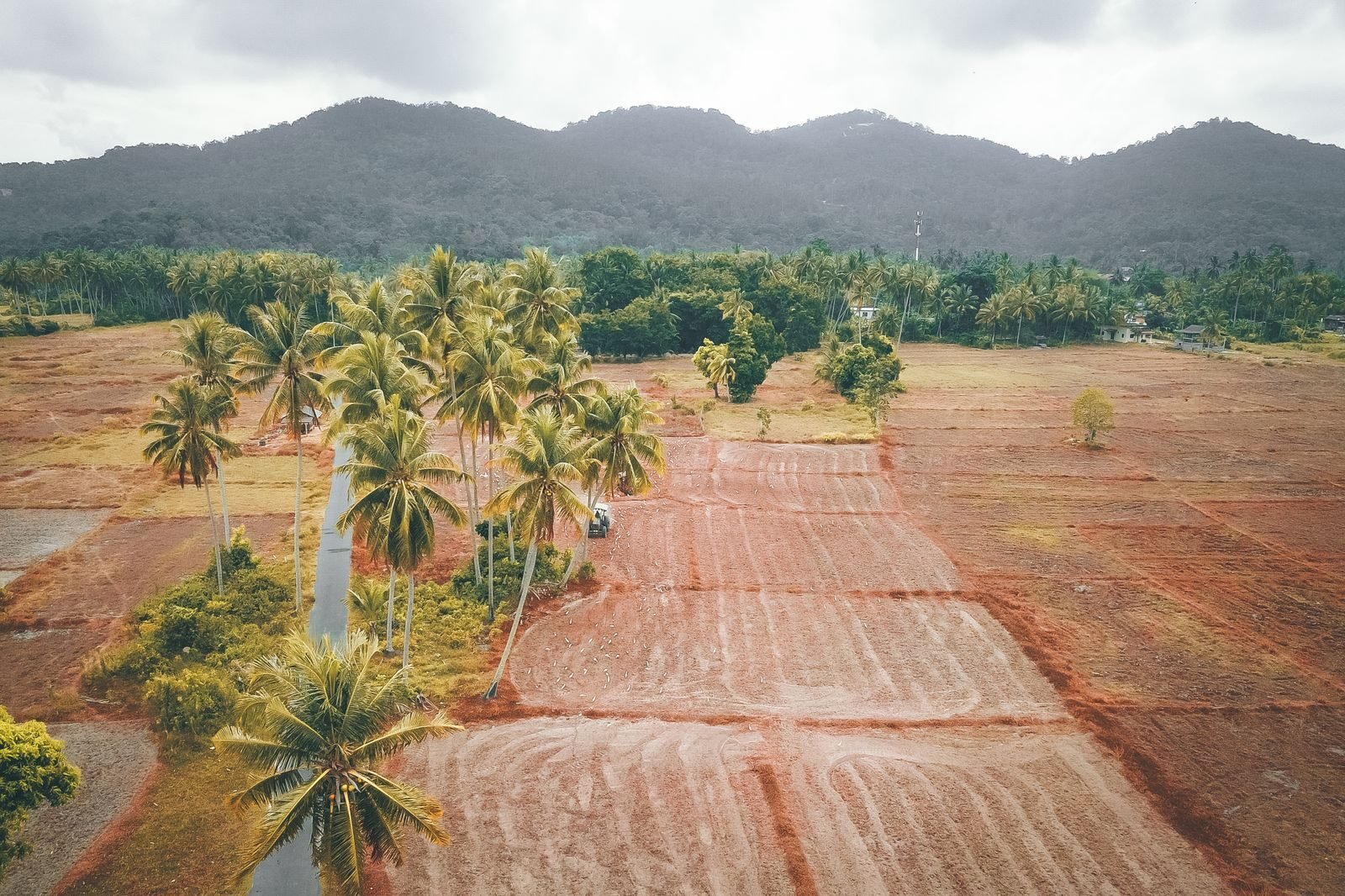
So what do I do with all this, and what would I suggest? Not despair, and not a rigid rule. Something calmer.
I no longer read “plant-based” as proof of anything green, because now you and I both know it can quietly mean palm-based. When a brand is open about its sourcing, naming its oils, avoiding palm where it can, or holding a credible certification, I trust it more than one that just prints “plant-based” and says nothing else. Openness beats a soft green word.
I also use less product, because the best way to lower the impact of any cleaner is to use less of it in the first place. If you tend to pour in more than you need, my ingredient concentration estimator can help you work out how much a job takes.
That is the shape of it. “Plant-based” is not the clean promise it looks like, the hidden plant is often a tall tropical palm called Elaeis guineensis, and neither using it nor dropping it is simple. The best you can do is favour the brands that tell you the truth, keep level expectations of certification, and use only what you need.
Summary
Many “plant-based” cleaners get their surfactants from palm oil, mostly from a single species, Elaeis guineensis, the African oil palm. Palm is the cheapest and most common oil for the job and appears in around half of supermarket products, but growing it has driven large-scale tropical deforestation, harming wildlife and releasing carbon.
It rarely appears by name on labels, hiding behind more than two hundred ingredient names such as sodium palm kernelate, sodium lauryl sulfate, and even some coco surfactants.
Avoiding palm entirely is not a clean fix…
Oil palm produces far more oil per hectare than crops like soy or sunflower, so switching to other oils can need more land and cause more harm overall. “Sustainable” certification helps only partly: a peer-reviewed study found RSPO certification cut deforestation by about a third, but most certified land already held little forest, and it did not stop peatland loss or fires.
So “plant-based” proves little on its own. The better approach is to favour brands that are open about their sourcing, treat sustainability logos as a mild plus rather than a guarantee, and use as little product as the job needs.
Common questions
Do “plant-based” cleaners contain palm oil?
Very often, yes. The surfactants that do the cleaning are frequently made from palm oil or palm kernel oil, since palm is the cheapest and most common plant oil for the job. Because palm hides behind many different ingredient names, a “plant-based” label usually cannot tell you whether palm is involved.
Which plant does palm oil come from?
Almost all of it comes from one species, Elaeis guineensis, the African oil palm, part of the palm family Arecaceae. A second species, Elaeis oleifera from the Americas, exists but is little grown because it yields far less oil. So the “plant” in many plant-based cleaners is this one tall tropical palm.
Why is palm oil a problem in cleaning products?
Growing oil palm to meet demand has cleared large areas of tropical rainforest, mainly in Southeast Asia, taking habitat from wildlife and releasing stored carbon. So a cleaner marketed as plant-based can carry a deforestation cost the green wording never mentions.
Should I avoid palm oil in cleaners completely?
Not necessarily. Oil palm produces far more oil per area of land than other crops, so switching to alternative oils can need more land and harm more wildlife overall. Avoiding palm is not a simple win, which is why openness about sourcing and credible certification count for more than a blanket boycott.
How can I tell if a cleaner contains palm oil?
Look past the word “plant-based” to the ingredients, and watch for clues: anything with “palm” or ending in “palmitate,” the Latin name Elaeis guineensis, the lauryl and laureth family, and coco surfactants like sodium coco sulfate, which are often run on palm kernel oil. No single name is proof, so a brand that is open about its sourcing is worth more than one that stays silent.