




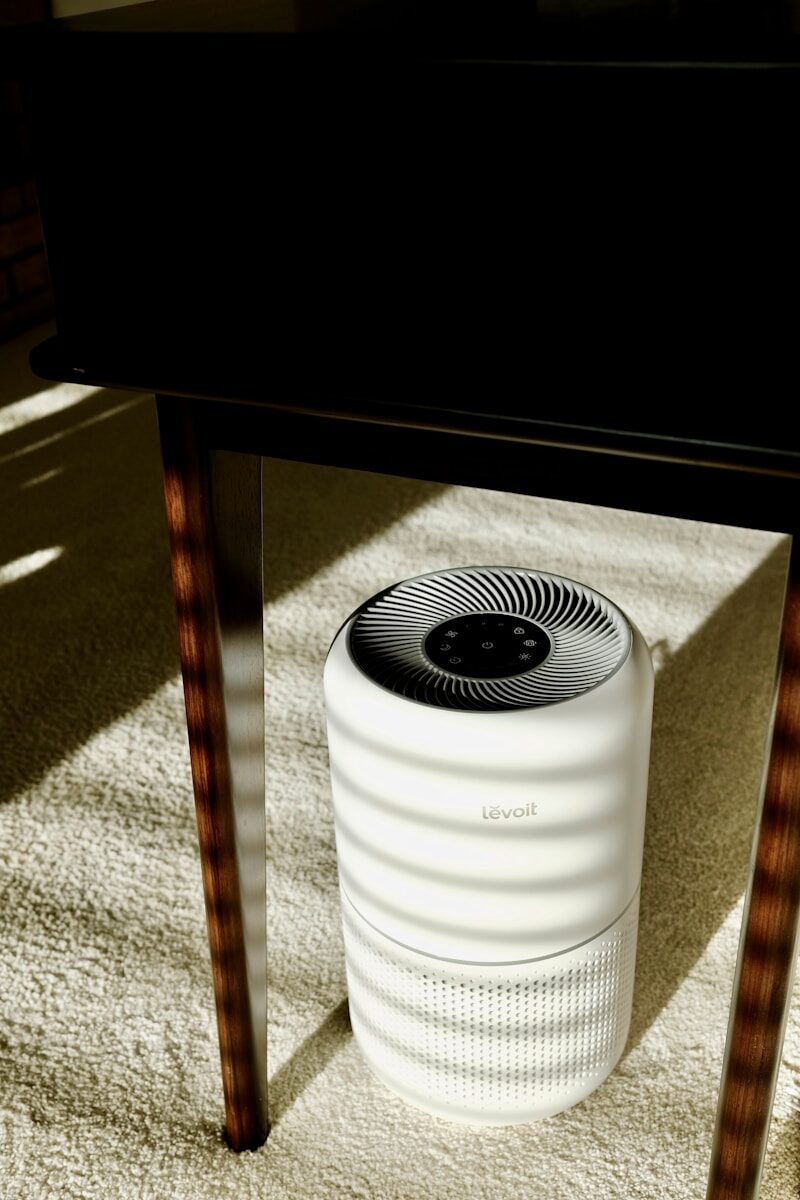




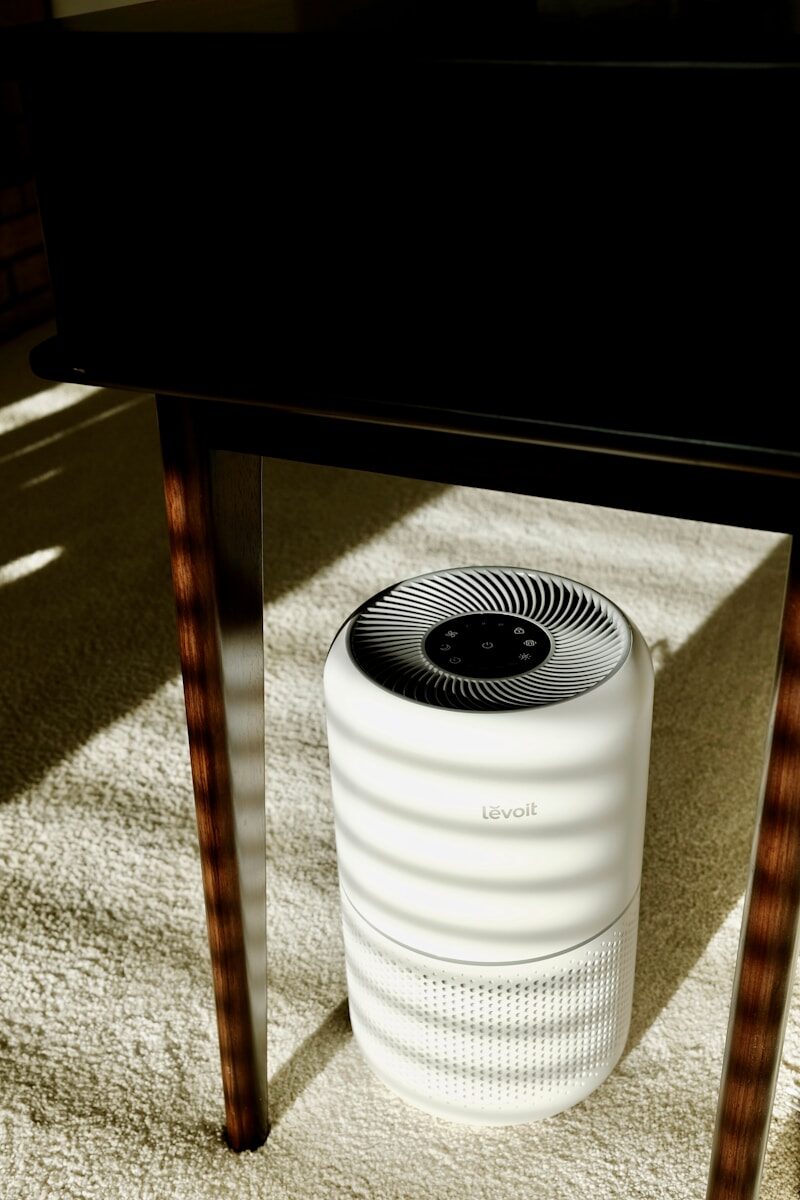
Two air purifiers, side by side. One says CADR 250. The other says CADR 180.
Grab the bigger number and go, right?
Not so fast. That number gets built in a specific way, and once you know how, the whole shelf looks different.
What CADR is really measuring
CADR stands for Clean Air Delivery Rate. The Association of Home Appliance Manufacturers built it so shoppers could compare purifiers on something real, instead of trusting whatever a manufacturer decided to print. Good idea. Most of this market runs on vague words rather than anything you can measure.
CADR is not how much air the fan pushes. That number is CFM, cubic feet per minute, a completely different measurement. A purifier can have a big loud fan and a high CFM while still delivering a weak CADR, if the filter is too dense or air slips around it instead of through it. CADR only counts the air that comes out clean.
The test itself is blunt and physical, which I like. Put the purifier in a sealed chamber. Measure how fast particles settle on their own with the unit off. Turn it on, measure the new, faster rate. Multiply the difference by the chamber’s size. That’s the CADR. No modeling, no estimating, just a stopwatch and a particle counter.
Why you get three numbers, not one
A properly certified purifier carries three separate CADR scores: smoke, dust, and pollen. Each one gets tested against a different particle size. Smoke particles are tiny and slip past filters easily. Pollen particles are huge and get caught with no effort. Dust sits in the middle.
Look at the smoke number first. It’s almost always the lowest of the three, and it shows you the purifier’s worst-case performance, not its best. A box that leads with a big pollen number isn’t lying to you. It’s just showing you its easiest win.
Sizing CADR to your room
AHAM and the EPA’s own indoor air quality office agree on the same rule. Take your room’s square footage, multiply by two-thirds, and that’s the minimum smoke CADR you need. A 300 square foot room wants a smoke CADR of at least 200. This isn’t a made-up number. It’s built to hit 4.8 air changes per hour, the point where a room’s air is being cycled fast enough to help with allergies, not just stirred around.
One catch on ceiling height. That two-thirds rule assumes 8 feet. A 10 foot ceiling means more air volume in the same floor space, so bump your target CADR by roughly 1.25 to keep up.
What the label doesn’t tell you
This is the part most buying guides skip, and it’s exactly where my own background in measurement and quality control changes how I read this number.
First: AHAM certification is voluntary, and it costs the manufacturer money. No certified number doesn’t automatically mean a bad product, some perfectly decent purifiers skip it to save cash. But it does mean nobody outside the company has checked the claim. You’re trusting the label with zero way to compare it fairly against something certified. Given the choice, I’ll take a verified 180 over an unverified 250 every time.
Second, and this is the most important part: CADR was never built as a safety test. It says nothing about ozone byproducts, nothing about motor reliability, nothing about power draw. A purifier can post a high CADR across all three categories and still be a bad buy for a reason this number was never designed to catch.
A high CADR tells you one thing only: this device pulls particles out of the air fast. It says nothing about whether it’s safe, efficient, or built to last.
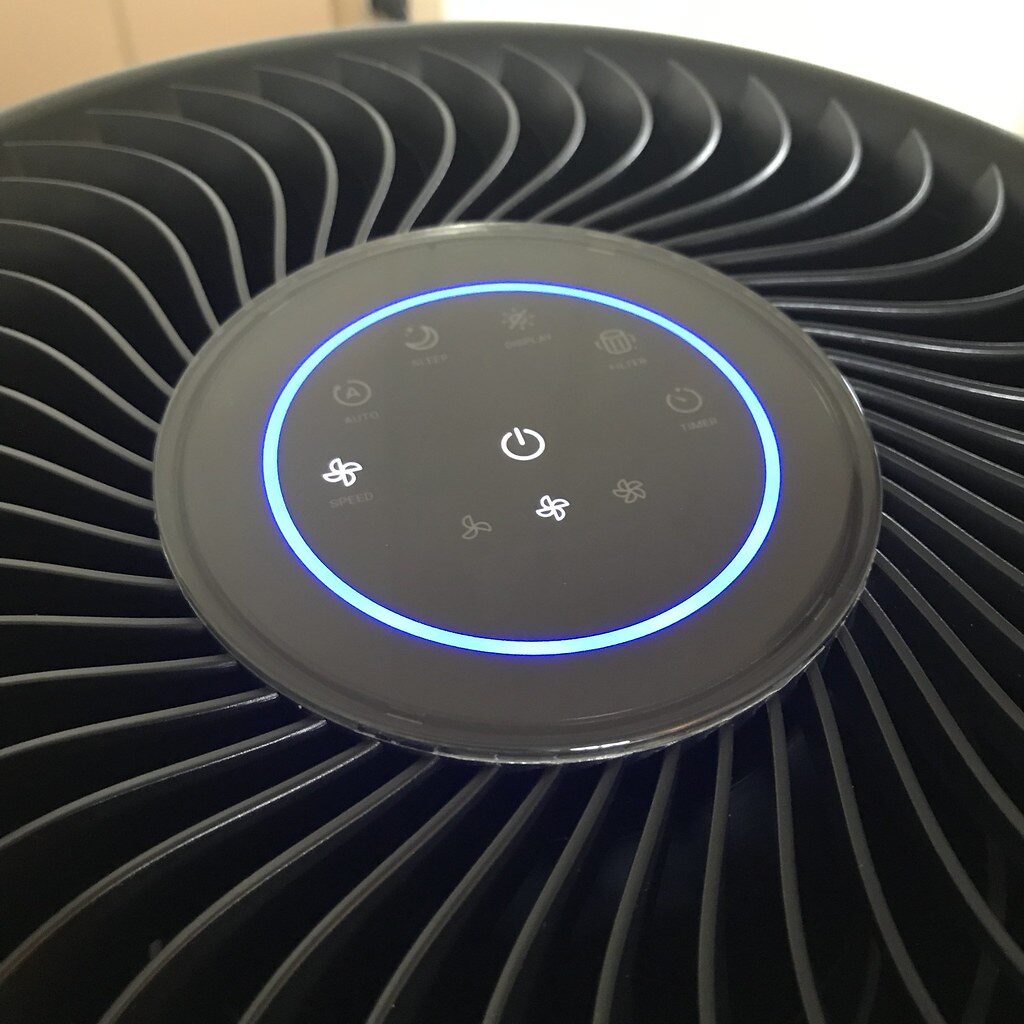
One more limitation worth knowing. CADR gets tested at a single fixed fan speed inside a controlled chamber. Smart purifiers that ramp their fan up and down automatically don’t fit that test cleanly. So the number on the box might not match how the unit behaves running quietly on low, which is how most people leave these things most of the day.
What I’d do with this number
I’d size it with the smoke CADR and the two-thirds rule, treat a missing certification as a reason to keep looking rather than panic, and stop treating CADR as the whole verdict.
It nails one question: how fast does this thing clear particles. Everything else about safety, efficiency, or build quality still needs a separate check.
Summary
CADR, Clean Air Delivery Rate, measures the volume of real filtered clean air a purifier delivers, not the raw airflow of its fan, which is a separate figure called CFM. Certified units carry three CADR scores, smoke, dust, and pollen, tested on different particle sizes, with smoke usually the lowest and most telling number.
A good CADR for your room is roughly two-thirds of its square footage, adjusted upward for higher ceilings. AHAM certification is voluntary and costs money, so an uncertified number can’t be verified against competitors.
Most importantly, CADR was never designed to measure safety, ozone output, or energy use, a high score tells you the unit removes particles quickly and nothing more.
What people usually want to know
What does CADR mean on an air purifier?
CADR stands for Clean Air Delivery Rate, a measurement developed by AHAM that shows how much real filtered clean air a purifier delivers per minute, tested separately for smoke, dust, and pollen particles.
Is a higher CADR always better?
A higher CADR means faster particle removal for that specific pollutant, but it says nothing about safety, ozone output, or how well the unit is built. Match the CADR to your room size rather than simply buying the highest number available.
What is a good CADR rating?
Take your room’s square footage and multiply by two-thirds, that’s the minimum smoke CADR worth looking for. A 300 square foot room needs a smoke CADR of roughly 200 or more.
Is CADR the same as CFM?
No. CFM measures the total volume of air the fan moves. CADR measures the volume of air that comes out clean, accounting for how well the filter captures particles. A purifier can have a high CFM and a much lower CADR.