







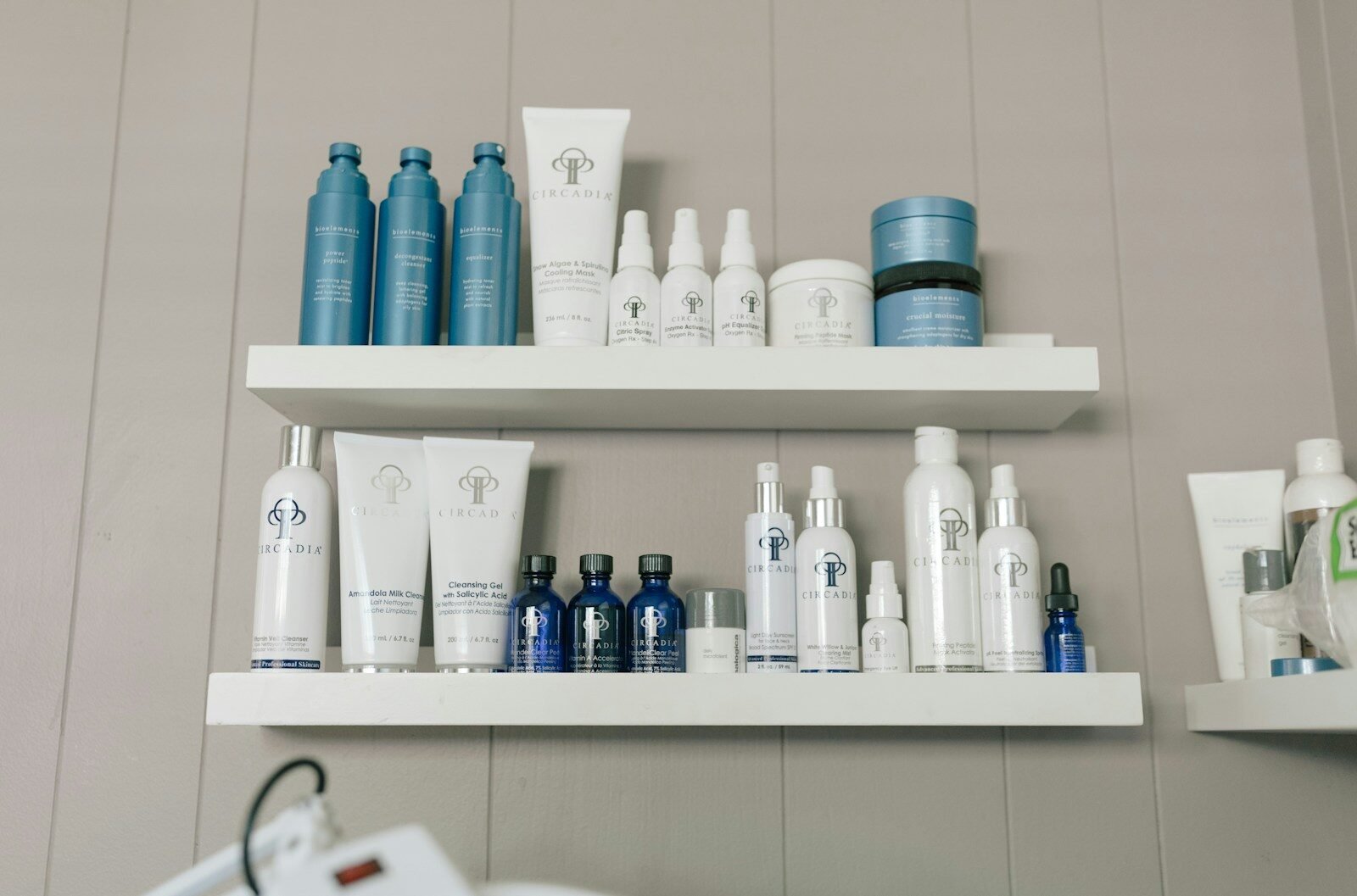
That before and after photo looks convincing.
Does it prove anything?
Almost every skincare ad has one. Two photos of the same face, the second one clearer, brighter and smoother. It is hard not to be impressed.
I look at those photos differently because of how I was trained. My courses on the design of ecological experiments, quality control of measurements and data-mining all taught me the same lesson. A result only means something if you know what would have happened without the treatment.
A skincare photo almost never tells you that. So here is how I read skincare claims, and what I look for when a brand says its product is “clinically proven”.
Does “clinically proven” mean anything? It can, but I found no official definition of the phrase. It is only as strong as the study behind it: how many people, for how long, and compared with what.
Why a before and after photo proves so little
Photos are easy to change without anyone noticing. Different lighting, a different angle, a little makeup, skin that is more hydrated in the morning than in the evening, or a slightly different distance from the camera can all change how skin looks. You do not need a clever filter for that.
Skin also changes by itself. People often start a new product when their skin is at its worst, for example during a breakout or a dry spell. Skin tends to improve afterwards whatever you apply, and the product gets the credit. Scientists call this regression to the mean, which just means that extreme moments rarely last.
Then there are the other changes. Most people who start a new serum also change their cleanser, sleep better, drink more water or move to a different season. If five things changed, you cannot say which one helped.
And finally, a brand chooses which photos to show. You see the best result, not the average one.

What a good skincare study looks like
When I read a study, I look for a few basic things before I look at the result.
A control group. Some people use the product and some do not, so you can compare. Even better is a control that uses the same cream without the active ingredient, because applying any moisturiser can improve how skin looks.
Random assignment. People are put into groups by chance, not picked by the researchers. Otherwise the groups can differ from the start.
Blinding. Neither the participants nor the people judging the results know who got what. When people expect a product to work, they often report that it does.
Enough people, for long enough. A study with 20 people over two weeks can show a trend, but it cannot show much more. Skin changes slowly, so a test shorter than about a month is hard to trust.
A measurement, not only an opinion. Measured changes, such as skin moisture or wrinkle depth, are stronger evidence than a questionnaire that asks people if their skin feels better.
Is “clinically proven” regulated?
Partly, and it depends on the product. The US Federal Trade Commission guidance on health products says claims about health benefits need competent and reliable scientific evidence, and that for health benefits this “will need to be in the form of randomized, controlled human clinical testing.” It says animal and laboratory dish studies are not enough on their own, and that customer surveys are never sufficient.
That guidance covers foods, supplements, drugs and other health-related products. It does not mention skincare by name, so I cannot tell you how it applies to every cream. And the US Food and Drug Administration says the law does not require cosmetics to be approved before they go on the market.
A product meant to change the skin’s structure, such as removing wrinkles or increasing collagen, is treated as a drug or device. The page does not say that anti-aging cosmetics must be proven effective.
So I treat “clinically proven” on a cosmetic as a claim I check myself, not a stamp that someone has checked for me.
Two habits I use when I read a claim
First, I ask how a number was measured and how much it can vary. A small change in skin moisture means little if the measurement itself moves around by about the same amount.
Second, I ask how many things were measured. If a study measures many outcomes and the brand reports only the ones that improved, something will look good by chance. So I ask what else was measured, and where the other results are.
I have not run skincare trials myself. This is how I judge the evidence, not a claim that I tested these products.
Common tricks in skincare claims
Once you know what to look for, a few patterns show up again and again.
“Clinically proven” with no details. This phrase has no fixed meaning. It can describe a small test with no control group. If a brand does not say how many people took part, how long it lasted and what they compared against, I treat it as marketing.
Results from a dish, not from skin. Many plant extract claims come from tests on cells in a laboratory dish. A compound that works there may never get through the skin in useful amounts, which I explain in how well plant extracts absorb into skin. The same applies to the question in do plant extracts in skincare work.
Evidence for the ingredient, not the product. A study may show that an ingredient works at a certain concentration. Your product may contain much less of it, or a form that breaks down quickly, as I describe in why a vitamin C serum turns brown and why turmeric is hard to use in skincare. My Ingredient Concentration Estimator can give you a rough idea of how much of an ingredient a label implies.
Self-assessment numbers. A line like “92 percent said their skin felt smoother” comes from a questionnaire. It says how people felt, not what changed.
Official-sounding labels. “Dermatologist tested” and logos on the pack do not prove the product works. I explain what they do and do not mean in what hypoallergenic and dermatologist tested mean and skincare certification logos explained.
A good example of an ingredient with real evidence behind it is salicylic acid, and the plant source that gets compared to it is covered in willow bark versus salicylic acid.
Clinically proven, clinically tested, scientifically proven: are they the same?
No, and the differences are good to read closely. “Clinically tested” says a test happened, not that it showed a benefit. “Clinically proven” says it worked, but gives no detail. “Scientifically proven” and “medically proven” have no fixed meaning that I found. “Dermatologist recommended” is someone’s opinion, not a study. I cover “dermatologist tested” in the post I link above.
The FTC guidance gives an example of why wording counts. It says “clinically tested ingredient” can imply that the test results prove a benefit, so the product itself may need testing, not only the ingredient.
How I check a “clinically proven” claim
First, I look for the study. I search the product claim with the ingredient name, and I look for the number of people, the length of the test and what it was compared with. Second, I check that the product was tested, not only a single ingredient. Third, I check whether the result was measured or just reported in a questionnaire.
If I cannot find any of this after a few minutes, I treat the line as marketing. I apply the same checks in plant based skincare brands backed by science.
What I would do at home
If I wanted to know whether a product helps my own skin, I would run a small, fair test on myself. It is not a scientific trial, but it avoids the biggest mistakes.
First, change only one product at a time. If I add a new serum, I keep everything else the same. Second, I give it at least four to six weeks, because skin changes slowly. Third, I take photos in the same place, in the same light, at the same time of day, once a week, and I judge them together at the end, not one by one. Fourth, I test a small patch first, in case the product irritates.
I also check the label before I buy, using the questions in this post. My Greenwashing Score Calculator helps with the vague claims, and I created this Read a Skincare Label Like a Scientist guide to go through the rest. For a look at the common marketing words, see greenwashing in natural skincare ingredient lists.
Summary
A before and after photo cannot show that a product works, because lighting, makeup, other changes and the natural ups and downs of skin can all explain the difference. A good study has a control group, random assignment, blinding, enough people for long enough, and a measured result.
Watch for “clinically proven” with no details, tests done in a dish, evidence for an ingredient that is not about the product, and satisfaction questionnaires. At home, change one product at a time, give it a month or more, and take photos in the same light.
FAQs
Do before and after photos prove a skincare product works?
No. Lighting, angle, makeup, hydration and the natural cycles of skin can change how it looks. Without a comparison group, a photo cannot show what caused the difference.
What does clinically proven mean in skincare?
It has no fixed meaning. It can describe a large, well-run trial or a small test with no control group. Look for the number of people, the length of the test and what the product was compared against.
How long does it take to see if a skincare product works?
Usually at least four to six weeks, because skin renews slowly. A result after a few days is more likely to come from moisture or from the product’s texture than from a lasting change.
How can I test a skincare product fairly at home?
Change only one product at a time, take photos in the same light every week, and compare them at the end. Test a small patch first to check for irritation.
Does clinically proven mean anything?
It can, but I found no official definition of the phrase. It is only as strong as the study behind it, so I look for the number of people, the length of the test and what the product was compared with.
Is clinically proven skincare real, or a scam?
Some products have well-run studies, and some use the phrase with nothing behind it. The FTC guidance says health benefit claims need randomized, controlled human clinical testing, and that customer surveys are never sufficient, so I check which one I am looking at.
What is the difference between clinically proven and clinically tested?
Clinically tested says a test happened. Clinically proven says it worked, but usually gives no detail. Neither tells me how many people took part or what the product was compared against, so I look for those details.
What is the difference between clinically proven and dermatologist recommended?
A recommendation is an opinion. A clinical study is a measured comparison. I ask whether a recommendation comes from a study, and what that study measured.
What skincare ingredients are clinically proven?
I will not give you a list, because I have not found one official source that lists them, and evidence depends on the amount and the formula. That includes common ingredients like niacinamide and hyaluronic acid. I check the study for the amount used and whether it matches the product.
How do I find skincare that is clinically proven?
I look for the study behind the claim, not the claim itself. I check the number of people, the length of the test, the comparison group, and whether the product or only an ingredient was tested. If I cannot find those, I treat the claim as marketing.
Is clinically proven skincare better than natural skincare?
Neither word tells me a product works. Natural describes where the ingredients come from, and clinically proven says a study exists. I ask the same question of both: what was measured, and against what.
What are the best clinically proven skincare brands?
I do not review or rank brands, so I cannot name one. I would check each product claim with the questions in this post and look for the study behind it.