








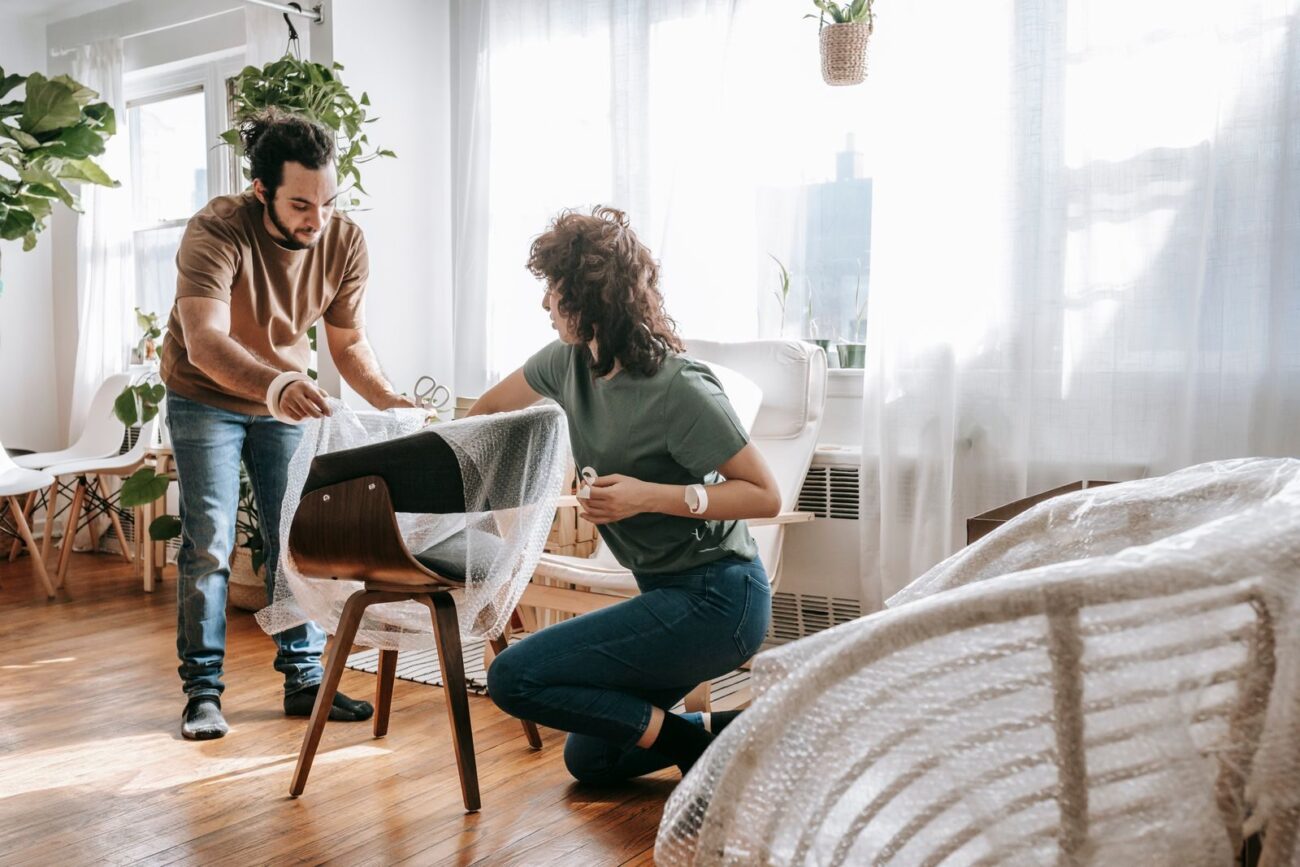
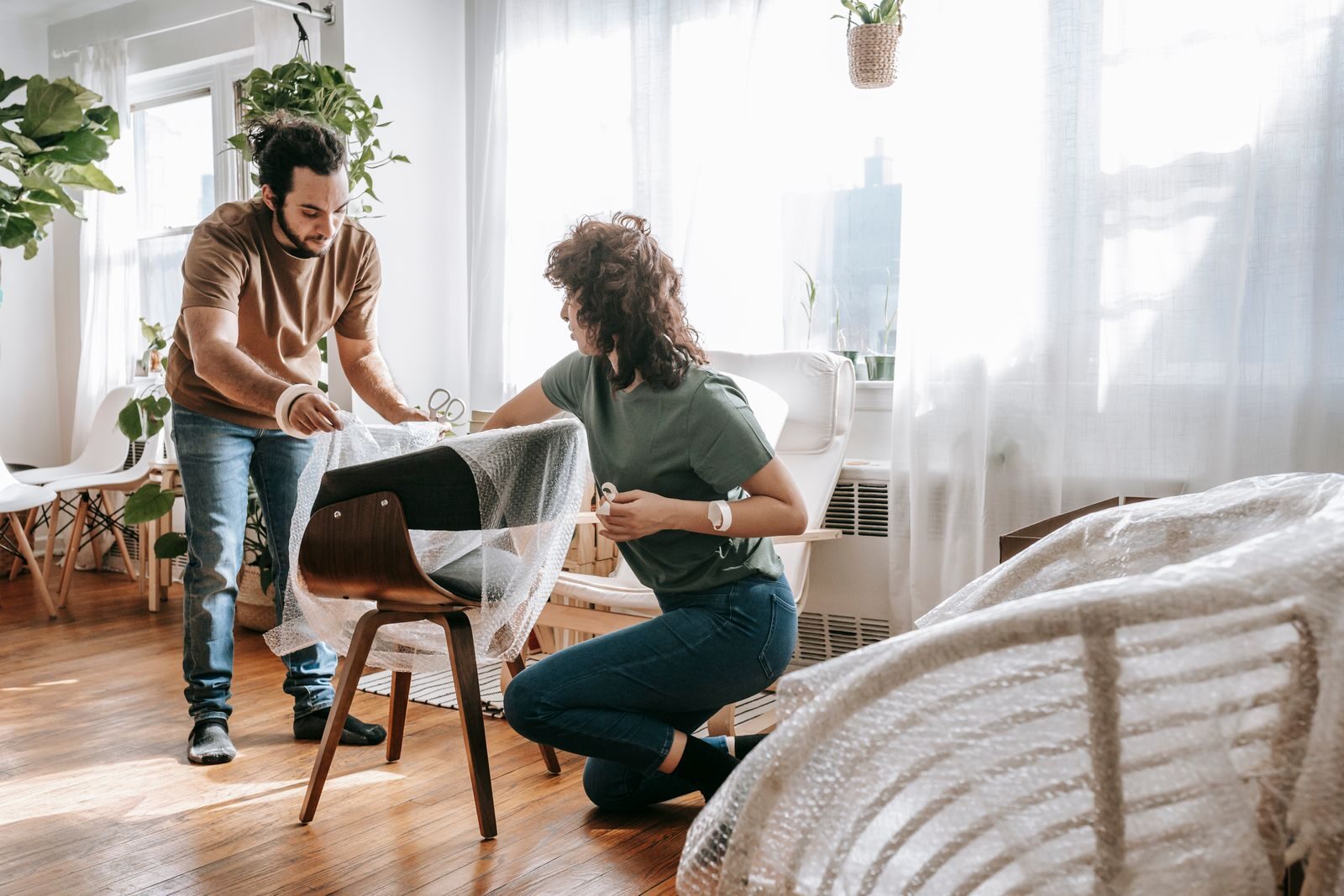
You unwrapped the new wardrobe, or the sofa, or the flat-pack desk. Now the whole room smells of chemicals. It catches in your throat. And if there is a baby or a pet in the house, the worry hits fast. Is this stuff harming us?
I will give you a calm, clear answer. Most articles either scare you or brush you off. Neither one helps you.
Here is the short version. The smell is real. It has a known cause. And most of the time it fades on its own. But not always. And there are a few simple things worth doing, mostly in the first weeks and mostly around babies and pets. I will tell you what the smell is, whether it is dangerous, how long it lasts, and how to clear it out faster.
What that new furniture smell really is
The smell is off-gassing. New furniture slowly lets gas escape into the air, and your nose picks it up.
The gases are called VOCs. That stands for volatile organic compounds. Volatile just means they turn into gas easily at room temperature. So they drift off the furniture and into the air you breathe.
New furniture has many sources of these gases. The glue that holds the boards together. The varnish and finish. The foam in the cushions. The dye and treatment in the fabric. The coating on leather. Each one gives off its own smell. That is why new furniture can smell sharp, or sweet, or sour, or even a bit like fish. Those are different gases coming from different parts.
So the smell is not one thing. It is many gases mixed together. And one of them is worth knowing by name.
Why formaldehyde is the one to know about
Out of all those gases, formaldehyde is the one I want you to know about. Not to scare you. It is the most studied, the most common one indoors, and it comes straight from the way furniture is built.
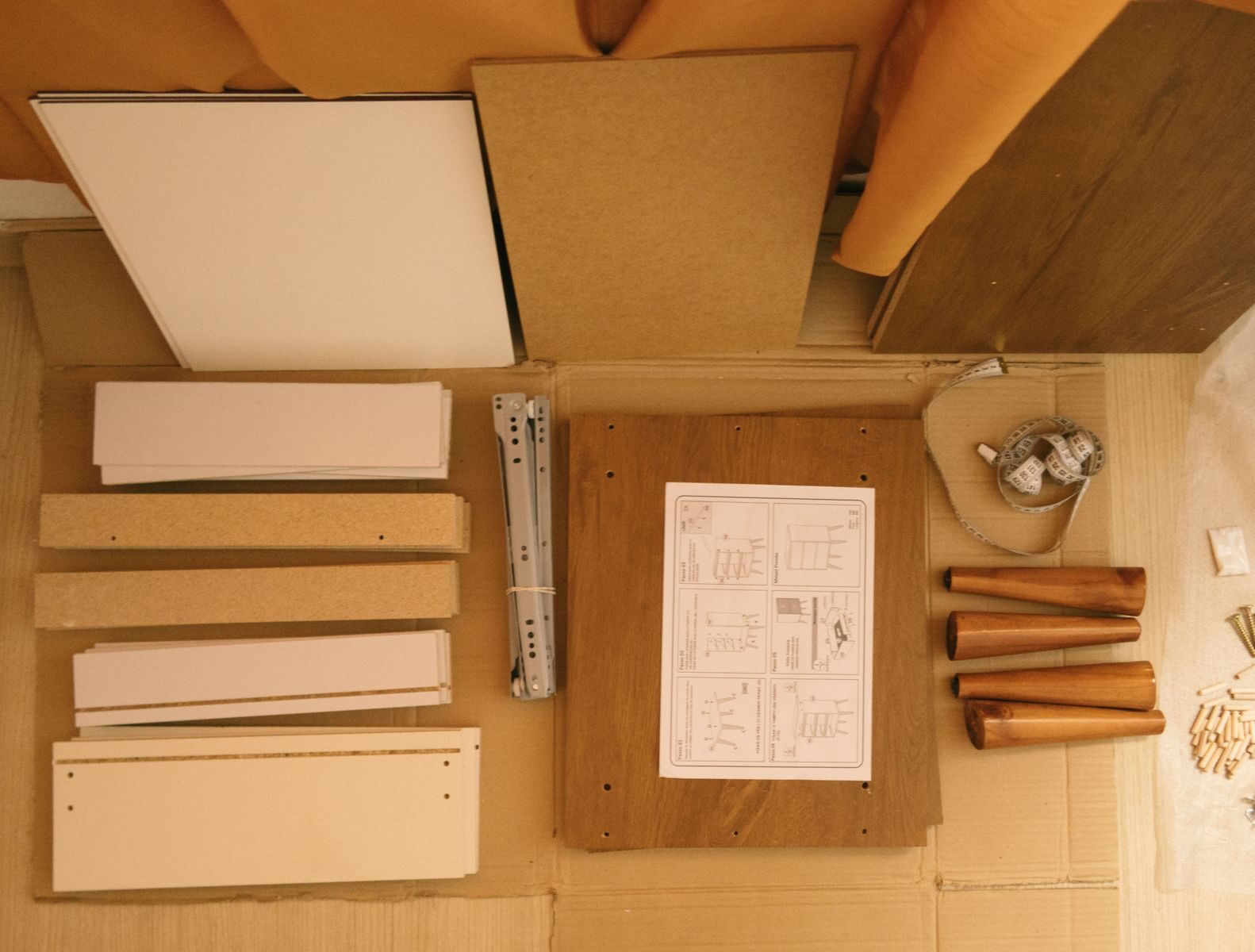
Most cheap furniture is not solid wood. It is made from pressed wood: particleboard, plywood, and a board called MDF. These are made by gluing wood chips and fibres together under pressure. The glue is usually a type that slowly gives off formaldehyde gas, long after the furniture is made.
According to the US Environmental Protection Agency, pressed wood made with this glue is the biggest source of formaldehyde in most homes. MDF gives off the most, because it uses the most glue.
So where is it? In the parts you do not think about. Drawer fronts. Cabinet sides. The thin panel on the back of a wardrobe. Shelves. Bed bases. The body of most flat-pack furniture.
Solid wood gives off very little, because there is little or no glue in it. The rule is simple. More glue means more formaldehyde. That is why a room full of new pressed-wood furniture smells stronger than one solid wooden chair.
Is new furniture smell dangerous?
Here is the careful answer. Both panic and brushing it off get this wrong, so stay with me.
First, the calming part. This comes from the way I am trained to think about measurement. A smell is not a dose. Your nose can pick up formaldehyde and other gases at levels far below the point where they cause harm. So smelling it does not mean you are being poisoned.
Health bodies say the same in plain words. Being able to smell a chemical does not mean the level is high enough to hurt you. Smelling something is not the same as smelling a harmful amount of it. That is the key point, and most scary articles skip it.
Now the part that keeps it from being nothing. At higher levels, formaldehyde does cause real effects. Once it builds up past a certain level in the air, it can sting the eyes, nose, and throat, give a burning feeling, and set off symptoms in people with asthma.
Some people grow more sensitive to it over time. And heavy, long-term exposure, the kind mostly studied in workplaces and not living rooms, is linked to cancer. That is why health experts take it seriously.
So how do both things fit together?
Like this. In a normal home, formaldehyde stays well below the harmful level, and the new-furniture smell is just an annoyance that fades. But the level can climb when you put a lot of new pressed-wood furniture into a small or warm room with poor airflow. That is the case to manage. Not panic. Just reduce it, air it out, and give it time.
One more thing for you. If you moved into a new home or bought a lot of new furniture, and you now get headaches, or burning eyes and throat that ease when you leave the room, take it seriously. Air the room out first. If it does not improve, see a doctor. Those symptoms have many causes, so this is about being sensible, not guessing from a website.
What about babies, and dogs and cats?
This is the worry people ask me about most. It is a fair one, so let me be straight with you.
Babies, young children, and pets are more sensitive than a healthy adult. There are good reasons. They are smaller. They breathe faster for their size. They often sit or lie low down, close to the furniture. And a baby’s body is still growing. None of this means new furniture is a danger waiting to happen. It just means the simple precautions count for more with them.
So here is the practical rule. Do not put a brand-new pressed-wood piece into a closed nursery and lay the baby down beside it the same night. Let new furniture air out first, in another room or by an open window, before it goes where the baby or pet sleeps. Keep that room well aired in the first weeks. For children’s furniture, look for the low-formaldehyde labels I describe below. And if your child or pet has symptoms that worry you, ask your doctor or vet. Do not guess.
The message is simple. More care, not more fear.
How long does new furniture smell last?
Good news here.
The strong smell, the one you notice the moment you walk in, usually fades in a few days to a few weeks. The lighter gases leave first, and fastest in the early days. So the worst part is short.
Formaldehyde from pressed wood is the slow one. It does not leave in a week. It drops off slowly, fastest in the first six to twelve months, then fading over a couple of years. Tests on pressed wood show the amount given off roughly halves every one and a half to two years. So after a few years, a piece gives off only a little of what it did when new.
The key word is dropping. You are not stuck at day-one levels. Every month, the furniture gives off less.
Two things speed it up: warmth and damp air. A warm, humid room pushes more formaldehyde out of the board, and faster. That sounds bad, but it helps you if you also open the windows, because the gas comes out sooner and goes straight outside. A cold, sealed room does the opposite. It holds the gas in and drags the whole thing out longer.
How to get rid of new furniture smell fast
This is what you came for. Here is what works, with the best first.
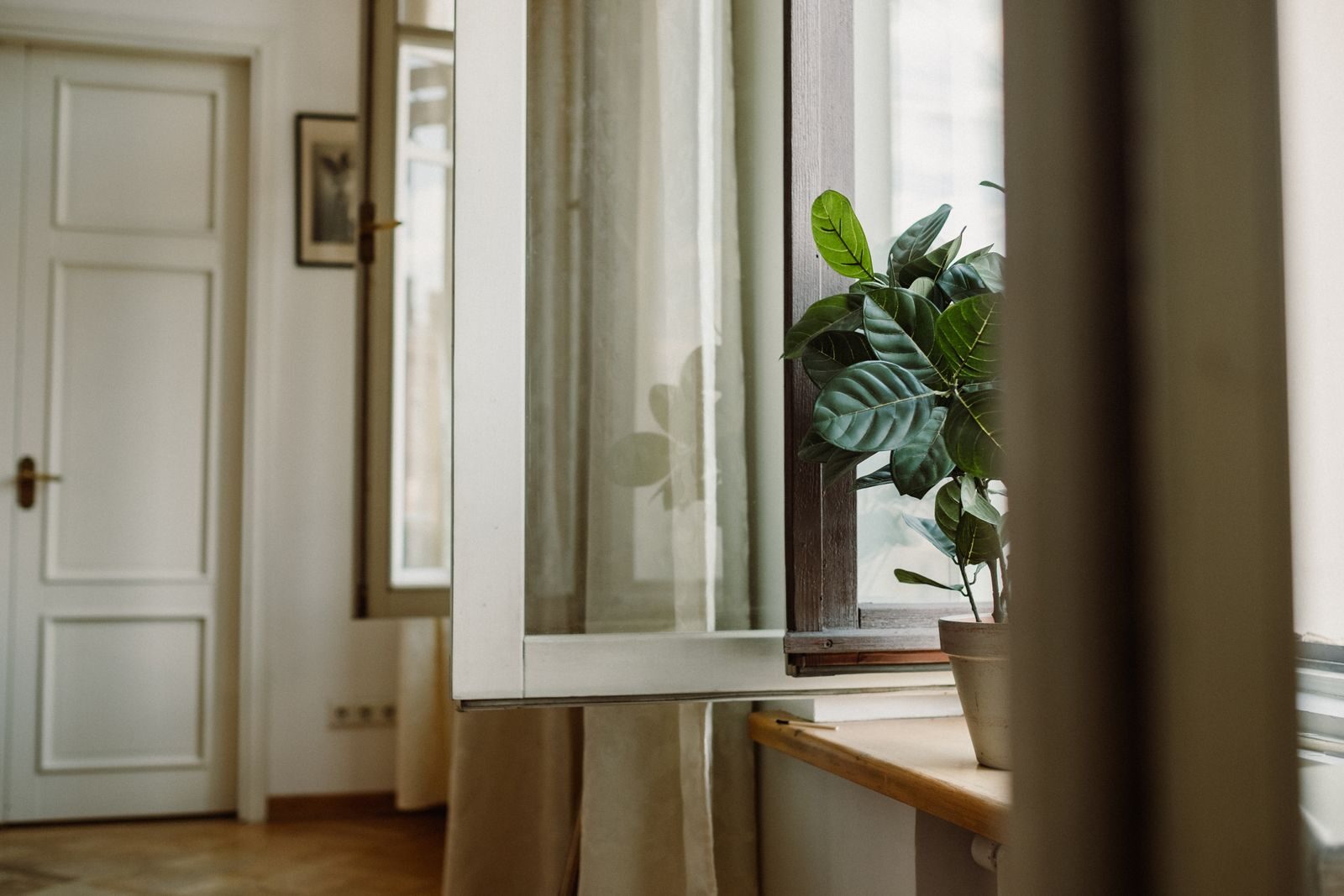
Open the windows, a lot. This is the big one. Fresh air carries the gases outside instead of letting them build up. Open windows, get a breeze flowing through if you can, and do it every day for the first weeks, not just once. Letting fresh air in is the most reliable way to bring these gases down. Nothing else here beats it.
Air it out before it comes inside. If you can, unwrap new furniture and leave it in a garage, a spare room, or by an open window for a few days before it goes into a bedroom. The first days give off the most, so let that happen away from where you sleep.
Use warmth and air together. A warm room releases the gas faster. So warm the room a little, then open the windows. This pushes the off-gassing to finish sooner. Do not heat a sealed room, though. That just traps the gas. Warm it, then let it out.
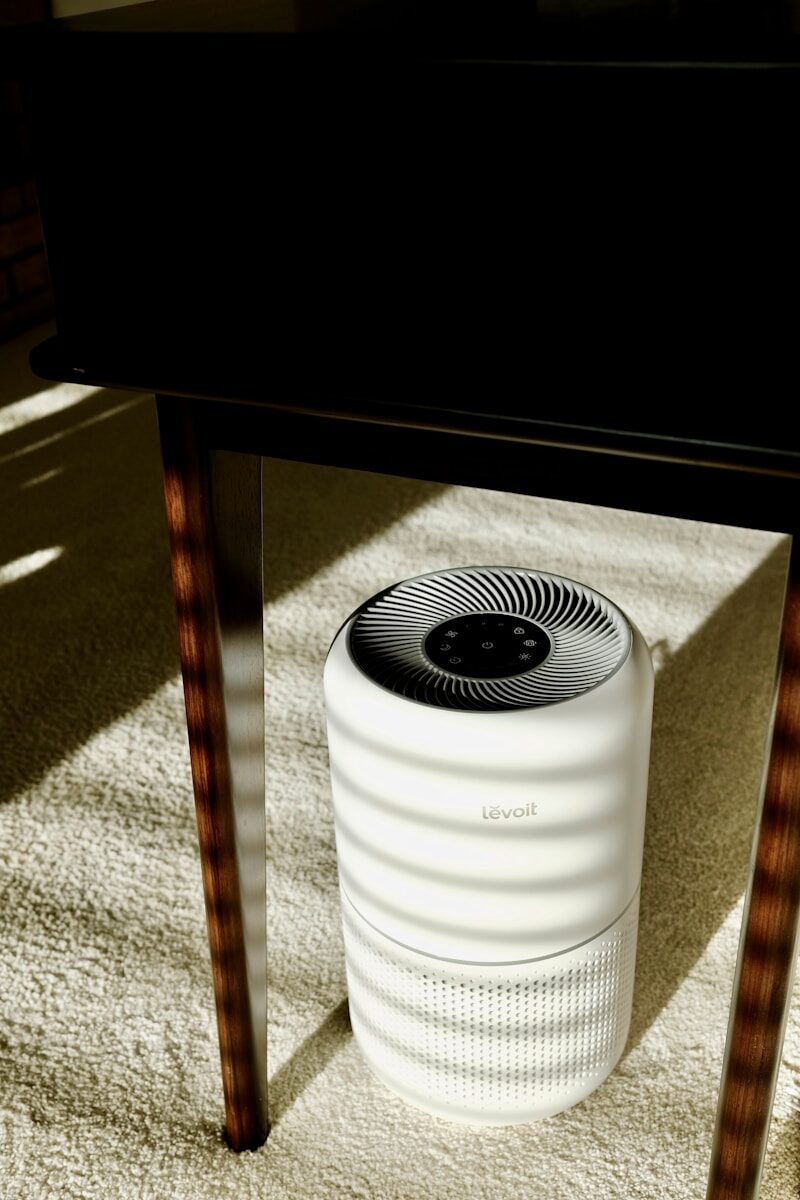
Try activated carbon if you want extra help. Carbon filters can soak up some of these gases. So an air purifier with a real, thick carbon filter can help reduce the smell. One thing to know, and it links to how these machines work. A plain HEPA filter does nothing here. HEPA traps particles, and these are gases. So if you buy a purifier for furniture smell, make sure it has plenty of carbon, not just a thin layer next to a HEPA filter.
Give it time. The off-gassing drops on its own. Do the steps above, wait a few weeks, and the problem mostly sorts itself out.
And here is what not to do. Do not cover the smell with air fresheners, sprays, or scented candles. These remove nothing. They just add their own gases on top, so you end up with more in the air, not less. You want to remove the gases, not hide them.
How to tell if your furniture has formaldehyde, and how much
You want to know if your own piece is a problem. Here is how to read it.
Look at the material first. Solid wood gives off little formaldehyde, because it has little glue. Pressed wood, which means MDF, particleboard, or plywood, gives off more, and MDF gives off the most. If a piece is flat-pack, light for its size, and very smooth and even on the surface, it is almost certainly pressed wood.
Look for the labels. In many countries, pressed wood now has to meet formaldehyde limits, and it is marked to show it, such as TSCA Title VI or CARB Phase 2 in the United States. That is the legal minimum. Better still, look for stronger labels: no added formaldehyde, ultra-low formaldehyde, or GREENGUARD Gold. That last one is often used for furniture made for nurseries and schools, because it is tested against low limits.
Be careful with cheap monitors. A cheap air monitor gives you one total-VOC number. This is the main thing my measurement training taught me, and I want you to have it. That number mixes everything together. It cannot tell you how much is formaldehyde, or whether you are near any health limit.
It is good for one thing only: showing when levels go up and down, so you can watch your airing out working. It is not a formaldehyde test, and it is not a health result. If you have a real, specific worry, a formaldehyde test kit sent to a lab gives you a proper figure. Everything else, smell included, is just a rough guide.
Buying lower-formaldehyde furniture next time
If all this has put you off, do not worry. You do not need to spend a lot. You just need to shop with open eyes.
Pick solid wood when you can afford it, since it skips most of the glue. When you buy pressed wood, which most of us do, look for the no-added or low-formaldehyde labels above, not just the legal minimum. Choose water-based finishes over strong, solvent-heavy ones. And whatever you buy, air it out before it goes into a bedroom.
A little label-reading in the shop saves you weeks with the window open later.
What I would do with new furniture
Here is my own simple routine, if you want it.
I air a new piece out before it goes into any room where someone sleeps, especially a baby. I open the windows a lot for the first few weeks, and I treat fresh air as the main tool, not an afterthought.
I never shut a baby or a pet into a closed room with brand-new pressed-wood furniture on the first day. I do not cover the smell with anything scented, because that only adds more gas. And I remember that the fading smell means the gas is leaving.
That is it. No gadgets needed. No panic needed. Fresh air, time, and a little label-reading do almost all the work.
Summary
New furniture smell is off-gassing. It is the slow release of gases called VOCs from the glue, finish, foam, and fabric in new furniture.
The gas most worth knowing is formaldehyde. It comes from the glue in pressed wood like particleboard, plywood, and MDF. MDF gives off the most, while solid wood gives off very little.
Smelling it does not mean you are being harmed, because your nose notices it well below harmful levels. But at higher levels, formaldehyde can sting the eyes, nose, and throat. It is more of a worry in a small, warm, poorly aired room full of new pressed-wood furniture.
The strong smell usually fades in days to weeks. The formaldehyde drops more slowly, over months to a couple of years, but it falls fastest early on and keeps falling.
Babies, children, and pets are more sensitive. So air new furniture out before it enters their room, and keep that room well aired early on.
The best way to clear the smell is fresh air, helped by gentle warmth and an airing-out period before the furniture comes inside. Carbon filters can help. Scented products only hide the problem.
To judge a piece, check if it is solid or pressed wood, and look for low or no-added-formaldehyde labels. Remember that a cheap monitor shows total VOC, not formaldehyde, so it is a guide, not a diagnosis.
Questions people ask
Is new furniture smell toxic?
The smell is a sign of off-gassing VOCs, and smelling it does not mean the level is harmful, because your nose is far more sensitive than the level where effects start. Still, formaldehyde from pressed wood can sting the eyes, nose, and throat at higher levels, mostly in new, warm, poorly aired rooms with a lot of pressed-wood furniture. The smart move is to air it out and reduce it, not to panic.
How long does new furniture smell last?
The strong smell usually fades in a few days to a few weeks, as the lighter gases leave first. Formaldehyde from pressed wood drops more slowly, over months to a couple of years, but it falls fastest in the early months. Good airflow makes it bother you for much less time.
How do I get rid of new furniture smell fast?
Open the windows often, since fresh air clears the gases better than anything else. Air the furniture out before it comes into a bedroom, use gentle warmth plus open windows to speed it up, and add an activated carbon filter if you want extra help. Do not cover it with sprays or candles, which only add more gases.
Is new furniture smell dangerous for babies?
Babies are more sensitive than adults, so it is worth more care, but not panic. Let new furniture air out in another room or by an open window before it goes into a nursery, keep the nursery well aired in the early weeks, and pick furniture with low or no-added-formaldehyde labels. If your baby has symptoms that worry you, speak with your doctor.
Is new furniture smell harmful to dogs and cats?
Pets are also more sensitive, partly because they are small and often rest close to the furniture. The same steps apply: air new pieces out first, keep the room well aired, and do not shut a pet into a closed space with strong-smelling new furniture. If a pet seems unwell, a vet is the right person to ask.
How can I tell if my furniture contains formaldehyde?
Pressed wood, which means MDF, particleboard, and plywood, almost always gives off some formaldehyde, while solid wood gives off very little. Check for labels that show it meets emission limits, and look for stronger marks like no-added formaldehyde or GREENGUARD Gold. A cheap monitor reads total VOC, not formaldehyde, so for a real figure you would need a formaldehyde test kit sent to a lab.
Does the formaldehyde in furniture ever go away?
Yes. It falls over time, fast at first and then more slowly, roughly halving every one and a half to two years, so an older piece gives off only a little of what it did when new. Warmth, damp air, and good airflow all speed up how fast a piece finishes off-gassing.