








I painted my own place a while back, and the smell lingered for days.
That surprised me, since I had picked a can marked low VOC on purpose.
It sent me digging into what that label promises, and the words on the tin turned out to cover less ground than I assumed.
What “low VOC” and “zero VOC” mean
There is a real number sitting behind these words.
Under the EPA’s national architectural coatings rule, flat paint is allowed up to 250 grams of VOCs per litre, and other finishes up to 380 grams per litre.
That is the legal ceiling, not a mark of quality.
It is simply the most a paint can contain and still be sold in the United States.
“Low VOC” and “zero VOC” sit well below that ceiling, and they generally come from industry certification rather than government law. Low VOC usually means 50 grams per litre or less for flat paint. Zero VOC usually means 5 grams per litre or less.
Green Seal’s GS-11 standard is the certification most manufacturers point to, and it specifically sets a separate, disclosed VOC limit for the paint once colourant is added, not just for the base. Hold onto that detail, it counts for more than it sounds like it should.
The part the can does not tell you
My quality control training changes how I read that number. For most paints on a shelf, that VOC figure is measured on the base paint, the plain, uncoloured product sitting in the can before you pick a wall colour. It is not measured on the paint you walk out with.
Colourant gets mixed in afterwards, and colourant carries its own VOCs. Darker shades need more of it, and that can add well over a hundred grams of VOCs per litre to a base that started at five. The person mixing your colour at the counter is very unlikely to know this. Nothing on an uncertified can discloses it either. Buy a paint labelled zero VOC, pick a dark colour, and you can leave the shop with something far from zero.
The certification is what closes this gap, not the words on the front, though it does it differently than you might expect. Green Seal’s current GS-11 standard does not simply hold the tinted paint to the same ultra-low base number. It allows colourant to add up to 50 grams of VOCs per litre above whatever the base limit already is, still capped, still disclosed, just not identical to the base figure. A paint carrying real GS-11 certification has that number accounted for and disclosed. A can that simply prints “zero VOC” without that certification has not.
That gap between what got tested and what ends up on your wall is the real story here, and it lines up with what happened in my own home. A can that tested near zero before tinting can still fill a room with smell for days once it is on your wall in colour.

Does zero VOC paint still smell?
Often, yes, and tinting is only one reason.
The other comes from how VOC gets defined in the first place.
Regulators exclude certain compounds from the VOC count because those compounds do not contribute to the outdoor smog reactions the rules were written to control.
Acetone and ammonia are two examples.
Neither counts as a VOC under the regulation, yet both have a real smell and both can irritate your eyes, nose, and airway indoors.
A paint can be entirely accurate about its VOC number and still contain something unpleasant to breathe.
Tinting VOCs plus excluded compounds together explain a lot: a paint can be legitimately labelled zero VOC and still produce a noticeable smell in your home.
That is not a false claim on the manufacturer’s part.
It is a label measuring a narrower thing than most people assume.
Here is the third layer, and it is the one that surprised me most.
A comparison study by Underwriters Laboratories tested paints for both VOC content, what the label reports, and VOC emissions, what ends up in the air of the room.
The two did not reliably line up.
Some paints with lower reported content produced higher measured emissions, and vice versa.
Even a carefully measured number on the can is not a guaranteed stand-in for how much a paint will off-gas once it is drying on your wall.
Is low or zero VOC paint safer to breathe?
Compared with a standard paint at the legal ceiling, yes, meaningfully so.
Less VOC content overall means less of the compounds linked to headaches, eye and throat irritation, and dizziness during and after painting.
I would not talk anyone out of choosing a low or zero VOC product over a standard one.
Just hold onto the difference between safer and risk-free.
Safer does not mean the paint gives off nothing once it is tinted and drying on your wall.
Ventilation still counts with a low VOC product, and that smell you notice is still worth airing out properly, not waved off just because the can says zero.
Is it safe to paint a nursery, or to paint while pregnant?
This one deserves care rather than a quick reassurance either way.
The American Pregnancy Association states plainly that there is no clear evidence household painting harms a pregnancy, and that the working assumption in the research is that ordinary household painting involves very low levels of exposure. That is a reassuring starting point, and it comes from a body set up specifically to give evidence based guidance on exactly this question.
Low exposure is not zero exposure, though, and the tinting point above still applies here. If you are choosing paint for a nursery or painting while pregnant, a water based low or zero VOC product, good ventilation during and after painting, avoiding oil based paint entirely, and limiting the time spent in the room while it dries are all sensible, low effort precautions. A specific health concern or a pregnancy complication is a conversation for your doctor, not a paint label or a website.
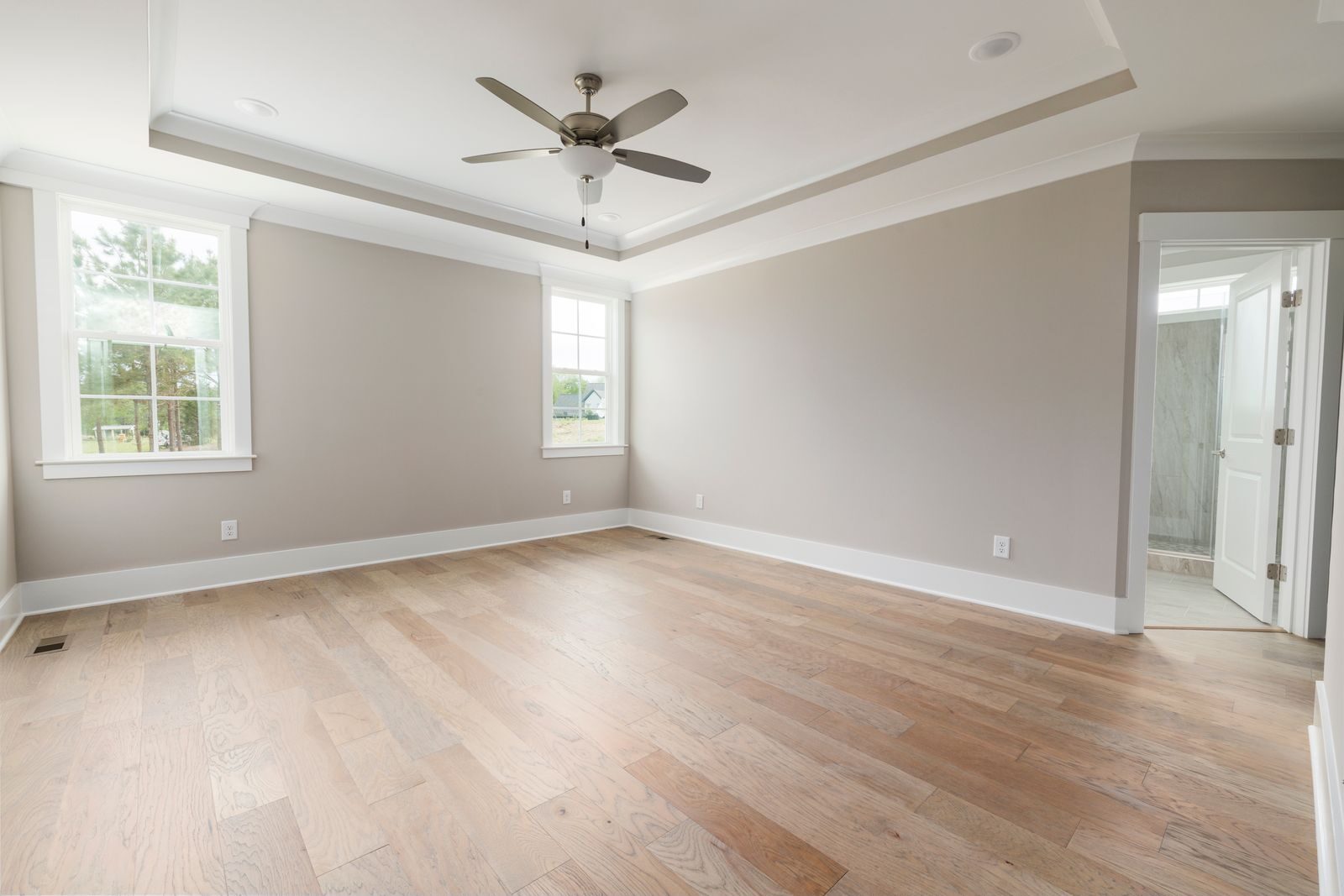
What I would do differently now
Knowing what I know now, I would look for real Green Seal GS-11 certification on the can, not just the words “zero VOC,” since that certification specifically accounts for the colourant.
On an uncertified product, I would just assume the VOC figure changes once my colour gets mixed in.
Where the choice is close, I would pick a lighter shade, since it needs less colourant.
And I would still open the windows and air the room properly for days afterwards, the same as I ended up doing anyway once the smell would not leave.
The label earned my trust for choosing between products.
It did not earn my trust to skip ventilation.
I already wrote about how the smell from new pressed wood furniture fades over time on this site, and paint follows a similar pattern, dropping off steadily rather than disappearing overnight.
The mechanism is different, but the airing out advice holds for both.
Summary
Low VOC and zero VOC are real, measurable categories, not empty marketing words, sitting well below the federal legal limit of 250 to 380 grams per litre. Low VOC generally means 50 grams per litre or less, and zero VOC generally means 5 grams per litre or less, but on an uncertified product these figures are measured on the base paint before colourant is added. Tinting can add well over a hundred grams per litre back in, especially for darker shades.
Real Green Seal GS-11 certification narrows this gap by setting a separate, disclosed VOC limit for the tinted product, higher than the base figure but still tested and capped, rather than leaving it unknown.
Some smell also comes from compounds like acetone and ammonia, which are not counted as VOCs under the regulation at all, and a comparison study by Underwriters Laboratories found that VOC content on the label does not reliably predict VOC emissions once a paint is applied. Low and zero VOC paints are meaningfully lower in these compounds than standard paint, worth choosing for, though that is not the same as odourless or exposure free.
For nurseries or painting while pregnant, the evidence available says household painting involves very low exposure, though sensible precautions like ventilation and avoiding oil based paint still apply, and any specific concern belongs with a doctor.
Questions worth asking
What is considered a low VOC paint?
Industry certification, most commonly the Green Seal GS-11 standard, generally sets the bar at 50 grams of VOCs per litre or less for the base paint, well below the federal legal limit of 250 to 380 grams per litre.
Does zero VOC paint still smell?
Often yes, on uncertified products. The VOC figure gets measured before colourant is added, and tinting can add a meaningful amount back in, especially for dark colours. Real Green Seal GS-11 certification narrows this gap with a separate, disclosed limit for the tinted product rather than leaving it unknown. Compounds like acetone and ammonia can also smell and irritate without counting as VOCs under the regulation.
Is low VOC paint safe to breathe?
It contains meaningfully less of the compounds linked to headaches and irritation than standard paint, which makes it a sensible choice. That is not the same as risk free though, so ventilation still counts even with a low or zero VOC product.
Is zero VOC paint safe for babies or during pregnancy?
The available evidence suggests household painting involves very low exposure, and there is no clear evidence it harms a pregnancy, according to the American Pregnancy Association. Sensible precautions such as good ventilation and avoiding oil based paint are still worth taking, and any individual concern should go to a doctor rather than general guidance.