










Why does your house smell musty when you cannot see any mould?
It is one of the most common questions I hear, and the answer is the key to getting rid of the smell for good. That musty smell is not just a smell. It is a message, and once you know what it is telling you, you stop wasting time on the wrong fixes.
This sits right in the area I trained in. I took a graduate course in indoor microbes, exposure assessment, and health effects, and a lot of it was about what microbes do in our homes and what they give off into the air. So let me explain what that smell really is, why air fresheners never work on it, and how to remove it properly.
What the musty smell is
That musty, damp, old-socks smell has a real cause. Mould gives off gases as it grows. These gases are called MVOCs, which stands for microbial volatile organic compounds. They are the waste gases mould produces while it feeds and grows, and your nose is very good at picking them up.
Here is the part that changes everything. Mould only makes these gases while it is alive and actively growing. The US Environmental Protection Agency notes that this mouldy smell comes from those gases. So the smell is not old or leftover. It is the smell of mould that is growing right now, somewhere in your home.
This is also why the health bodies take the smell seriously. When I read the World Health Organization guidelines on dampness and mould, what stood out to me was that they list a perceived mouldy odour as one of the recognised signs of dampness and microbial growth, right alongside visible mould and condensation. In other words, the smell on its own is treated as real evidence that something is growing, even before you find it.
That is why the smell is so useful, once you understand it. It is not dirt to cover up. It is a live signal that mould is present and active, and it is pointing you towards a moisture problem you need to find.
Why you can smell it but not see it
This is the question that frustrates people most. The smell is strong, but there is no mould in sight. From my training, this makes complete sense, and here is why.
The gases that make the smell are light and they travel. They drift through the air, out of the spot where the mould is growing and into the rest of the room. So the smell spreads even when the mould stays hidden.
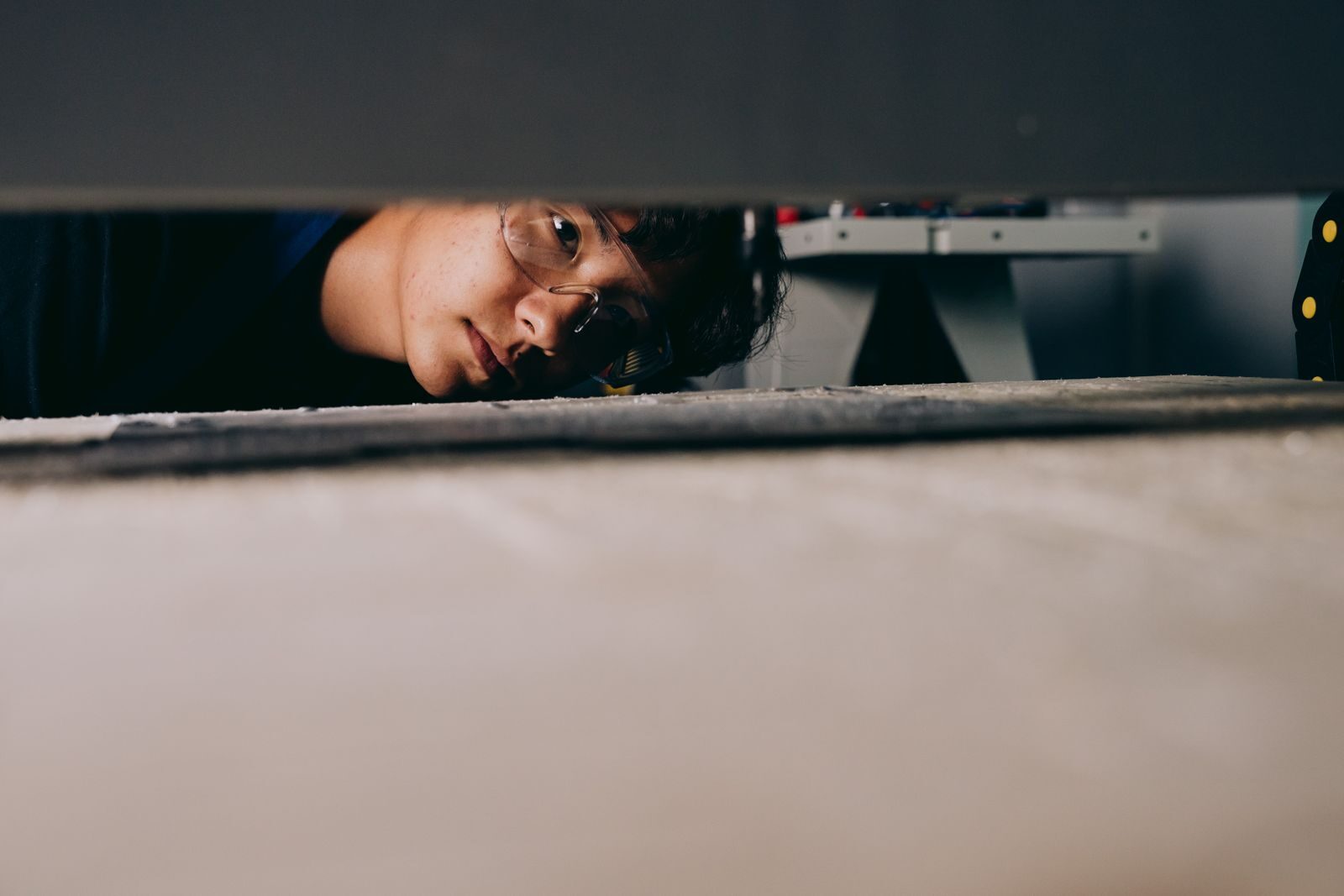
And mould loves hidden places. It grows where it is damp and dark and undisturbed, which is usually out of sight: behind furniture pushed against a cold wall, under carpet and underlay, inside a wall cavity, behind skirting boards, under the kitchen sink, in the back of a cupboard, or in the heating and air vents. The smell reaches you long before the mould does.
There is research that backs this up in a way I find interesting, given how I think about measurement. In one study, scientists were able to predict a musty odour in homes from nothing more than the temperature and humidity readings in the room, you can read it here. That fits what I learned: the conditions that make the smell, damp surfaces and cool, still air, can be seen in the numbers before you ever find the patch.
So if you can smell it but not see it, that is normal. The smell has done its job. It has told you there is active mould. Now you have to find it.
Why air fresheners and sprays never fix it
This is the mistake almost everyone makes first, so let me save you the money and effort.
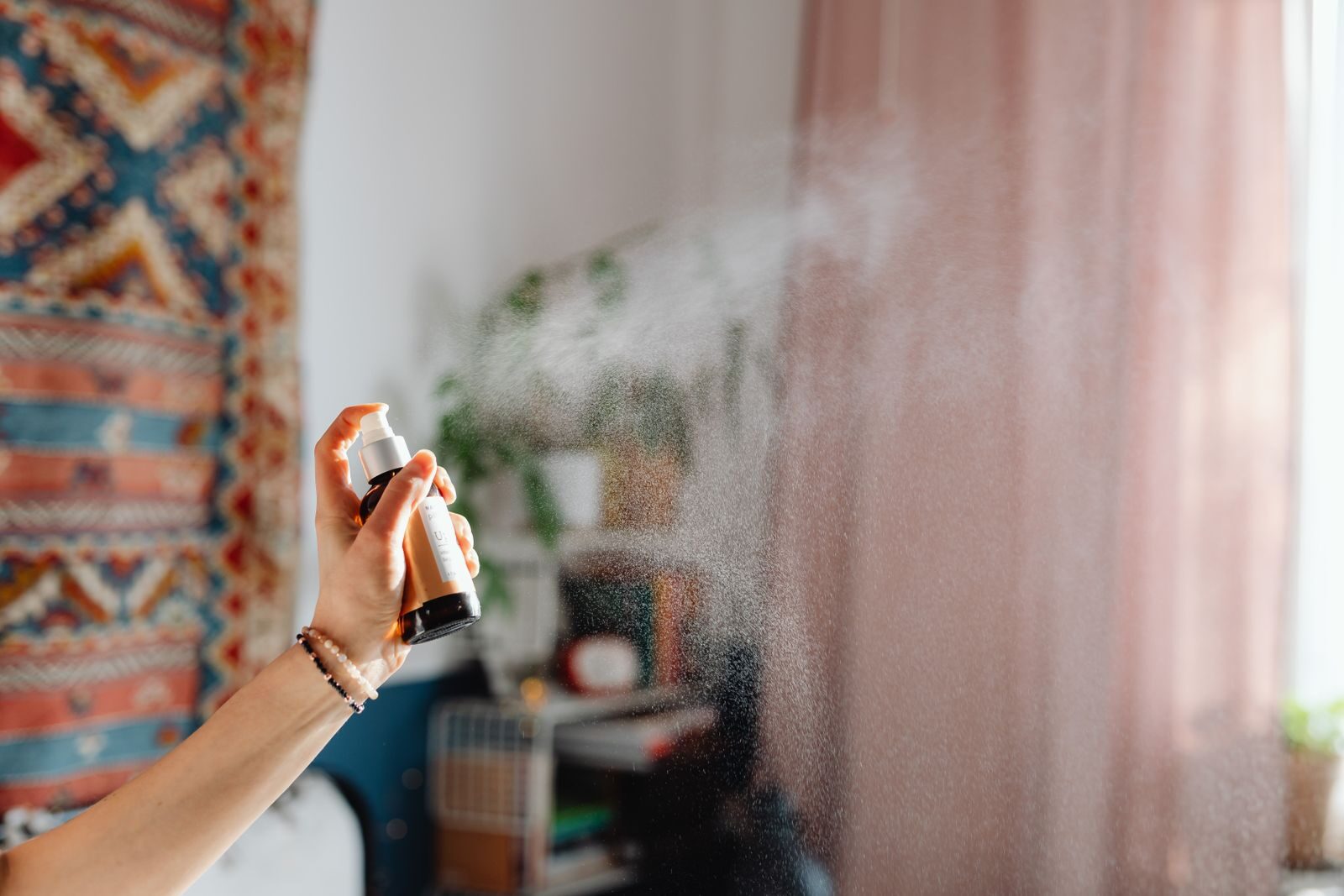
Air fresheners, scented sprays, candles, and plug-ins do nothing to the mould. They only add their own smell on top of the mould gases. For a while the room smells of flowers and mould, then just of mould again, because the mould is still there, still growing, still giving off gas. You have covered the warning light, not fixed the fault.
Ozone machines are sold for this too. They can break down the smell molecules for a while, but they do not kill the mould or stop it growing, so the smell comes back. And ozone is an irritant you should not be breathing anyway.
The rule is simple. The smell goes away when the mould goes away, and not before. Anything that only changes the smell, without removing the mould and drying the source, is a waste of time.
How to get rid of the mould smell, properly
Here is the approach that works, in order. It is the same logic as removing the mould itself, because the smell and the mould are the same problem.
Find the mould.
Follow your nose to the strongest spot, then check the hidden places: behind and under furniture, under carpet, inside cupboards, under the sink, around windows, behind skirting, and in damp corners. A musty smell that gets stronger in one area, or when it rains, is a clue to where the moisture is.
Fix the moisture.
This is the real cause. The mould is growing because a surface is damp. Find the source, condensation on a cold wall, a leak, poor airflow, a wet appliance, and deal with it. Until the surface is dry, the mould and its smell will keep coming back.
Remove the mould.
Clean it off hard surfaces and dry them fully. For soft or porous things the mould has grown into, like carpet, underlay, or plasterboard, cleaning often is not enough, and that piece may need replacing. Remember, you have to remove the mould, not just kill it, because dead mould can still smell and still cause reactions.
Air it out.
Open windows and get fresh air moving through. The lingering smell sits in the air and soaks into soft things, so airflow and, where you can, sunlight help clear it. Fresh air does more for a musty room than any spray.
Deal with the things that soaked up the smell.
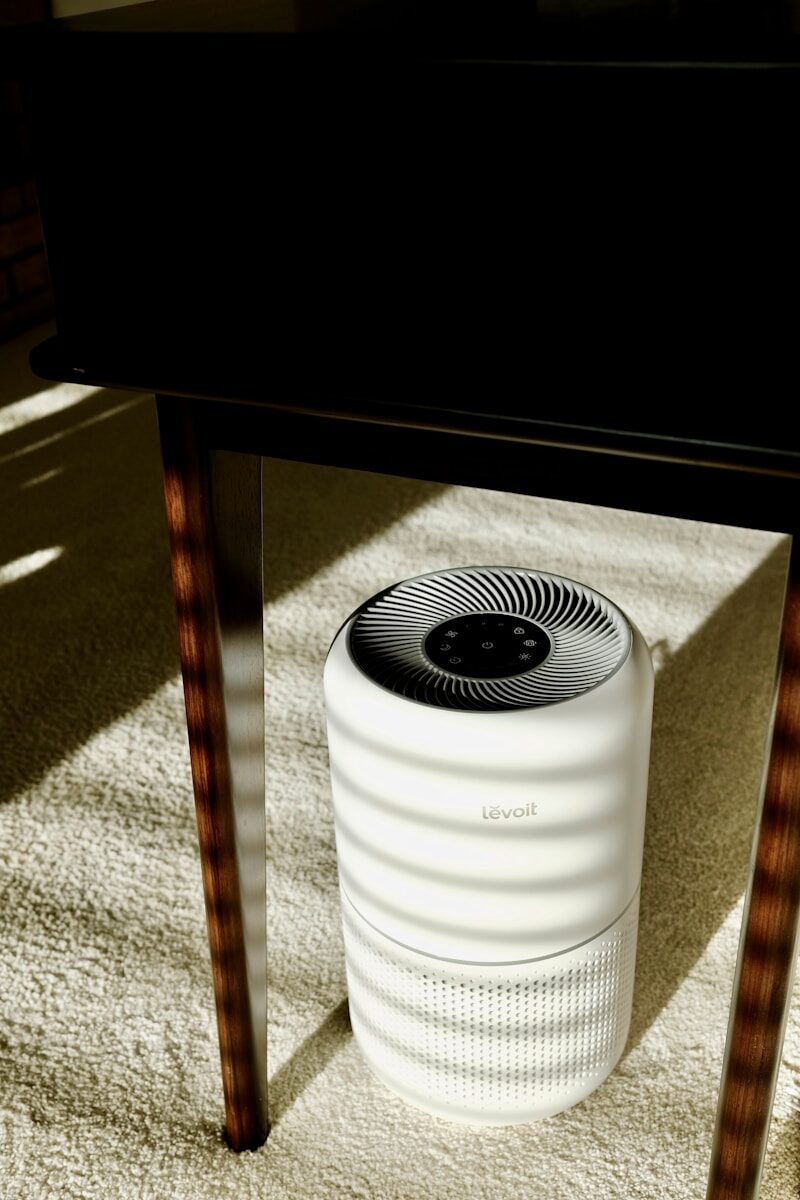
This is the part people miss. Even after the mould is gone, soft items can hold the smell: clothes, curtains, bedding, carpet, soft furniture. Wash what you can wash, air the rest in fresh air and sunlight, and clean or replace what stays musty. Note that ordinary air filters, including HEPA, do not remove these gases, so do not rely on a purifier to fix the smell.
The smell in specific places
People ask about specific spots, so quickly:
A washing machine that smells musty has mould growing on the rubber seal and in damp folds. Leave the door open to dry between washes, and clean the seal and drawer.
Clothes and fabric that smell come from being stored damp, or from a damp wardrobe or drawer. Wash and fully dry them, and fix the damp where they are kept.
A cupboard, wardrobe, or fridge that smells musty is holding moisture. Empty it, clean it, dry it fully, and improve the air it gets.
A car that smells musty usually has damp carpet or a blocked drain letting water sit. Dry it out and find where the water is getting in.
In every case the rule is the same. The smell is mould or damp. Find it, dry it, remove it. The place changes, the fix does not.
Where I see this in my own home
I keep my home dry and well aired, so it rarely gets to this point. But I notice in winter that the damp and any musty hint show up first in the coldest, wettest spots, around the kitchen sink and in the bathroom. Those are the places that stay wet longest.
And I know I can make it worse without thinking, by bringing in wet jackets and wet shoes, or leaving damp things sitting around. That moisture has to go somewhere, and it feeds anything starting to grow on the cold surfaces.
So when I catch even a faint musty note, I treat it as an early warning, dry the surfaces, air the room, and it does not get the chance to build into a smell I have to chase.
Will the mould smell ever go away on its own?
Not while the mould is alive. As long as the surface stays damp and the mould keeps growing, it keeps giving off the gas, so the smell stays.
If a damp spot dries out on its own, the mould can go quiet and the smell can fade, but the mould is still there and will return with the next bit of damp. So waiting it out is not a real fix. The only lasting answer is to remove the mould and dry the source.
Summary
That musty smell is gases called MVOCs, which mould gives off while it is actively growing. So the smell is a live signal that mould is present somewhere, not just a stale odour to cover.
You can smell it without seeing it because the gases travel through the air, and mould often grows hidden: behind furniture, under carpet, in cupboards, or in wall cavities.
Air fresheners, sprays, candles, and ozone machines do not work, because they do not remove the mould. They only mask or briefly alter the smell, which then returns.
To get rid of it for good, find the mould, fix the moisture feeding it, remove the mould properly, air the room well, and clean or replace the soft things that soaked up the smell.
The same rule covers every spot, the washing machine, clothes, cupboards, the car: the smell is mould or damp, so find it, dry it, and remove it.
It will not go away on its own while the mould is alive. The smell goes when the mould goes, and not before.
Common questions
How do you get rid of mould smell in the house?
Find the mould, fix the moisture feeding it, remove the mould, dry the surface, and air the room well. Masking it with sprays or candles does not work, because the smell only goes when the mould is gone.
Why can I smell mould but not see it?
Because the gases that cause the smell travel through the air, while the mould is often hidden behind furniture, under carpet, or inside a wall. A musty smell with no visible mould usually means hidden growth worth searching for.
Will a mould or musty smell go away on its own?
Not while the mould is alive, since it keeps giving off the gas that causes the smell. The only lasting fix is to remove the mould and dry the source.
Do air fresheners or a dehumidifier get rid of mould smell?
Air fresheners only cover the smell and remove no mould, so it comes back. A dehumidifier helps by drying the air, but it will not remove mould already there, so you still need to find and remove it.
What does mould smell like?
Most people describe it as musty, damp, and earthy, like wet socks or a damp basement. If you notice it, treat it as a signal that mould is growing somewhere, even if you cannot see it.
Is it bad to sleep in a room that smells of mould?
For a healthy adult one night is unlikely to cause harm, but it is worth dealing with rather than living with. Sensitive people, those with asthma, allergies, or weak immunity, plus babies and pregnant women, should sleep elsewhere until it is sorted, and see a doctor about any symptoms that worry them.