









Have you found mould in your bedroom, and now you are not sure it is safe to sleep there tonight?
It is a fair worry. And if you search it, the internet only makes it worse, with talk of toxic mould and worse. Let me give you a calmer answer.
This is the exact area I trained in. I took a graduate course in indoor microbes, exposure assessment, and health effects. We did not just read about mould. We looked at how it is sampled and measured, and what the evidence says about how it affects people’s health. So when you ask whether it is safe to sleep near a patch, this is the question that training was built around.
I will also tell you about my own home, because it shapes how I think. I keep my place dry and well aired, so it rarely gets to the point of mould. To me that is the whole game. Stop the damp, and you stop the mould.
So when I see a patch on a wall, I do not see poison. I see a sign that a surface has been too wet, and a job to do. I am not a doctor, and this is not medical advice for you. But I can tell you what the evidence says, who should be careful, and what I would do.
The short answer
If you are healthy, one night in a room with a small patch of mould is not an emergency. You are very unlikely to come to any sudden harm. So if you found it tonight and you feel well, you can stop worrying about where to put your head down.
What I would not do is leave it and live with it. Mould where you sleep is a sign to act. The real concern is not one night. It is night after night, over weeks and months. And it depends far more on who you are than on the patch itself.
So my answer is simple. Probably fine for now if you are healthy. Sort it out soon. And take more care if you, or anyone sharing the room, is in a higher-risk group. Let me show you what I mean.
What mould can really do
The truth sits between the two extremes you read online, so let me keep it plain.
According to the US Centers for Disease Control and Prevention, being in a damp or mouldy room may cause a range of effects, or none at all, depending on the person. For some people it brings a stuffy nose, a sore throat, a cough, wheezing, burning eyes, or a skin rash. Those are real. But for most people they are irritation and allergy-type symptoms, and they ease once you are away from the mould.
The scary claims are mostly overblown. The health bodies are clear that “toxic mould” is not a correct term, and that black mould affects people much like other common moulds do. So sleeping near a patch is not the poisoning event some pages make it sound. For a healthy adult, it is a problem to fix, not a thing to run from.
Who I would tell to sleep somewhere else
This is the part where my answer changes depending on who you are. Some people are more sensitive to mould, and from what I learned about exposure and health, I would not take chances with them.
Sleep in another room until the mould is gone if you, or whoever is in that room, has asthma. Mould is a known trigger, and a damp bedroom can set it off.
The same if you have allergies, or a mould allergy. A night in there is hours of exposure, long enough to bring on a blocked nose, sneezing, and irritation.
The same, more firmly, if you have a weak immune system, from illness or treatment. In rare cases mould can cause more serious infections in people whose defences are low, so this group should not sleep in a mouldy room.
The same for a long-term lung condition, since the lungs are more exposed.
And I would keep babies and young children out of a mouldy room. They are small, they breathe faster for their size, and they are still growing, so it is wise to be careful with them.
If you are pregnant, this is a common worry. The day-to-day risk is usually low, but I would still be careful, stay out of a damp, mouldy room to sleep, and ask your midwife or doctor if you are unsure.
If none of that is you, and you are a healthy adult, the rush is lower. If any of it is you, move to another room tonight.
When I would stop waiting and act now
A few things would push me from “soon” to “now.”
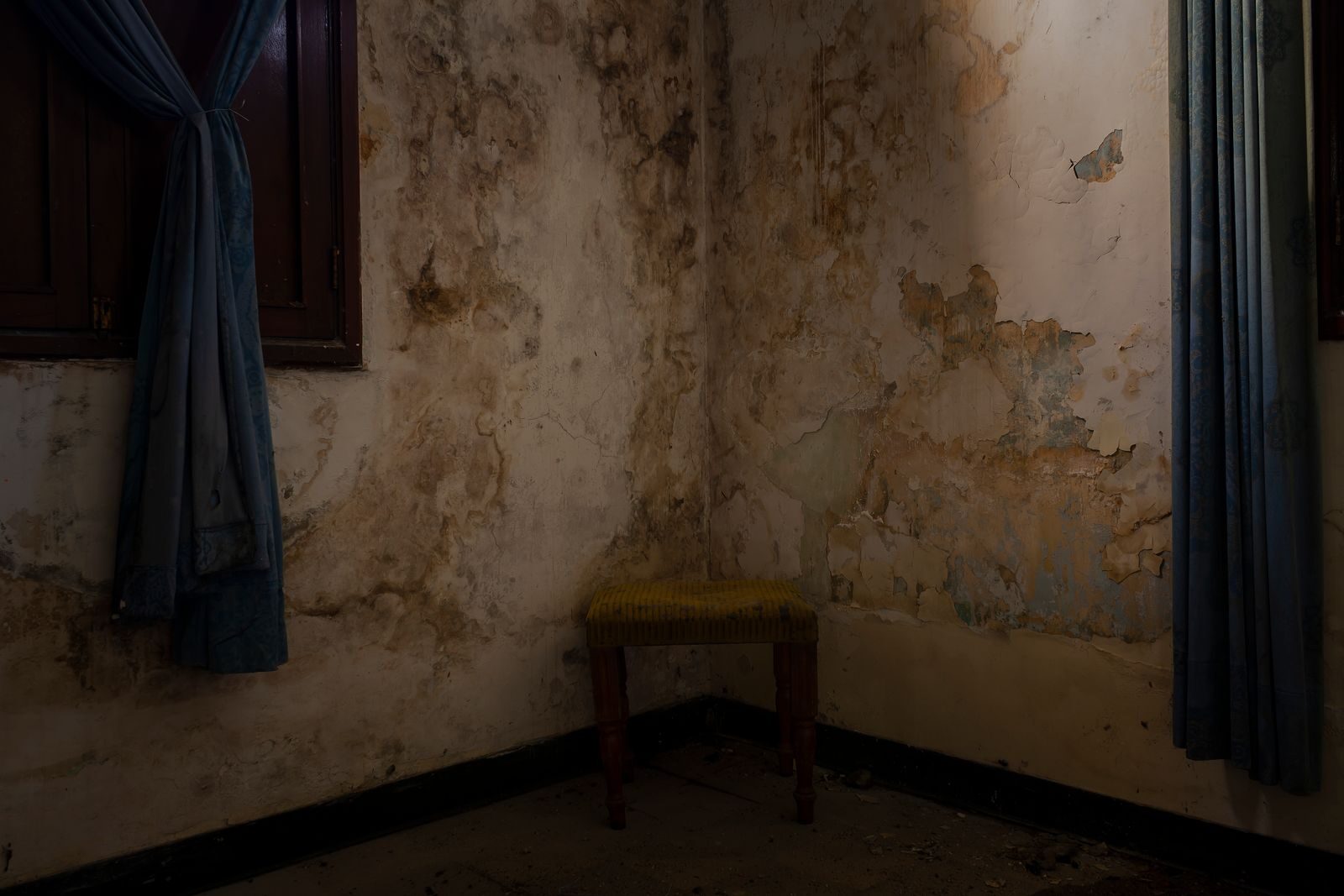
If the mould covers a large area, very roughly more than about a square metre, not just a small patch.
If there is a strong musty smell, which often means more mould than you can see, maybe hidden behind something.
If anyone in the room is in one of the higher-risk groups above.
And if anyone has symptoms, headaches, a blocked nose, a cough, sore eyes, that get better when they leave the room and come back when they return. I pay attention to that pattern. It does not prove mould is the cause, since those symptoms have many causes, but it is a real clue, and worth telling a doctor.
In any of those cases, I would sleep somewhere else until it is sorted.
What I would do tonight, and then
If it were my room, here is how I would handle it.
Tonight, if I were healthy and the patch were small, I would open a window, air the room well, and sleep there without much worry. If I had a spare room and wanted to be safe, I would use it. If anyone in the room were in a higher-risk group, I would have them sleep elsewhere, no question.
Then I would deal with the cause, because that is what ends the problem for good. I would find the moisture feeding the mould, remove the patch properly, dry the surface, and keep the room aired.
This is where my own habit comes back. In my home the damp shows up in winter on the coldest, wettest spots, around the kitchen sink and in the bathroom. And I can make it worse without thinking, by bringing in wet jackets and wet shoes, or leaving damp things sitting around. So I keep those surfaces dry and the rooms aired. That is why mould rarely gets started for me, and it is the same habit that keeps it from coming back once you have cleaned it.
And if anyone had symptoms that worried me, I would speak to a doctor, not guess from a website. That is the line I will not cross with you. I can explain the science. Questions about your own body belong with a professional.
Can you sleep in the room after using mould spray?
People ask me this a lot, so quickly. Give it time first. Air the room well, follow the instructions on whatever you used, and let the spray dry and the smell clear before you sleep in there.
If the smell is strong, sleep somewhere else that night and let the room air out. The whole point of removing mould is cleaner air. Do not swap it for a night breathing in spray.
Summary
If you are a healthy adult, sleeping one night in a room with a small patch of mould is very unlikely to harm you. It is not the emergency the scare stories suggest.
Mould in a damp room can bring irritation and allergy-type effects in some people, a stuffy nose, cough, wheeze, sore throat, itchy eyes, or a skin rash. These usually ease once you are away from it.
The real risks sit with certain people. Those with asthma, allergies, a weak immune system, or a long-term lung condition, plus babies, young children, and pregnant women. They should take more care and sleep elsewhere until the mould is gone.
I would act faster if the patch is large, there is a strong musty smell, or anyone has symptoms that ease away from the room and return when they go back.
The lasting fix is never about where you sleep. It is about dealing with the mould. Find the moisture, remove the patch, dry the surface, and keep the room aired. Keeping surfaces dry is what stops it in the first place.
And if anyone has symptoms that worry you, see a doctor. I can guide you on the science, but your health belongs with a professional.
Common questions
Is it safe to sleep in a room with mould?
If you are a healthy adult, one night near a small patch is very unlikely to cause sudden harm, so it is not an emergency. But mould in a bedroom should not be lived with night after night, and people with asthma, allergies, weak immunity, or lung conditions, plus babies and pregnant women, should take more care and sleep elsewhere until it is dealt with.
Can sleeping in a room with mould make you sick?
It can bring irritation and allergy-type symptoms in some people, such as a stuffy nose, cough, wheeze, sore throat, or itchy eyes, especially in those who are sensitive. Most healthy people get mild effects or none. If your symptoms ease when you leave the room and return when you come back, tell a doctor about that pattern.
How long can you sleep in a room with mould?
There is no exact safe number of nights, because it depends on you, the amount of mould, and the room. The sensible approach is to treat any bedroom mould as a sign to act soon rather than to live with, and to sleep elsewhere in the meantime if you are in a higher-risk group.
Can a baby sleep in a room with mould?
It is best to keep a baby out of a mouldy room until it is cleaned and the damp is fixed. Babies are small, breathe faster for their size, and are still developing, so it is wise to be careful. If you have any health concerns about your baby, speak to your doctor.
Is it safe to sleep in a room with mould on the ceiling?
The same approach applies as for mould on a wall. A small patch is unlikely to harm a healthy adult for a night, but it should be removed and the moisture fixed, and sensitive people should sleep elsewhere until it is. Ceiling mould often points to a leak or condensation above, so finding the water source counts.
Can you sleep in a room after using mould spray?
Air the room well and let the spray dry and the smell clear before sleeping there. If the smell is strong, sleep in another room that night and let it air out. Follow the instructions on the product you used.