







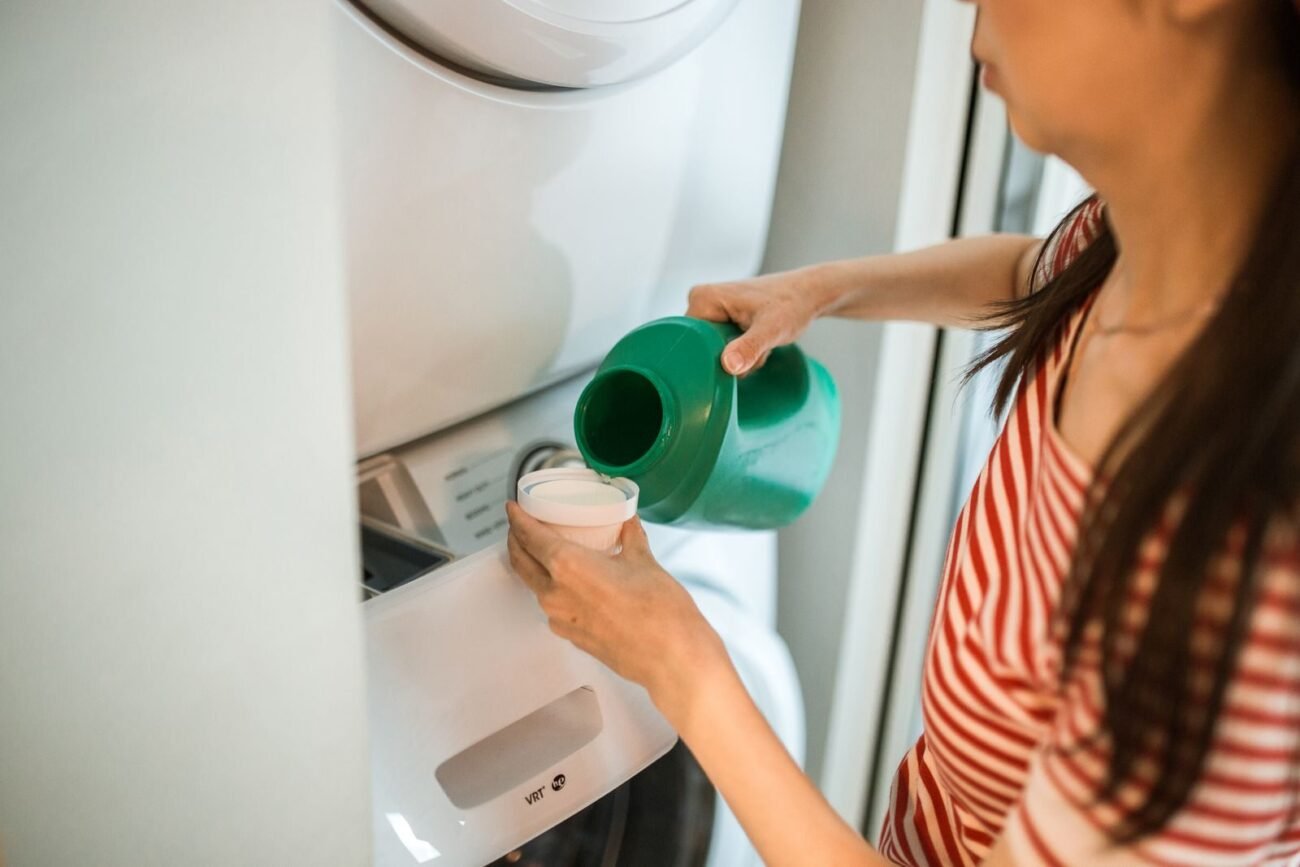
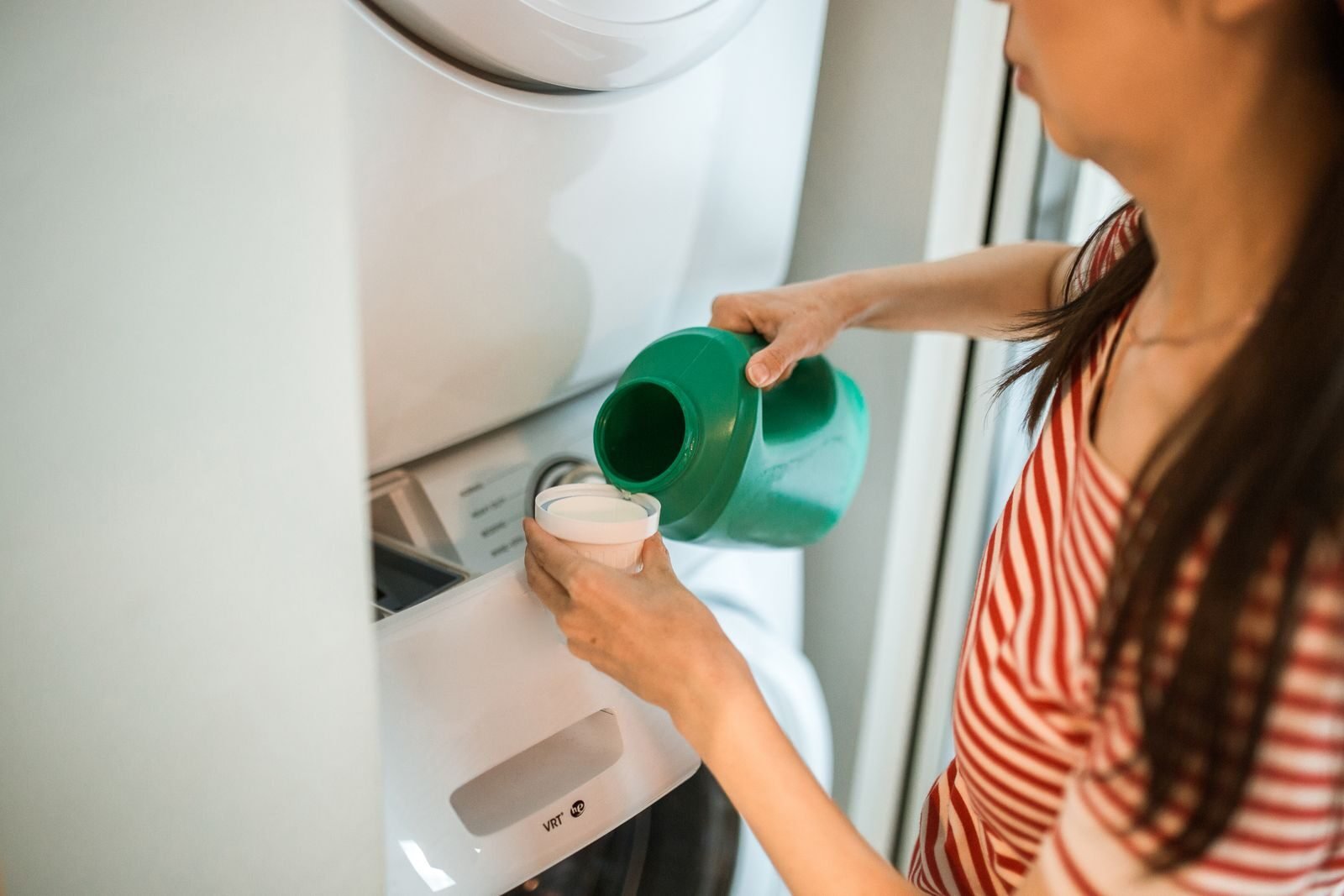
Every wash sends a slug of detergent out of your machine, down the drain, and off towards a river somewhere.
So is laundry detergent biodegradable, and does all that washing quietly harm the water it ends up in?
This is a better question than it first looks, because the honest answer has two halves that most people never separate. One part of detergent does break down. Another part does not need to break down to cause harm, and that is the part the word “biodegradable” quietly steps around.
Let me explain it the way I look at it…
Part of my postgraduate work was in ecotoxicology and risk assessment, which is the study of how substances affect living things and the water around them, and at what dose they start to count.
When I read a detergent claim, I am not just asking whether it breaks down. I am asking what it does to a lake or a stream while it is there, and afterwards. Those are not the same question, and laundry detergent is the perfect example of why.
The two working parts of a detergent
A laundry detergent is really two jobs in one box, and it helps to keep them apart.
The first job is done by surfactants, the same grease-grabbing molecules that clean your dishes. They loosen dirt and oil from the fabric and hold it in the wash water so it rinses away. Like the ones in dish soap, the surfactants in modern laundry detergent are generally biodegradable, and in many places they are legally required to be.
The second job is done by something called a builder. Builders soften hard water so the surfactants can work properly, because minerals in tap water otherwise get in the way. And it is the builder, not the surfactant, that has caused the real environmental trouble over the years. For decades the builder of choice was phosphate, and phosphate is where this story gets interesting.
So is laundry detergent biodegradable?
For the surfactant part, mostly yes. Under the rules used across the European Union, the surfactants in detergents must be biodegradable to a defined standard, and the law was tightened to require that they break down fully rather than just partly. So the cleaning molecules themselves are designed to be eaten by microbes and taken apart into harmless pieces, in sewage treatment and in the environment.
But here is the catch, and it is a big one. Phosphate, the traditional builder, is not a biodegradability problem at all. It never breaks down into something harmful, because it is already a simple mineral nutrient. The trouble is the opposite of persistence. Phosphate is plant food, and feeding a river plant food is exactly the problem.
This is why “biodegradable” on a detergent box can be true and still miss the point. Biodegradable describes whether something breaks down. Phosphate does not need to break down to do damage. So a detergent could, in principle, be labelled around its biodegradable surfactants while still carrying a builder that harms water in a completely different way. The word answers one question and stays silent on the other.
The phosphate problem, explained simply
Here is the mechanism, because once you see it you understand why phosphates were such a concern.
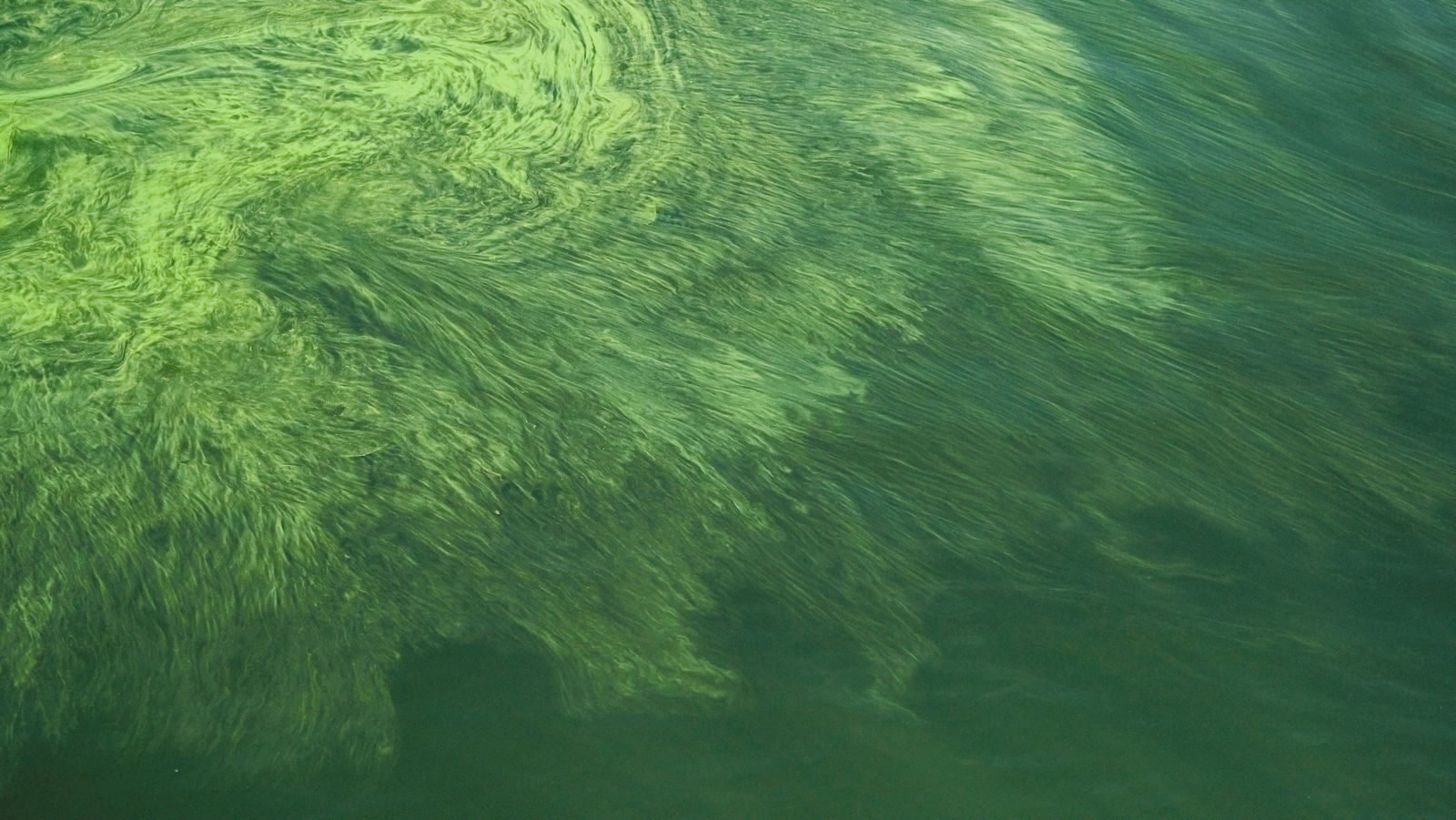
Phosphate is a nutrient. In a river or lake, the amount of natural phosphate is usually low, and that low level is part of what keeps the water balanced. Add a lot of extra phosphate, from decades of detergent going down millions of drains, and you feed the algae and water plants far beyond their normal limits. They bloom, spreading across the surface in thick green mats.
Then the real damage comes. When that mass of algae dies, bacteria break it down, and that breakdown uses up the oxygen dissolved in the water. Strip the oxygen out, and the fish and insects and other life that need it suffocate.
Scientists call this whole process eutrophication, and in the worst cases it creates “dead zones,” stretches of water where very little can survive. This is the harm the European detergent rules set phosphate limits to reduce, and it is why phosphate builders have been restricted or banned across much of the world.
So the phosphate story is a clean example of my main point. The problem was never that phosphate failed to break down. The problem was what it did while it was there, by being a nutrient in a place that did not need one.
The good news, and where things stand now
Now the reassuring part, because this is genuinely a success story.
The response to the phosphate problem worked…
Manufacturers reformulated, and most modern laundry detergents have moved away from phosphate builders to gentler alternatives like zeolites and citrates, which soften water without feeding rivers. In many regions phosphates in household laundry detergent are now restricted or gone. So the specific disaster that drove all those algae blooms has been largely designed out of the product on your shelf.
That does not mean every box is perfect…
Detergents still carry other ingredients worth a thought, and “biodegradable” on the front is still doing marketing work rather than telling you the whole story. But the headline is a good one: the worst offender has mostly been removed, and it happened because the harm was understood and regulated.
How I choose and use laundry detergent
So here is what I actually do, and what I would suggest.
I do not lose sleep over ordinary modern detergent, because the surfactants are biodegradable and the phosphate era is largely behind us. If you want to choose well, the single most useful move is to look for a recognised environmental certification rather than the bare word “biodegradable.”
A scheme like the United States EPA’s Safer Choice programme reviews the actual ingredients against environmental and aquatic criteria, which is a real check, unlike a green word a brand printed itself.
And use the right amount, which for detergent is almost always less than people think. Overdosing detergent does not clean better once you pass the point the fabric needs. It just sends extra surfactant and extra everything down the drain, and often leaves residue in your clothes. The dose on the box, or a little under for a normal load, is plenty. Using less is the simplest thing you can do for the water and your money at the same time.
That is the full picture. The surfactants in laundry detergent are largely biodegradable, the phosphate problem that once harmed rivers has mostly been engineered out, and the smart habit now is to choose by certification and wash with a sensible dose.
Summary
A laundry detergent does two jobs: surfactants lift dirt from fabric, and builders soften the water so they can work. The surfactants in modern detergent are generally biodegradable, and in many places are legally required to break down fully.
The bigger environmental story, though, is the builder. For decades that was phosphate, which is not a biodegradability problem but a nutrient one. Phosphate does not need to break down to cause harm; as plant food, extra phosphate in rivers and lakes feeds huge algae blooms, and when the algae die the breakdown strips oxygen from the water, suffocating aquatic life. This process, eutrophication, is why phosphate builders have been restricted or banned across much of the world.
The good news is that most modern laundry detergents have moved to phosphate-free builders like zeolites and citrates, so the worst harm has largely been designed out. “Biodegradable” on the label still only answers half the question, so the better move is to choose a product with a recognised environmental certification and to use a sensible amount rather than overdosing.
Common questions
Is laundry detergent biodegradable?
The surfactants that do the cleaning are generally biodegradable, and in many regions they are legally required to break down fully. But biodegradability is only half the picture. The traditional water-softening builder, phosphate, does not break down and instead acts as a nutrient that can harm rivers, which is why phosphate has been restricted in most places and why a recognised certification tells you more than the word alone.
Do laundry detergents still contain phosphates?
Mostly not, in household laundry detergent. After phosphates were linked to serious harm in rivers and lakes, most manufacturers moved to phosphate-free builders such as zeolites and citrates, and many regions restricted or banned phosphates in laundry products. Some older or imported products may still contain them, so a certification or a “phosphate-free” note is worth looking for.
Why are phosphates in detergent bad for the environment?
Phosphate is a nutrient, and rivers and lakes naturally contain very little of it. Extra phosphate from detergent feeds algae far beyond normal levels, causing large blooms. When the algae die, the bacteria that break them down use up the oxygen in the water, which suffocates fish and other life. This process is called eutrophication, and in bad cases it creates oxygen-starved dead zones.
Does laundry detergent harm rivers and fish?
Modern detergent is far less harmful than it once was. The surfactants biodegrade, and the phosphates that caused the worst damage have largely been removed. Home wash water is also diluted and usually treated before release. The main way to keep impact low now is to choose a certified product and avoid overdosing, since excess detergent just sends more of everything down the drain.
What is the most eco-friendly laundry detergent?
Rather than trusting the word “biodegradable,” look for a product carrying a recognised environmental certification, which checks the real ingredients against environmental and aquatic criteria. Phosphate-free is now standard for most laundry detergent, so certification and a sensible dose matter more than any single claim on the front of the box.