




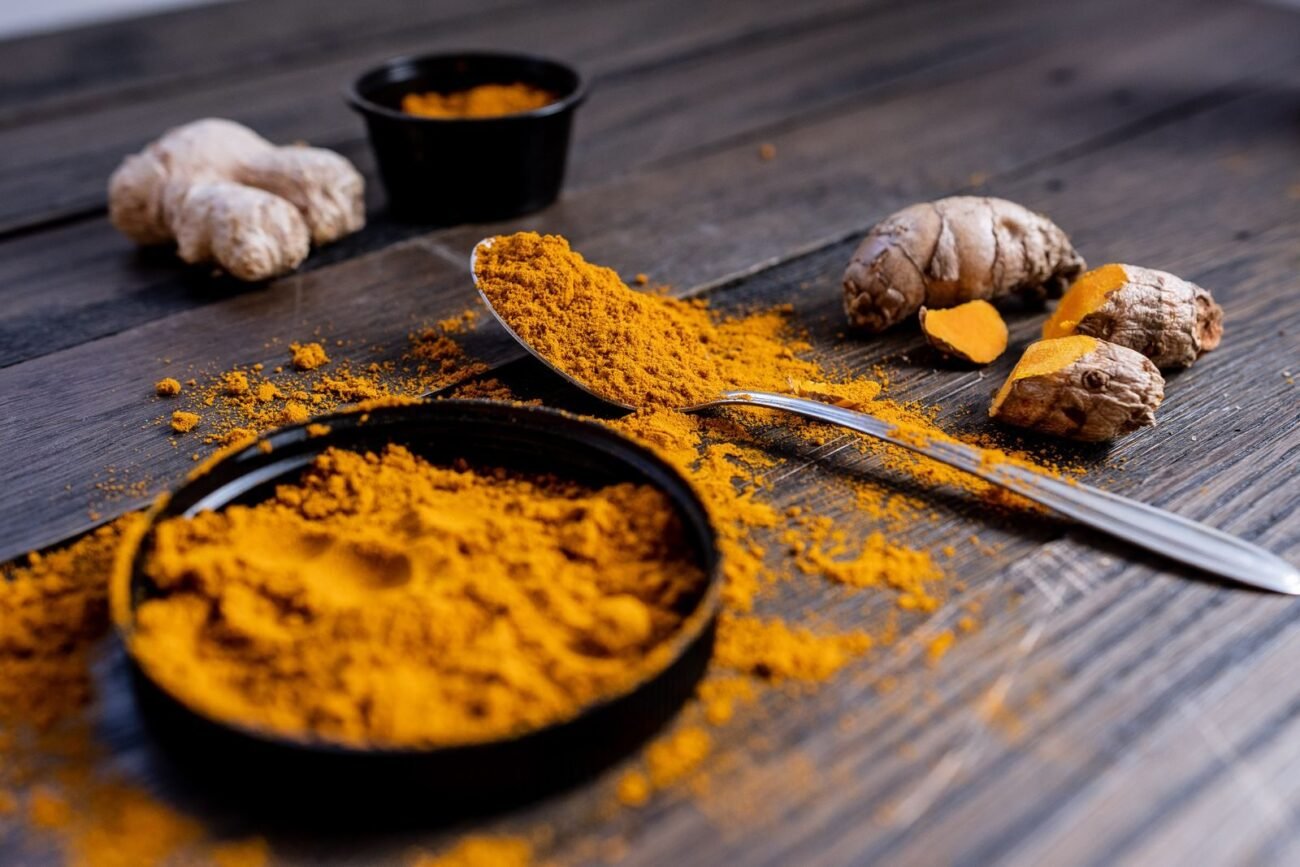
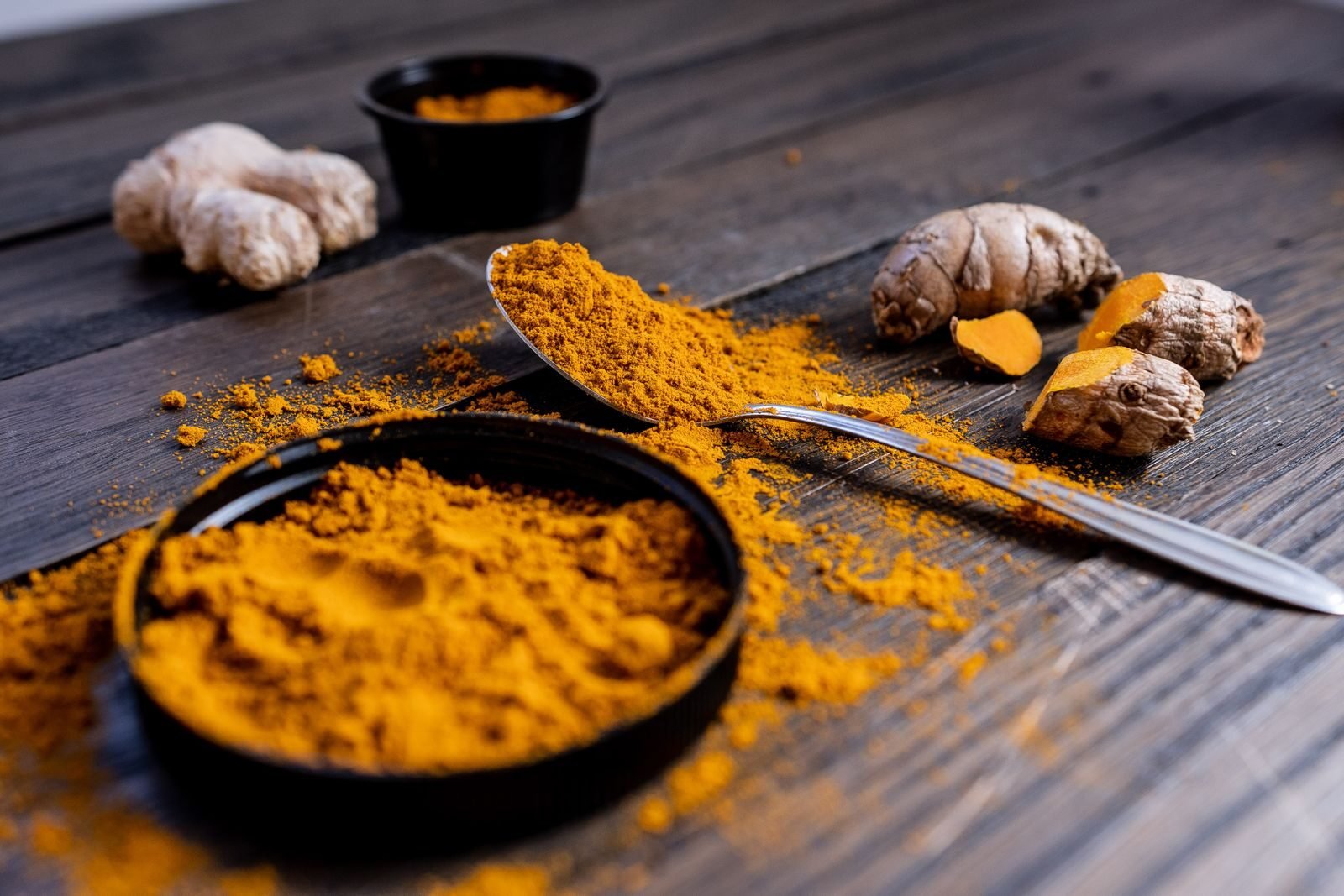
Every turmeric skincare page tells you the same thing. Curcumin stains, and it doesn’t absorb well. What almost none of them explain is why, at the level of the actual molecule.
I’ve now gone through five other plant compounds in this series, and each one fails to deliver on its promise for a different specific reason. Aloe’s acemannan needs the right molecular weight to work.
Centella and willow bark both carry a sugar chain that has to come off before the core compound does anything. Rosemary’s carnosic acid is prized because it resists breaking down. Curcumin fails for a reason none of those cover. It’s not too big, and it’s not waiting on a sugar chain to be removed. It’s structurally restless. The molecule itself won’t sit still.
The structure that explains everything
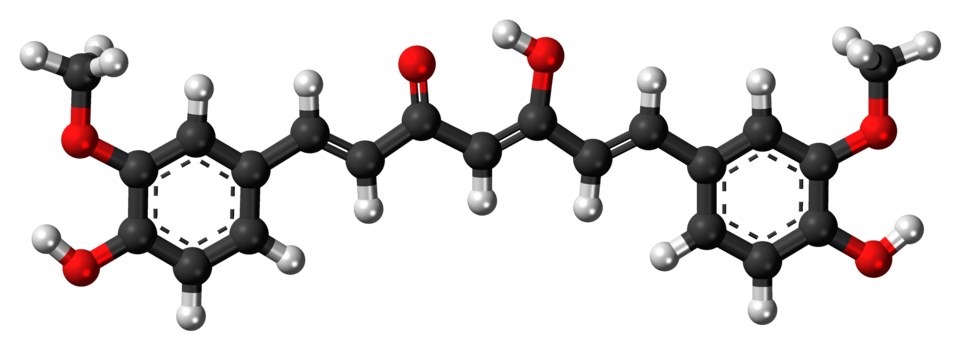
Curcumin is built around what chemists call a beta-diketone, two phenol rings connected by a chain with two ketone groups sitting in the middle. That specific arrangement lets the molecule exist in two different shapes, called tautomers, that constantly interconvert.
In water, at the pH your skin sits at, curcumin overwhelmingly favors one of those two shapes, called the enol form. And that enol form is the unstable one. It’s practically insoluble in water at neutral pH, and once it’s in solution, it starts breaking down almost immediately, with a half-life measured in minutes at room temperature, not days or weeks.
I find this the most interesting thing about curcumin, once you see it. The molecule’s colour, its poor solubility, and its instability all trace back to the exact same structural feature. It’s not three separate problems. It’s one structure causing all three.
Why light and pH make it worse
The instability isn’t constant, it gets worse under specific conditions, and this is confirmed by real measurement, not just theory. Research tracking curcumin’s stability in solution found it holds up reasonably only under low light and neutral pH, while stronger light and shifts in pH accelerate its breakdown through a combination of hydrolysis and oxidation (Appendino et al., 2022).
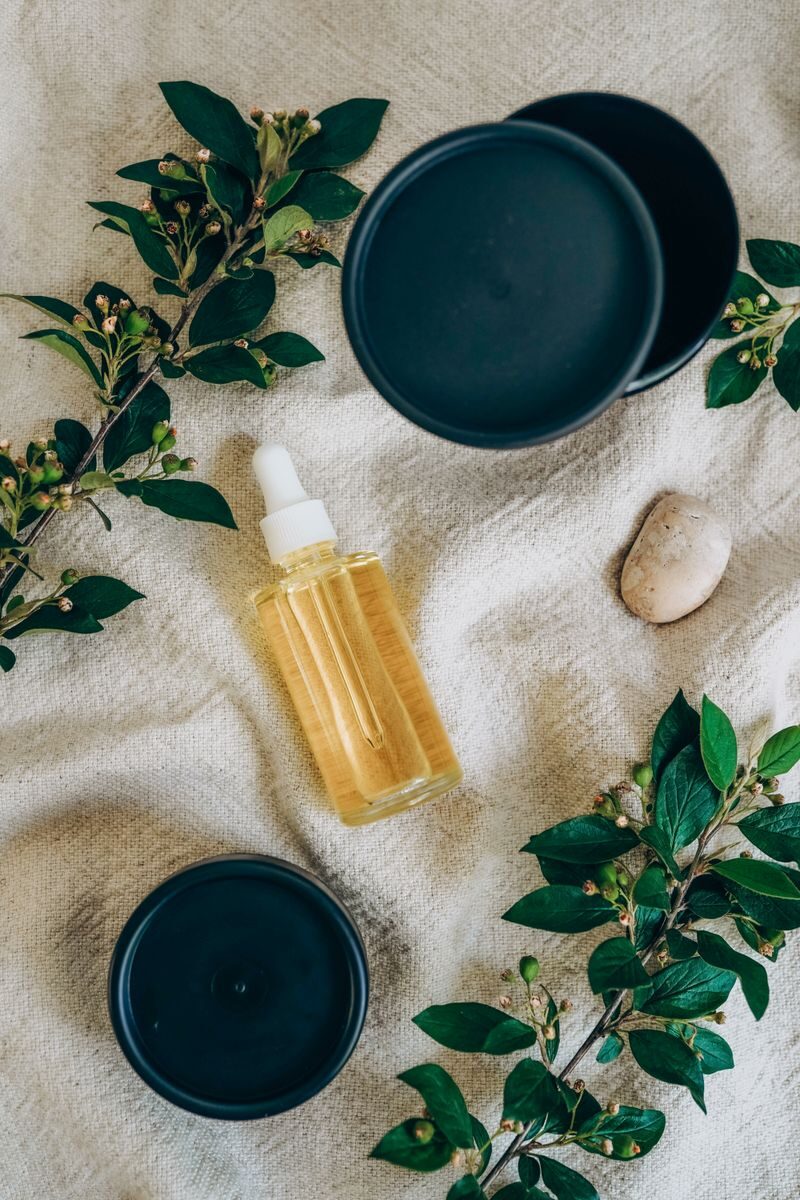
So a curcumin serum sitting in a clear bottle on a bright bathroom shelf is fighting its own chemistry from two directions at once, light speeding up the breakdown, and the same water-based formula it needs to spread easily also being the environment where it degrades fastest.
Why tetrahydrocurcumin is a genuinely different compound, not just a paler curcumin
This is where I think the marketing undersells something real. Tetrahydrocurcumin isn’t curcumin with the colour edited out. It’s a different, saturated version of the molecule, the reactive double bonds in that central chain have been filled in with hydrogen.
That structural change is exactly why it doesn’t have curcumin’s colour and doesn’t share its instability. It’s a genuinely more settled molecule.
I’d trust a formula built around tetrahydrocurcumin more than one relying on raw curcumin’s stability holding up on a shelf, not because it’s a fancier marketing name, but because the actual chemistry backing that stability claim checks out.
What this means for you
Curcumin’s real problem isn’t that it’s a weak ingredient. It’s that the same structure giving it colour and biological activity also makes it fall apart quickly in water, in light, and off neutral pH. That’s a genuinely harder chemistry problem than most plant compounds I’ve looked at in this series.
If you want to actually judge a turmeric product, I’d check three things. Whether it’s packaged in dark, light-blocking material, since that’s a real defense against a documented weakness.
Whether it names the actual form, curcumin, a standardized curcuminoid extract, or tetrahydrocurcumin, since I went through why the sugar chain or core structure of a compound decides everything with Centella too, and the same logic applies here.
And whether the brand is honest that this is a slow-acting, supporting ingredient, not a fast fix, since that timeline claim tracks with what the actual research on curcumin’s mechanisms describes.
FAQs
Why does turmeric barely work in skincare?
Curcumin, turmeric’s main active compound, has a molecular structure that makes it both poorly soluble in water and chemically unstable, breaking down within minutes under normal conditions, especially with light exposure or a shift in pH. This is a structural property of the molecule, not just a formulation oversight.
Why does curcumin stain skin and fabric?
Curcumin’s colour and its instability come from the same part of its structure, a chain connecting two phenol rings that shifts between two chemical forms. That structure absorbs visible light strongly, which is what produces the yellow-orange colour, and also makes the molecule reactive and short-lived.
Is tetrahydrocurcumin better than curcumin for skincare?
Often, yes. It’s a chemically different, more saturated version of curcumin, not curcumin with the colour removed. That structural change is what makes it colourless and considerably more stable, which is why it shows up in premium formulations aiming for both a longer shelf life and cleaner texture.
How can I tell if a turmeric product is actually well formulated?
Check for dark or opaque packaging, since light accelerates curcumin’s breakdown. Check whether the label names the actual form used, whole extract, standardized curcuminoids, or tetrahydrocurcumin, since these behave differently. And expect a slow, supporting role rather than a fast, dramatic result, since that matches what the research on curcumin’s mechanisms actually describes.