




Does your home feel dry in winter, the kind of dry that cracks your lips and leaves your skin tight?
If you have wondered whether a few houseplants could fix that, you are asking a good question. As a plant scientist, I can give you a clear answer, and explain the part most articles get wrong.
Yes, plants do add moisture to the air. The way they do it is real and well understood. But the amount a few houseplants add to a normal room is small, smaller than most people hope. So plants help a little, and there are ways to get more out of them, but they are not a quick fix for properly dry air.
Let me show you how it really works, because once you understand the mechanism, you can make a sensible choice instead of buying ten plants and feeling let down.
How plants add moisture to the air
Plants are, in a sense, water pumps. They pull water up from the soil through their roots, move it up through the stem, and release most of it as vapour from tiny pores in their leaves. Those pores are called stomata, and the process is called transpiration. A plant uses only a small share of the water it takes up for its own growth. The rest passes straight through and out into the air as moisture.
When a plant transpires, it is putting real water vapour into the room. So plants do not dry the air, they add to it. The “do plants increase or decrease humidity” question has a clear answer: they increase it. The only real question is by how much.
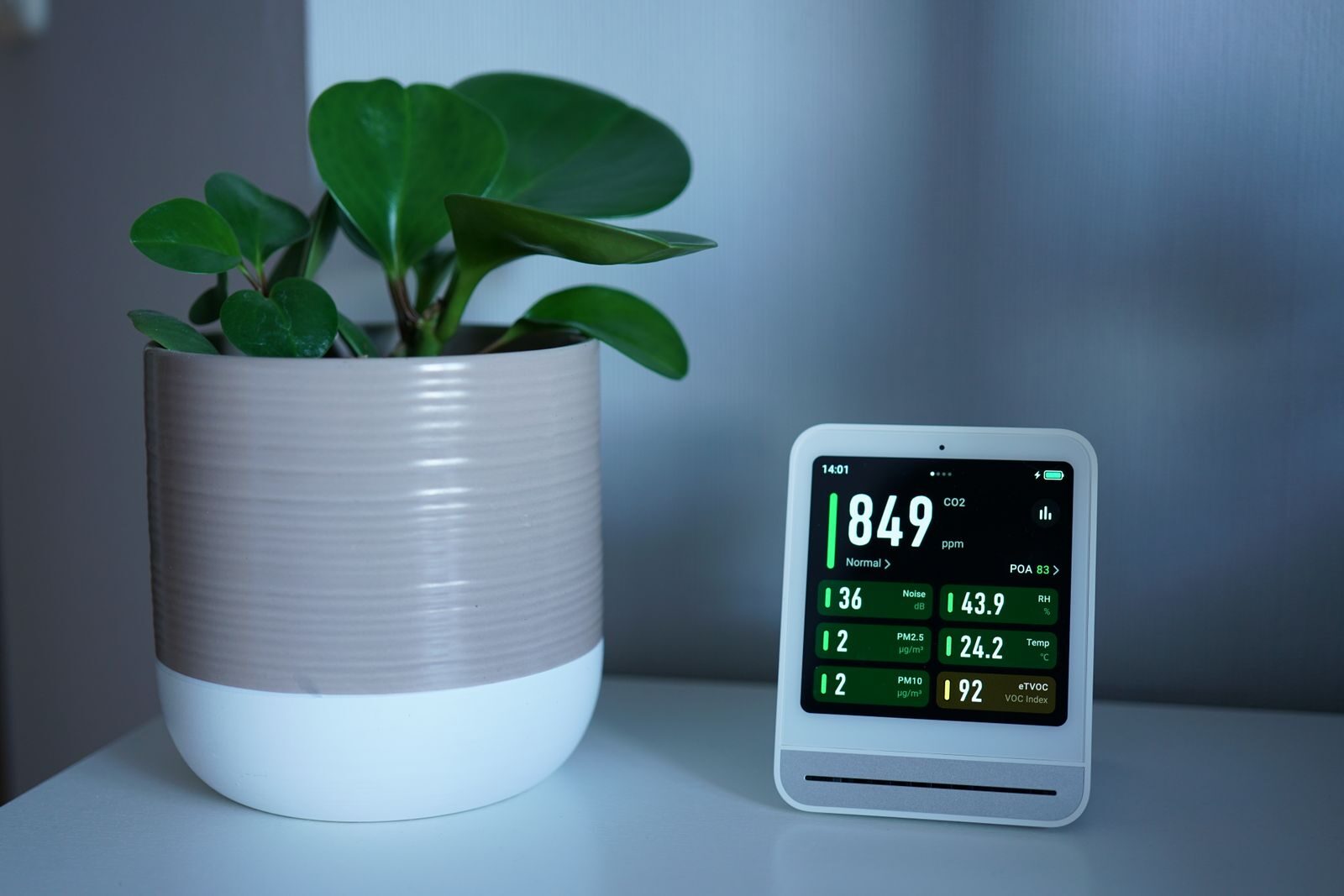
That part I can speak to from experience. A lot of my field research involved working with air humidity and temperature sensors, running through a plant experiment across a whole growing season. Humidity was not the headline of that work, we tracked it carefully so it could not quietly distort the rest of the data, because temperature and moisture shape how plants behave.
But living with those measurements taught me the two things that decide this whole question. One, how tightly temperature and humidity are tied together. Two, how restless moisture in the air really is. It does not sit still where it is released. It drifts, it mixes, and it leaves. Hold on to that second point, because it is the thing most houseplant advice skips.
So how much humidity does a houseplant really add?
A single houseplant adds only a little moisture to a room.
Researchers who measured this in real offices found that each plant released roughly 35 to 60 grams of water into the air per day through transpiration. That sounds like something, but spread through the air of a whole room, it is a small effect. In that office work, it took around 12 large Ficus plants, or 6 of a thirstier pothos-type plant, to produce a humidity rise big enough for the instruments to call meaningful in a small office.
The reason comes back to how moisture behaves in air. What a plant releases does not pile up around it. It diffuses out into the whole room and, more to the point, it leaves the room every time air moves through. The rate at which a room swaps its air with outside, through gaps, doors, vents, and open windows, has a bigger effect on the humidity than the plants do.
The same office research found exactly this: air exchange shaped the room’s humidity more than the plants did, and in summer, with more air moving through, the plants’ effect disappeared into the background even though they were transpiring faster. So one or two plants on a windowsill are quietly adding moisture, while the room is quietly carrying it away just as fast.
That is not plants failing. It is just the scale of it. A plant is a small, slow source of moisture in a space that loses moisture constantly.
Not all plants are equal
One thing the simple answer hides: plants differ a lot in how much moisture they push out, and this is where plant biology earns its place.
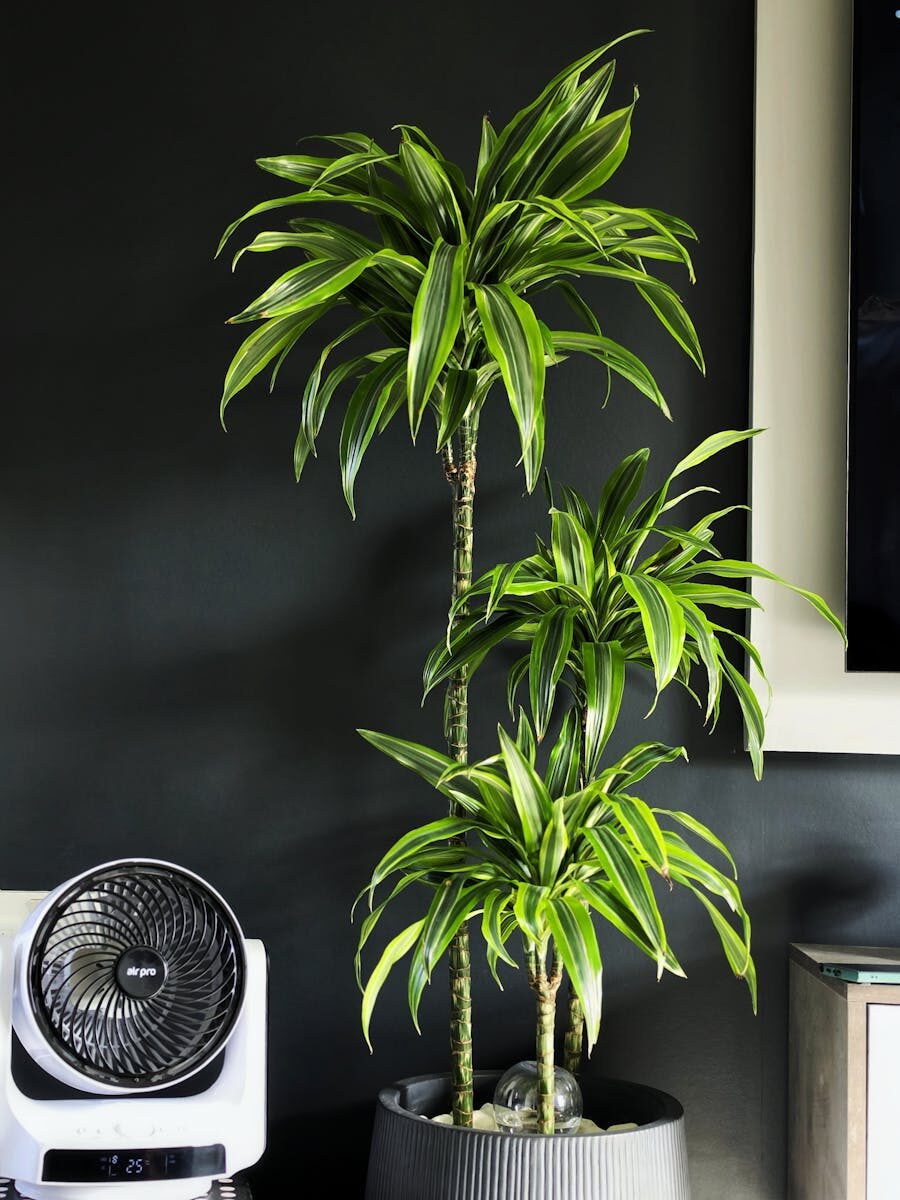
Transpiration happens through the stomata, the pores in the leaves. So a plant with more leaf area, and more pores, moves more water. In the office study, a pothos-type plant out-transpired a Ficus partly because it had about 40 percent more leaf area, and so more pores doing the work. A big, leafy, fast-growing tropical is a far better humidifier than a small, waxy, slow plant.
This is also why succulents and cacti are near useless for adding humidity. They evolved to hoard water, not release it, and they keep their pores shut for much of the day. So if humidity is your goal, the plant you choose changes the result as much as the number of plants. Reach for the leafy, thirsty types, not the desert ones.
Why your home goes dry in winter, and where plants fit
This is the part my sensor background explains well, because it is about temperature and humidity together, and the two are locked tightly.
Warm air can hold more moisture than cold air. In winter, your heating warms the indoor air, which raises how much moisture that air could hold. But there is rarely enough moisture around to fill that bigger capacity. So the air reaches for moisture wherever it can, pulling it out of your skin, your furniture, and yes, your plants.
That is why a heated home in winter feels so dry, and why the relative humidity reading stays low even when the air is warm.
I see this every winter where I live. The cold months bring dry indoor air, and damp only ever shows up in the coldest, dampest corners, never as general humidity through the home. So a few plants in that setting are working against a strong drying force. They add moisture, but the warm, dry, air-swapping room pulls it away faster than a couple of plants can supply it.
There is a flip side worth knowing, and it comes straight from the temperature-humidity link. In a warm, dry room, each plant transpires harder, because dry air pulls water out of leaves faster. So plants try their best exactly when the room is driest. They are simply outmatched by the scale of the dryness.
That is the real answer to “are plants good for dry air”: they push hardest when you need them most, but a few of them still cannot win against a heated, leaky room.
How to get more humidity out of your plants
If you want plants to make a real difference, the trick is to stop fighting that diffusion-and-air-exchange problem. Here is what works, in order of effect.
Group your plants together.
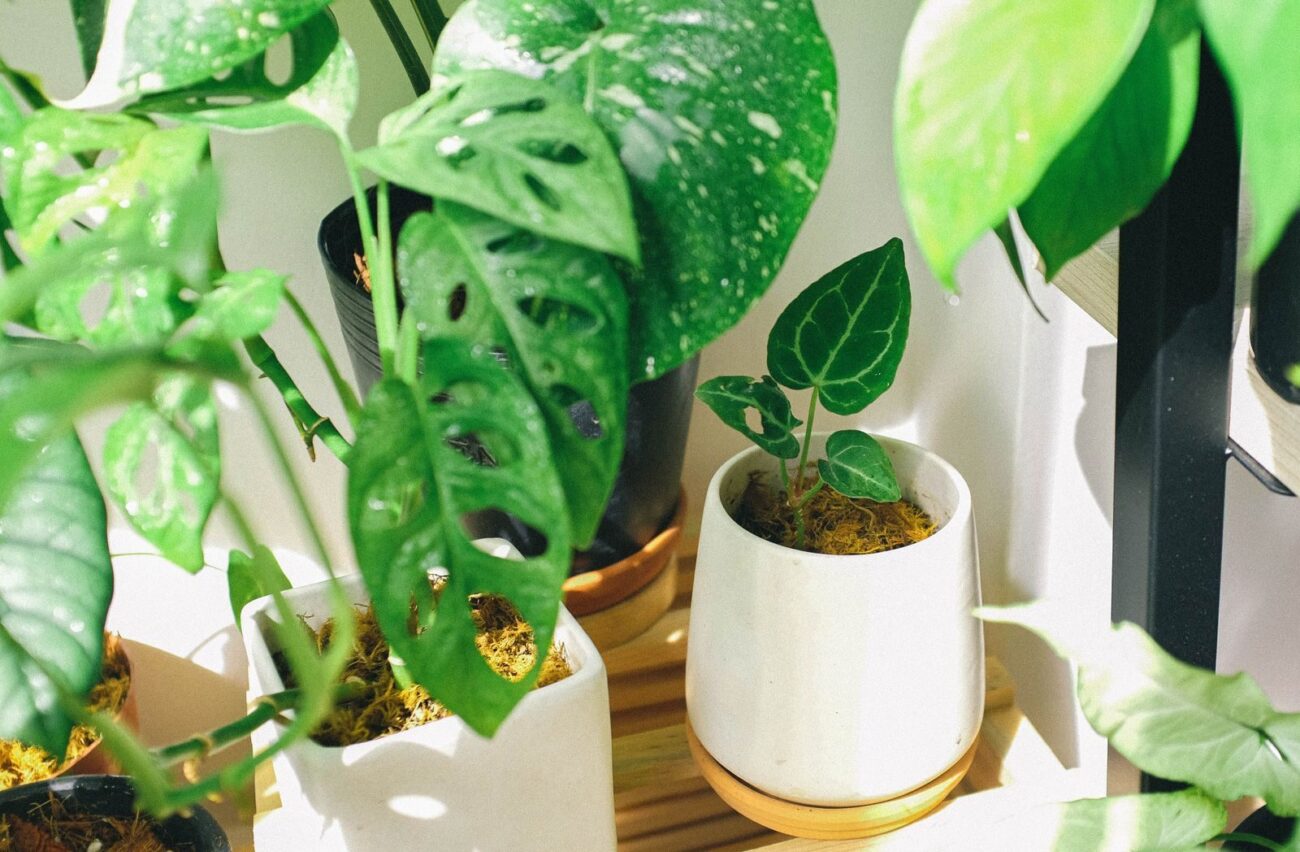
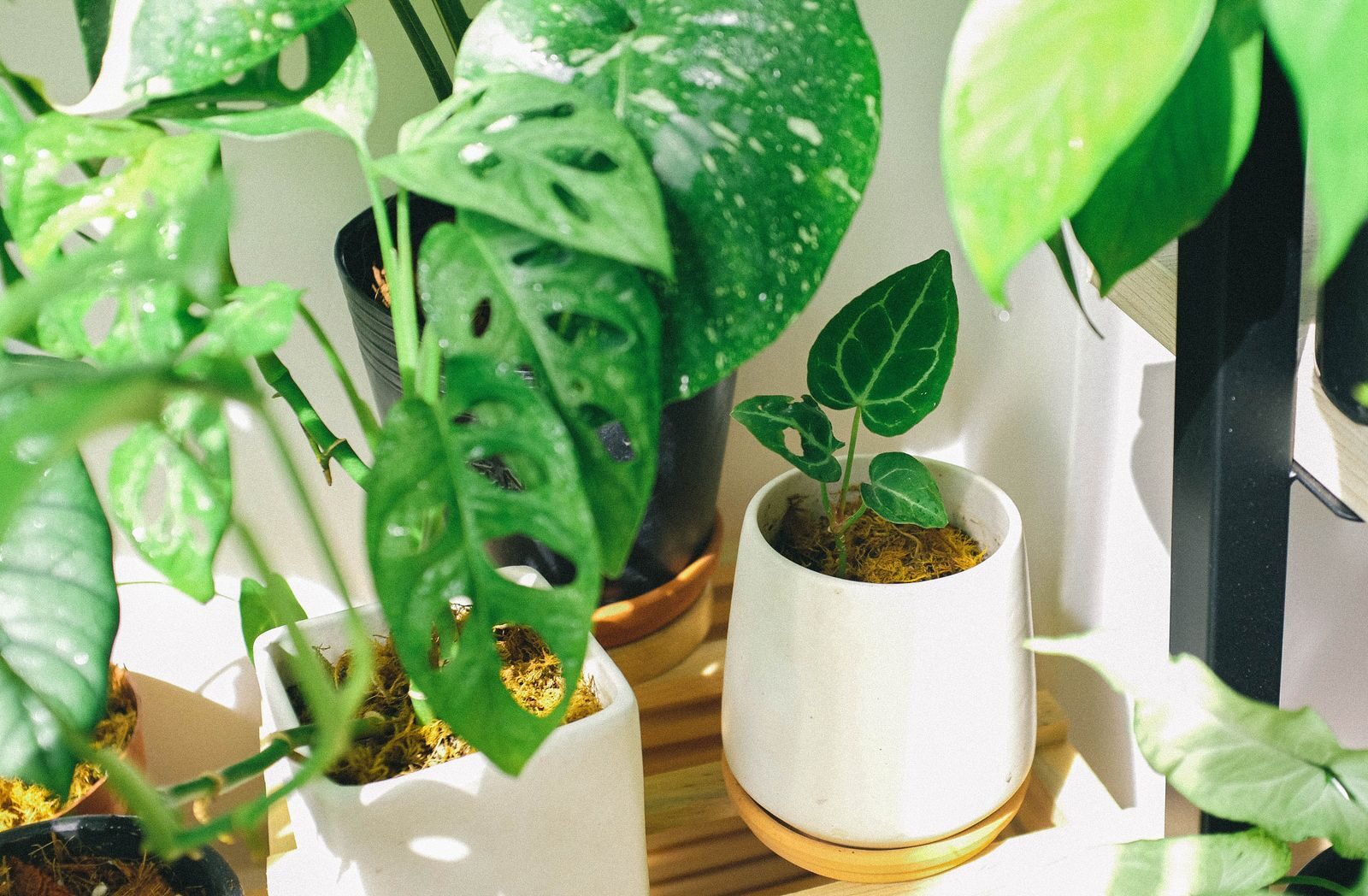
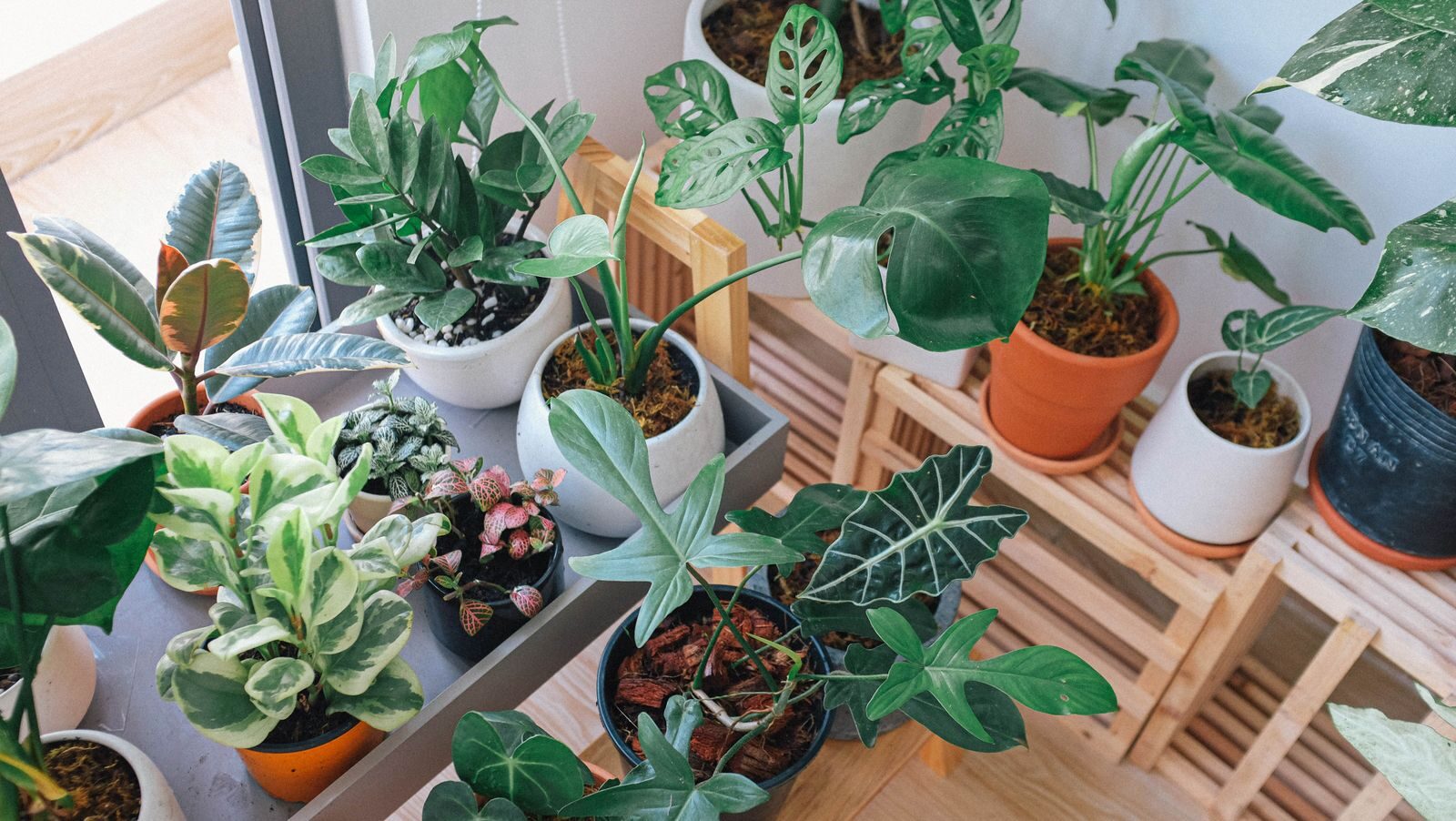
This is the big one, and it is free. When you cluster plants, the moisture from each one builds up in the small pocket of air around the group, instead of being lost at once to the whole room. That shared, humid microclimate around a tight group is far damper than any single plant could manage. Grouping is the single most effective free thing you can do.
Use more plants than you think.
The effect scales with numbers. A few plants do little; many plants, grouped, do something you can measure. One office study found that going from no plants to a generous number lifted a room from quite dry into a comfortable range, a real, measured shift. The dose is the difference.
Add a pebble tray, as a helper.
A tray of water with pebbles under the pots adds a little evaporating surface near the plants. On its own it does very little, but as a support to grouping, in a small, still room, it nudges things up.
Pick the thirsty species.
As above, leafy fast growers like pothos and ferns transpire far more than succulents. Choosing the right plants does as much as adding more of them.
And the plain comparison: if you really need to raise a dry room’s humidity, a humidifier does far more, far faster, than any realistic number of plants. A humidifier can lift a room by 20 to 30 points in an hour and hold it.
Plants are a pleasant, slow, partial contribution. So I would keep plants for the greenery and the small, steady lift, and use a humidifier when the air is properly too dry.
A note on the plants themselves
One thing worth turning around. While you are wondering whether plants humidify your air, your plants are wondering the same thing about your home, and for them the answer can be more pressing.
Many popular houseplants come from humid, tropical places and prefer a relative humidity of around 40 to 60 percent, with the real tropical types liking it higher still. A dry winter room can sit well below that. If your plant’s leaves go brown and crisp at the tips and edges, that is often the plant telling you the air is too dry for it.
So grouping and the other tricks above are as much for the plants’ comfort as for yours, and a clump of plants raising the humidity in their own corner helps the plants in that clump too.
Summary
Yes, indoor plants increase humidity. They draw water from the soil and release most of it into the air as vapour through pores in their leaves, a process called transpiration. So plants add moisture to a room rather than removing it.
But the amount from one or two houseplants is small. Each plant releases only a modest amount of water a day, and most of that moisture diffuses through the room and is carried off as the room swaps air with outside. The rate of air exchange affects a room’s humidity more than a few plants do.
Plants also differ widely. Leafy, fast-growing tropicals with lots of pores, like pothos and ferns, add far more moisture than water-hoarding succulents and cacti, which add almost none.
Homes feel dry in winter because heating warms the air and raises how much moisture it could hold, while there is rarely enough moisture to fill it, so the air pulls moisture from everything around it, including plants.
To get a real humidity effect from plants, group them together to build a humid microclimate, use plenty of them, choose thirsty leafy species, and add a pebble tray as a helper. For truly dry air, a humidifier does far more than plants can.
Common questions
Do indoor plants increase or decrease humidity?
They increase it. Plants release water vapour into the air through transpiration, so they add moisture to a room rather than drying it. The increase from a few plants is small, but the direction is not in doubt.
How much do indoor plants raise humidity?
Only a little per plant. Measured in offices, each plant added roughly 35 to 60 grams of water to the air per day, and it took many grouped plants to lift a room’s humidity by a measurable amount. A few plants add moisture, but not enough to transform a dry room.
Do plants help with dry air?
A little. Plants add moisture through transpiration, and grouped together they help more. But in a heated, dry winter room the air carries moisture away quickly, so plants alone rarely fix truly dry air. A humidifier does far more for that.
Which indoor plants add the most humidity?
Leafy, fast-growing tropicals with lots of leaf area and pores, such as pothos and ferns, transpire more and add more moisture. Water-hoarding plants like succulents and cacti add almost none, because they keep their pores shut to save water.
How can I increase humidity for my plants without a humidifier?
Group plants together to build a humid pocket of air around them, use several rather than one or two, choose thirsty leafy species, and stand them on a pebble tray of water as a supplement. Keeping them out of drafts and away from heat sources helps too.
Why does my home feel so dry in winter?
Heating warms the air, which raises how much moisture the air could hold, but there is rarely enough moisture to fill that capacity. So the warm air draws moisture from your skin, furniture, and plants, leaving the relative humidity low and everything feeling dry.